






News Center
When does cyclohexane make sense as an extraction solvent
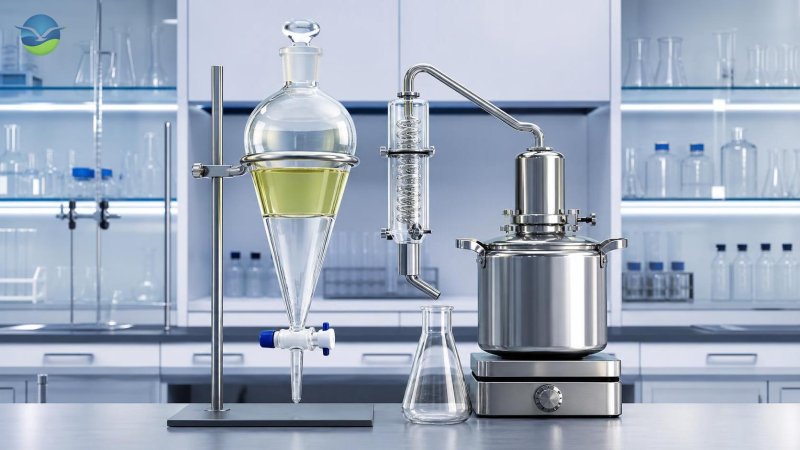
Cyclohexane tends to enter solvent discussions in a very practical way: not as the most polar, not as the most aggressive, and not always as the first name on a screening list, but often as the solvent that makes the overall process easier to live with. For technical evaluators working on extraction route selection, that distinction matters. A solvent may perform well in a beaker and still create headaches in recovery, phase disengagement, residue control, or downstream drying. The real question is not whether cyclohexane can dissolve a target compound. It is when cyclohexane makes sense as an extraction solvent within the full process window.
In chemical operations, extraction decisions are rarely based on one variable. Solubility, selectivity, density difference, boiling point, impurity carryover, equipment compatibility, safety handling, and cost all compete for attention. Cyclohexane becomes attractive when a process needs a relatively non-polar medium, predictable evaporation behavior, and cleaner separation from aqueous systems than some more complex solvent options can provide.
Where cyclohexane fits in solvent selection logic
Cyclohexane is a non-polar hydrocarbon solvent with low water solubility and a moderate boiling point that supports solvent recovery by distillation. That combination gives it a clear role in liquid-liquid extraction, washing steps, and isolation workflows involving hydrophobic or weakly polar components. It is especially relevant when the extraction target is sensitive to overly polar solvents, or when the process team wants to minimize residual solvent complexity in final drying.
For evaluators, the key advantage is not simply “good solvency.” It is balance. Cyclohexane often sits in a useful middle ground where it can extract oils, wax-like fractions, hydrophobic intermediates, and certain organic impurities while remaining easier to strip off than heavier hydrocarbon solvents. In batch and continuous operations alike, this can simplify mass balance calculations and reduce downstream load.
That said, cyclohexane should not be treated as a universal replacement for aromatic solvents, oxygenated solvents, or chlorinated extraction media. Its value appears when the chemistry, phase behavior, and recovery strategy line up.
Signs that cyclohexane is a sensible extraction choice
If a process review is still at the screening stage, several conditions usually indicate that cyclohexane deserves serious consideration.
1. The target or impurity profile is strongly hydrophobic
Cyclohexane works best when the species being transferred into the organic phase are non-polar or predominantly lipophilic. This includes many hydrocarbon-like substances, oils, greases, resinous components, and organic side-products with limited polarity. If the process objective is to pull these materials away from water or from a more polar reaction matrix, cyclohexane may provide sufficient partitioning without over-extracting highly polar species that are better left behind.
2. Fast and clean phase separation matters
Some extraction solvents create persistent emulsions or ambiguous interphases, especially when surfactant-like impurities are present. Cyclohexane can offer cleaner phase disengagement in suitable systems because of its immiscibility with water and simple hydrocarbon character. When production teams are trying to avoid long settling times, repeated centrifugation, or manual rework, this becomes more important than bench-scale yield alone.
3. Solvent recovery needs to stay straightforward
Recovery is often where a solvent either proves its industrial value or loses it. Cyclohexane’s volatility makes it practical for distillation and recycle loops, provided the rest of the formulation does not create difficult azeotropic or contamination issues. If plant economics depend on solvent reuse, recovery energy and purification ease should be evaluated early, not after lab success has already biased the team.
4. The downstream step is sensitive to residual solvent burden
In some formulations and intermediates, especially where drying efficiency or odor control matters, choosing a solvent that leaves the system cleanly can save time. Cyclohexane may be preferred over higher-boiling alternatives when the process cannot tolerate extended drying cycles or when solvent traces interfere with product handling.
When cyclohexane is often the wrong choice
A clear evaluation also means identifying where cyclohexane will likely disappoint.
If the target compound is polar, strongly hydrogen-bonding, or highly associated with aqueous or alcohol-rich phases, cyclohexane may show weak extraction performance. In such cases, forcing the system with excessive solvent ratio only shifts the inefficiency downstream. Similarly, if selectivity depends on specific solvent interactions rather than simple hydrophobic partitioning, a more functionalized solvent may outperform cyclohexane decisively.
It can also be a poor fit when safety and site controls are not aligned with flammable hydrocarbon handling. Although this is standard territory for many chemical plants, not every facility is equally positioned in terms of ventilation, grounding, vapor management, and solvent storage discipline. Technical suitability on paper does not remove operating constraints.
Another common mistake is assuming cyclohexane will automatically improve purity because it is less polar. In reality, some non-polar co-extractives may follow the target into the organic phase very efficiently. If the impurity profile includes fats, color bodies, waxes, or hydrophobic degradation products, selectivity has to be tested rather than assumed.
How experienced evaluators compare cyclohexane against alternatives
In practice, cyclohexane is rarely assessed in isolation. It is usually compared with hexane, heptane, toluene, ethyl acetate, methyl tert-butyl ether, or mixed-solvent systems. The best comparison framework is not a generic solvent table, but a process-specific matrix built around four questions:
- What needs to move into the solvent, and what must stay out?
- How cleanly do the phases separate under realistic agitation conditions?
- What does recovery look like after contamination, moisture pickup, and repeated recycle?
- What burden does the solvent create for drying, waste handling, and operator control?
Cyclohexane often performs well when compared against more polar solvents that extract too broadly, bringing unwanted materials along with the target fraction. It may also be selected over heavier hydrocarbons when a lower boiling range is useful for recovery. Against hexane, the decision may come down to specific plant preferences, impurity patterns, regulatory expectations, and supply consistency rather than broad solvency differences alone.
For teams evaluating raw materials or process aids across product categories, this style of screening is familiar. A cosmetic ingredient workflow, for example, may place extra emphasis on purity documentation, traceability, and post-processing behavior. That same mindset is relevant whether the item under review is a solvent or a formulation component such as Niacinamide Vitamin B3 Cosmetic Raw Material, where extraction history, handling properties, and quality consistency all influence technical acceptance.
Operational factors that change the answer
Even when lab extraction data looks promising, scale-up can change the verdict on cyclohexane. Agitation energy, vessel geometry, temperature profile, and water content can all shift extraction efficiency and settling behavior. A system that separates neatly in a separatory funnel may become slower in larger tanks if fine droplets persist. Conversely, some systems improve at scale when temperature control is tighter and mixing is less erratic.
Technical evaluators should also look closely at material compatibility and contamination control. Because cyclohexane is frequently recovered and reused, its quality over multiple cycles matters. Trace oils, by-products, or cleaning residues can gradually alter extraction performance. What begins as a solvent choice question may turn into a solvent management question.
This is one reason supply coordination matters more than many buyers initially expect. In export-oriented chemical procurement, the solvent itself is only part of the evaluation. Documentation, batch consistency, packaging integrity, and response speed around samples and technical files all affect how quickly a project moves from screening to qualification.
What to verify before you approve cyclohexane for a process
A disciplined review normally includes the following checks:
- Partition performance: Confirm actual distribution behavior for both target compound and key impurities.
- Phase disengagement: Measure separation time after realistic mixing intensity, not just gentle lab shaking.
- Recovery profile: Evaluate distillation ease, moisture impact, and solvent purity after recycle.
- Residual handling: Determine how easily cyclohexane can be removed from wet cake, concentrate, or final product.
- Safety fit: Match flammability controls to the intended storage and operating environment.
- Documentation readiness: Ensure COA, MSDS, and shipment-related quality records are available and aligned with internal review needs.
These checks sound routine, but they are often where projects stall. A solvent may pass technical screening while supply-side support remains incomplete. For overseas buyers in particular, delays often come from sample coordination, documentation turnaround, or uncertainty about whether production and commercial communication are aligned.
That coordination gap is exactly where an integrated structure can help. Qixiang Chemical manages foreign trade operations through its Wuxi center in Jiangsu, where teams handle inquiry response, sample delivery, quotation support, order follow-up, logistics coordination, and after-sales documentation. Meanwhile, production is based in Shandong, with a standardized manufacturing facility and in-house process control covering blending, processing, testing, and shipment documentation. For technical evaluators, that split is practical rather than cosmetic: commercial communication stays responsive, while manufacturing remains tied to source capacity and batch control.
A realistic rule of thumb
Cyclohexane makes sense as an extraction solvent when the process benefits from a non-polar medium, water immiscibility, manageable recovery, and relatively clean downstream removal. It becomes more compelling when emulsification risk needs to stay low and when the extracted fraction is hydrophobic enough to justify the solvent ratio. It becomes less attractive when the chemistry requires polarity, strong specific interactions, or tighter selectivity than a hydrocarbon solvent can provide.
In other words, cyclohexane is rarely chosen because it looks ideal in isolation. It is chosen because, in the full context of extraction, separation, recovery, and scale-up, it can be the most workable compromise. For a technical evaluator, that is often the decision that matters most.
Please give us a message
Send Us Your Inquiry Today
Scalable production and one-stop R&D, manufacturing, sales & after-sales services.