






What cyclohexanone purity means for downstream resin performance
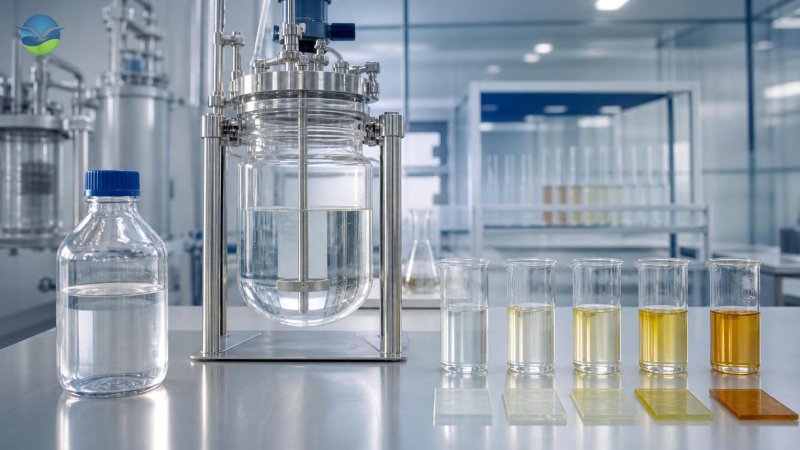
In resin manufacturing, a small purity deviation in cyclohexanone rarely stays small for long. It can show up as a viscosity shift during reaction, a color issue that appears only after curing, or an unexpected change in mechanical performance that sends quality teams back through raw material records. For QC and safety managers, cyclohexanone purity is not just a procurement line item. It is a process variable with direct consequences for batch consistency, impurity management, operator safety, and the predictability of downstream resin performance.
That is why experienced plants do not treat “purity” as a single number. They look at what sits behind the assay: water content, low-boiling impurities, high-boiling residues, trace acids, aldehydes, and other contaminants that may interact with catalysts, intermediates, or heat-sensitive formulations. In practical terms, understanding cyclohexanone means understanding what your resin system can tolerate—and what it cannot.
Why resin systems react differently to the same cyclohexanone specification
Two suppliers may both present cyclohexanone that appears acceptable on a certificate of analysis, yet the downstream behavior can differ. This happens because resin production is sensitive not only to the main component content, but also to the impurity profile. A high-purity solvent or intermediate-grade material may still contain trace compounds that affect reaction kinetics, solubility balance, or the stability of additives used later in the process.
For example, in systems where cyclohexanone is used as a solvent, residual water can influence dissolution behavior and drying performance. In systems where it serves as a reaction feedstock or participates more directly in synthesis pathways, side impurities can alter conversion efficiency, increase by-product formation, or create more variation between lots. What matters to QC is not only whether a batch passes incoming inspection, but whether it performs the same way every time it enters the reactor.
This is especially relevant in modified resin and coating production, where downstream performance depends on a chain of tightly linked variables. A small impurity level that appears manageable at raw material stage may amplify during heating, blending, crosslinking, or curing.
What “purity” should mean in a technical review
When quality teams evaluate cyclohexanone, the simplest question—“What is the purity?”—is often not enough. A more useful review includes several dimensions:
- Main component assay: the percentage of cyclohexanone itself.
- Moisture content: critical for reactions and drying-sensitive systems.
- Color and appearance: early signs of degradation or contamination.
- Acidity or trace reactive impurities: especially relevant in catalyst-sensitive formulations.
- Non-volatile residue or heavy ends: potential sources of film defects, odor, or residue build-up.
- Batch-to-batch stability: often more important than a single high assay result.
From a standards perspective, QC teams usually need to align the incoming cyclohexanone specification with the actual process window of the resin line. A material that is acceptable for general industrial use may be too variable for systems requiring precise color control, low odor, or narrow viscosity tolerance. This is where technical purchasing and quality assurance need to work together rather than operate in parallel.
How cyclohexanone purity influences resin performance in the plant
The impact is not abstract. It shows up in production behavior that operators and lab teams notice quickly.
Reaction stability
Impurities can interfere with heat transfer, catalyst performance, or intermediate formation. In a controlled resin process, that may lead to longer reaction times, incomplete conversion, or wider exotherm variation. Even when the final product remains within specification, the route to get there may become less stable and more resource-intensive.
Viscosity control
One of the first warning signs of inconsistent cyclohexanone quality is a viscosity shift. Trace moisture or side compounds can change the solvency balance or influence molecular weight development indirectly. That means rework, extra adjustment steps, or more frequent in-process corrections.
Color and appearance
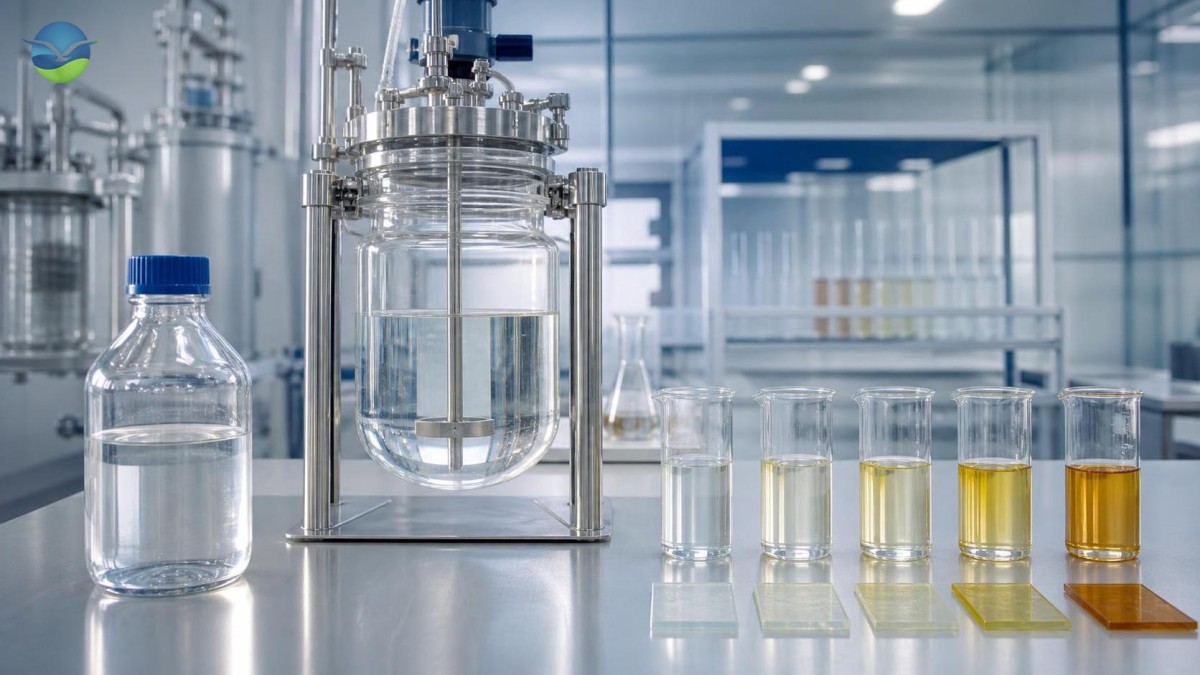
Resins intended for coatings, adhesives, or appearance-sensitive applications often reveal impurity problems through yellowing, haze, or reduced clarity. These issues are frustrating because they may not originate in the resin recipe itself, but in solvent or feedstock quality that looked acceptable at receiving stage.
Storage and shelf stability
Impurities may accelerate oxidation, generate odor, or increase the risk of gradual degradation under storage conditions. This matters not only to finished resin quality but also to warehouse safety and inventory planning.
Safety teams should care about purity too
For safety managers, cyclohexanone purity has implications beyond product quality. A less controlled impurity profile may affect volatility behavior, decomposition risk under certain conditions, worker exposure patterns, and compatibility with storage or transfer systems. While cyclohexanone already requires appropriate handling as a chemical material, uncertainty in composition increases the burden on hazard assessment.
This is why documentation matters. Reliable COAs, MSDSs, batch traceability, and clear communication between supplier and plant teams reduce the gap between what is purchased and what is actually used. In many factories, the real risk is not only a “bad batch,” but a poorly understood batch.
Some purchasing teams focus on price first and assume lab testing will catch the rest. In practice, that can create hidden costs: production interruptions, additional sampling, delayed release, or more conservative operating conditions. Safety and quality often meet at the same point—the need for predictable material behavior.
Common mistakes when evaluating cyclohexanone for resin applications
A frequent mistake is relying only on headline purity percentage. Another is testing the first shipment thoroughly, then relaxing incoming control after initial approval. Resin systems do not fail only because of dramatic contamination; they often drift because of subtle lot variation that escapes attention until multiple process deviations accumulate.
There is also a tendency to judge raw material suitability in isolation. Cyclohexanone may appear stable on its own, yet behave differently when paired with certain modifiers, pigments, curing agents, or anti-corrosion components. In mixed manufacturing environments, cross-material compatibility matters more than a single-spec benchmark.
This broader compatibility mindset applies across chemical sourcing categories. For example, even a material from a different application field—such as Vanillin Flavor Fragrance Raw Material—still reminds procurement and QC teams of a familiar principle: purity on paper must be matched with use-case-specific control, documentation, and batch consistency. The standard always has to fit the process, not the other way around.
What a stronger incoming quality approach looks like
For plants using cyclohexanone in downstream resin production, a more resilient control strategy usually includes three layers.
First, define the functional specification. Do not stop at generic purity. Identify which properties influence your resin most: moisture, color, acidity, residue, odor, or storage stability. Build the incoming standard around actual process sensitivity.
Second, verify with both documents and testing. COAs and MSDSs are essential, but they work best when supported by risk-based laboratory confirmation, especially for new suppliers or critical batches. The goal is not to test everything every time, but to test what can materially change resin behavior.
Third, connect raw material data to downstream outcomes. If batches with slightly higher moisture regularly correlate with viscosity adjustment or longer reaction time, that is valuable operational knowledge. Over time, this creates a practical specification rooted in plant performance rather than theory alone.
Why supply coordination matters as much as specification
For overseas buyers and technical teams, supplier structure can influence quality control almost as much as the material itself. When communication is slow, sample coordination is fragmented, or supporting documents arrive late, QC decisions become reactive. That increases both production risk and internal workload.
Qixiang Chemical addresses this through a dual-location model that separates customer-facing coordination from source manufacturing without disconnecting the two. Its foreign trade operations center in Wuxi, Jiangsu handles overseas communication, sample delivery, order follow-up, logistics coordination, documentation support, and after-sales response. For QC and safety personnel, that means questions about cyclohexanone specifications, qualification files, factory visibility, or shipment documents can be managed quickly through a dedicated team rather than routed through multiple layers.
Meanwhile, the production base in Shandong operates as the source manufacturing site, with self-managed processing, storage, and quality inspection capabilities. This arrangement is practical for buyers who need both responsiveness and manufacturing traceability: Wuxi supports efficient communication with global customers, while Shandong provides production control, scalable output, and shipment documentation such as COAs and MSDSs. In technical sourcing, that combination often reduces uncertainty more effectively than a low price alone.
Questions QC teams should ask before approving a supplier
- Is the cyclohexanone specification aligned with our actual resin process sensitivity?
- Can the supplier explain impurity control, not just main assay?
- Are COAs consistent across multiple lots, not only in one sample?
- Is supporting documentation available promptly for audit or internal review?
- Can sample coordination and technical communication happen without long delays?
- Does the supplier have a clear manufacturing and traceability structure?
These are not administrative questions. They directly affect how quickly a nonconformance can be investigated, how confidently a batch can be released, and how much exposure a plant carries when production schedules are tight.
Purity is really about predictability
In downstream resin production, the most valuable quality is often not the highest theoretical purity, but the most reliable and well-understood purity. Cyclohexanone that behaves consistently enables tighter process control, cleaner troubleshooting, and safer operating decisions. For quality and safety teams, that predictability reduces noise in the system. It makes root-cause analysis easier, protects product performance, and supports more stable manufacturing over time.
So when evaluating cyclohexanone, the key question is not simply whether a batch passes. It is whether the material can be trusted to support the same resin outcome, under the same process conditions, again and again. That is the point where purity stops being a number and becomes a true performance standard.
Please give us a message
Send Us Your Inquiry Today
Scalable production and one-stop R&D, manufacturing, sales & after-sales services.