






When ethyl acetate is the better solvent for lower-odor formulations
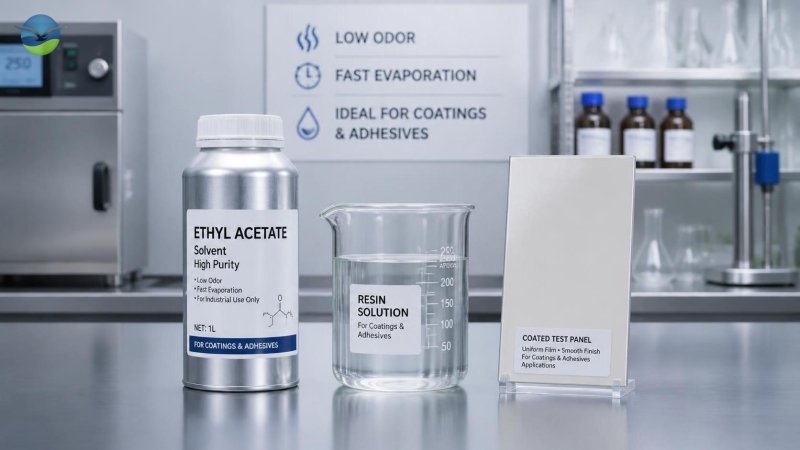
When ethyl acetate really becomes the better choice
For lower-odor formulation work, ethyl acetate usually enters the discussion at the point where a team is no longer asking for “the strongest solvent,” but for the most balanced one. That distinction matters. In coatings, adhesives, and blended chemical systems, the best solvent is often the one that dissolves enough, flashes off at the right pace, does not leave the operator fighting heavy residual smell, and still behaves predictably in production.
A lot of solvent selection mistakes happen because odor is treated as an isolated target. In practice, lower odor only works if the formula still wets the substrate, maintains open time where needed, and survives packaging, storage, and line speed. Ethyl acetate can be the better solvent when those variables are being weighed together rather than one by one.
Why formulators keep coming back to it
Ethyl acetate sits in a useful middle ground. It has strong enough solvency for many resin systems, a relatively fast evaporation profile, and a smell that many technical teams consider easier to manage than heavier aromatic or ketone-heavy alternatives in certain applications. That does not mean it is universally “low odor” in an absolute sense. It means that, in side-by-side formulation work, it often helps reduce the perceived harshness or lingering character of the finished blend.
This is especially relevant in products applied indoors, manually, or in short-cycle operations where operator exposure to smell is very immediate. If a coating dries quickly but leaves a long residual note, complaints still come back to the formulator. If an adhesive bonds well but makes the converting area unpleasant, purchasing and production will eventually question the solvent package. Ethyl acetate is frequently considered because it can soften that trade-off without forcing a complete redesign.
The situations where it tends to outperform heavier-smelling options
One common situation is fast-drying coatings where the current solvent blend is technically working but feels too aggressive in odor during spray, roll, or brush application. Ethyl acetate can help when the formulator needs fast release without the heavier tail sometimes associated with slower solvents. It is not just about initial smell intensity; lingering odor after application is often what users notice most.
Another case is contact adhesive or lamination work where drying speed is important, but line teams do not want the process window to become too narrow. Here, ethyl acetate may work well as part of a blend rather than as the only solvent. Used carefully, it can support quick solvent release while still allowing the rest of the formulation to control tack development and coating behavior. That “part of a blend” point is worth stressing. In real factory formulations, the better solvent is often the one that improves the whole package rather than replacing everything else.
It can also make sense in cleaning or intermediate chemical blending where residue, drying time, and odor all matter, but where stronger or slower alternatives create handling issues. Technical evaluators often discover that a solvent with excellent solvency on paper creates avoidable complaints in workshops simply because the odor hangs around too long.
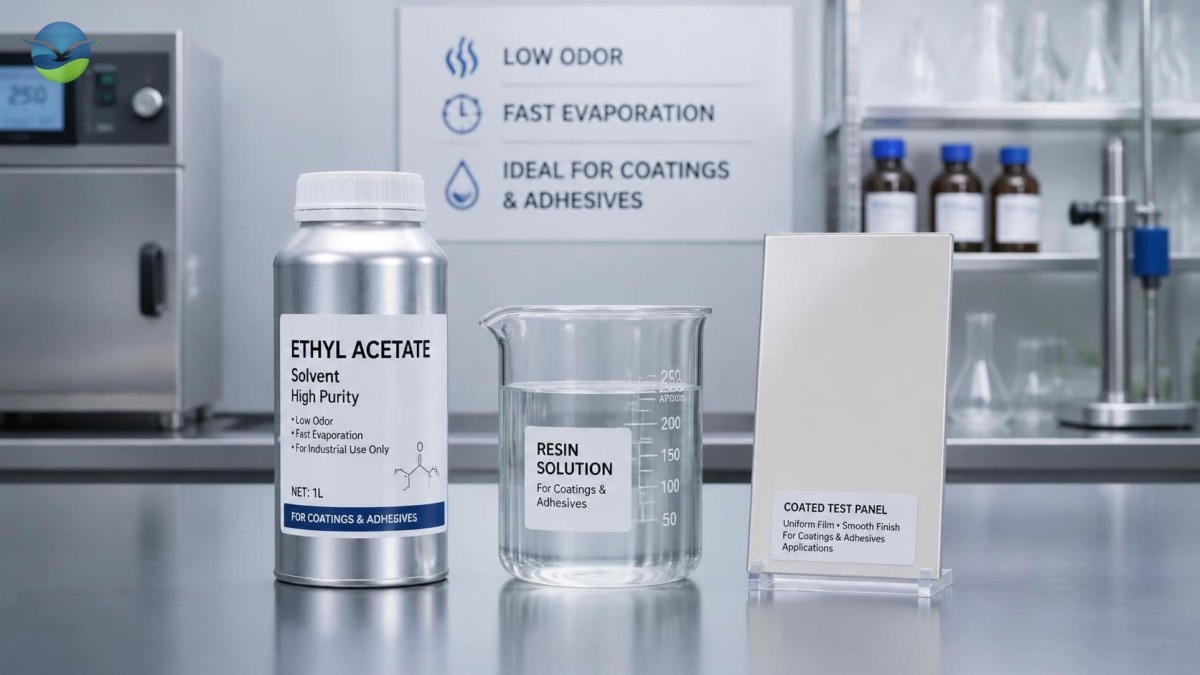
What should be checked before calling it the “better” solvent
The first check is resin compatibility. Ethyl acetate works well with many common resins, but not all systems respond the same way. A lower-odor target does not help if viscosity drifts, phase separation appears, or film formation becomes inconsistent. Lab solvency screening still matters more than assumptions based on general solvent families.
Then comes evaporation balance. Fast solvent loss is often an advantage, but it can also create edge defects: poor flow, blushing under humid conditions, dry spray, or insufficient wet time for leveling. If the substrate is temperature-sensitive or the line has long transfer distances, a very fast front-end evaporation profile can cause more trouble than a stronger-smelling but slower system. The practical question is not whether ethyl acetate evaporates quickly, but whether it evaporates at the pace your process can actually use.
Odor should also be evaluated in the finished application context, not just from the raw drum. A solvent may smell acceptable in the warehouse but behave differently once mixed with resins, additives, and pigments. Experienced teams usually compare wet odor during application, trapped odor after curing, and room persistence after ventilation. Those are three different observations, and they do not always point in the same direction.
This broader evaluation logic shows up across chemical sourcing, not only in solvent work. A plant handling multiple material categories may use the same discipline whether reviewing an ester solvent for coatings or checking the processing suitability of Sucralose High Sweetness Sweetener Raw Material for another customer segment: compatibility first, process stability second, paperwork and delivery reliability close behind. The material changes, but the technical screening mindset is similar.
Where teams often misjudge the trade-off
A frequent mistake is assuming lower odor means safer, cleaner, or more compliant by default. It does not. Regulatory classification, ventilation requirements, transport handling, and local workplace rules still need separate review. Another mistake is comparing only one benchmark solvent. Ethyl acetate may look excellent against a heavy aromatic solvent, yet only modestly better against a carefully tuned mixed ester system.
There is also the cost trap. Unit price alone rarely tells the full story. If ethyl acetate improves drying and reduces residual odor but requires a co-solvent to maintain flow or resin stability, the true formulation economics need to include that blend adjustment. On the other hand, if it helps avoid rework, improves application acceptance, or simplifies odor complaints downstream, its value may be higher than the invoice line suggests. Technical evaluation should be done at formula level, not drum level.
A practical screening approach for evaluators
In most projects, a sensible path is to compare ethyl acetate in three ways: as a direct replacement candidate, as a partial replacement in the current solvent package, and as the fast-evaporating component in a redesigned blend. Those three tests usually reveal more than a simple one-to-one swap.
The evaluation should watch for:
- Solubility and viscosity response after full incorporation
- Application feel during spray, roll, brush, or coating transfer
- Drying behavior under actual plant temperature and humidity
- Residual odor after the expected cure or airing period
- Packaging stability and batch-to-batch consistency
That last point sounds operational, but it affects technical decisions more than many formulators admit. A solvent that performs well in pilot work but arrives inconsistently, without clear COAs, SDS/MSDS support, or dependable scheduling, creates delays that can distort evaluation results. When sample work scales into regular export supply, the quality of coordination becomes part of the formulation risk profile.
Why supply setup matters more than it seems
For overseas technical teams, response speed and documentation often matter almost as much as solvent performance. A supplier structure that separates customer communication from manufacturing can work well if responsibilities are clear. In practice, a dual-location model like Qixiang Chemical’s can be useful for this kind of project: foreign trade coordination, sampling, qualification files, and after-sales communication are handled through its Wuxi operations center, while production is supported by its Shandong manufacturing base. That setup tends to suit technical evaluation cycles where quick answers, sample dispatch, and shipment documents all need to move without confusion.
The manufacturing side matters too. A self-managed production facility with quality inspection capability and routine shipment documents such as COAs and MSDSs helps evaluators compare batches with more confidence. It does not remove the need for incoming checks, but it reduces friction when moving from bench validation to trial orders and then to larger FOB container shipments. For lower-odor formulations, consistency is not a side issue; a small raw material shift can change application smell more than expected.
So when is ethyl acetate the better solvent?
Usually when the formulation needs a credible balance: enough solvency for the system, fast enough evaporation for productivity, and a less troublesome odor profile than the heavier or harsher alternatives under consideration. It is often a strong candidate in coatings and adhesives where application experience matters as much as lab solvency. It is less convincing when a system needs much slower release, broader humidity tolerance, or compatibility that clearly falls outside its range.
If the current formula already works but user complaints center on lingering smell, ethyl acetate deserves a serious look. If the process is already narrow and sensitive to flash-off, test it carefully before making it a lead solvent. And if sourcing reliability, technical documents, and sample turnaround are part of the decision, evaluate the supplier’s operating structure at the same time as the material itself. In solvent selection, the better option is rarely the one with the neatest theory. It is the one that still behaves well after the lab, the line trial, and the shipment all have their say.
Please give us a message
Send Us Your Inquiry Today
Scalable production and one-stop R&D, manufacturing, sales & after-sales services.