






Why Is Citric Acid Used as a Preservative in Beverages, Sauces, and Ready Meals?
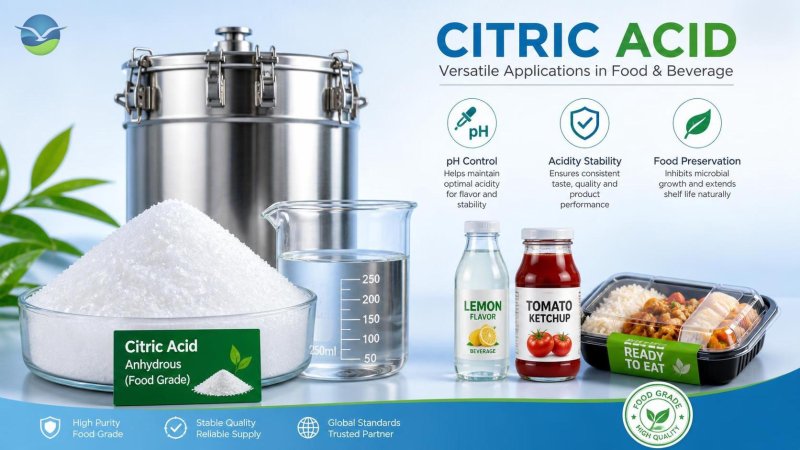
Citric acid is used as a preservative because it changes the product environment in a way that many spoilage organisms do not tolerate well. In beverages, sauces, and ready meals, the practical value of a citric acid preservative starts with pH control. When acidity is adjusted into a lower range, bacteria, yeasts, and molds generally face slower growth, while flavor, color, and texture can often remain more stable through filling, cooling, warehousing, and distribution. That makes citric acid one of the most workable acidulants when a formulation needs preservation support without introducing an unfamiliar processing route.
Its role is rarely isolated to a single function. In a fruit drink, it may sharpen taste while helping the preservative system perform as intended. In a tomato-based sauce, it may help maintain the expected acidity through thermal treatment and storage. In a chilled or shelf-stable ready meal, it can support flavor stability and reduce the chance that small formulation shifts push the final pH outside the desired process window. This combination of technical effect and formulation flexibility is why citric acid preservative systems appear so often in routine production.
Why pH control matters so much
Most preservation problems begin with conditions that allow microorganisms to recover after processing. Citric acid lowers pH by releasing hydrogen ions in the water phase of the product. Once the environment becomes more acidic, many spoilage microbes become less active, and some preservatives that may be used alongside it can become more effective. That matters in products where heat treatment is mild, where package opening and reclosing is expected, or where ingredients such as vegetable solids, starches, proteins, or seasonings can create small pH variations between batches.
For production teams, pH is not only a laboratory number. It affects fill behavior, flavor balance, heat resistance of some components, and the consistency of downstream quality results. A drink that tests correctly in the blending tank but drifts after dilution, deaeration, or flavor addition can create avoidable hold times. In sauces, the issue is often local non-uniformity: if acid is added too late or mixed poorly, the measured pH may look acceptable while denser portions remain less protected. Ready meals can be even more complicated because the sauce phase, protein phase, and vegetable phase do not always behave as one uniform system.
Performance in beverages
Beverages are one of the easiest places to see why citric acid remains common. It dissolves readily, contributes a clean sourness familiar in juices and soft drinks, and can be dosed with reasonable precision. In many liquid systems, the target is not simply “add acid until sour.” The actual task is to bring the product into a stable acidity range that fits flavor design, process conditions, and package shelf-life expectations. A citric acid preservative works well here because the acidification step can often be integrated directly into normal liquid blending.
There are also practical advantages during plant operation. Citric acid is available in forms that are easy to weigh, dissolve, and transfer. It does not usually require unusual feeding hardware, and it can be incorporated before final homogenization or filtration depending on the product design. If a beverage contains minerals, plant extracts, or unstable flavor compounds, bench work is still needed because acidification can change clarity, aroma release, and sediment behavior. The point is that citric acid provides a controllable starting tool, not that it removes the need for validation.
One common error in beverage work is assuming the same addition level will behave identically across all water sources and syrup bases. Buffering from salts, fruit solids, and added nutrients can shift the acid requirement. Another frequent issue appears when pH is measured too early, before the batch is fully equilibrated. A short delay after mixing can produce a more reliable reading than an immediate sample.
Why sauces respond differently
Sauces usually contain suspended solids, oils, starches, sugars, spices, or tomato derivatives, so citric acid behaves in a more complex matrix than it does in clear beverages. Even so, the reason for using it is similar: lower pH generally reduces microbial risk and helps maintain sensory consistency. In tomato sauces, chili sauces, dressings, and dipping sauces, acidity also influences perceived brightness and can offset sweetness or fat.
The processing sequence matters. Adding citric acid before full hydration of gums or starches may shift viscosity development. Adding it too late can leave insufficient time for uniform distribution, particularly in high-viscosity kettles with limited shear. In emulsified sauces, the acid may also affect emulsion stability depending on the protein system and emulsifier package. For that reason, citric acid is often evaluated together with the complete thermal profile, hold time, and filling temperature rather than as a stand-alone preservative decision.
Another operational issue is false confidence from a single top-layer sample. Thick sauces can show pH gradients if mixing is incomplete. A better approach is to sample from more than one point after recirculation or final agitation. When reformulating with spice extracts, vegetable concentrates, or starch changes, the old acid dosing rule may no longer hold.
Ready meals bring matrix complications
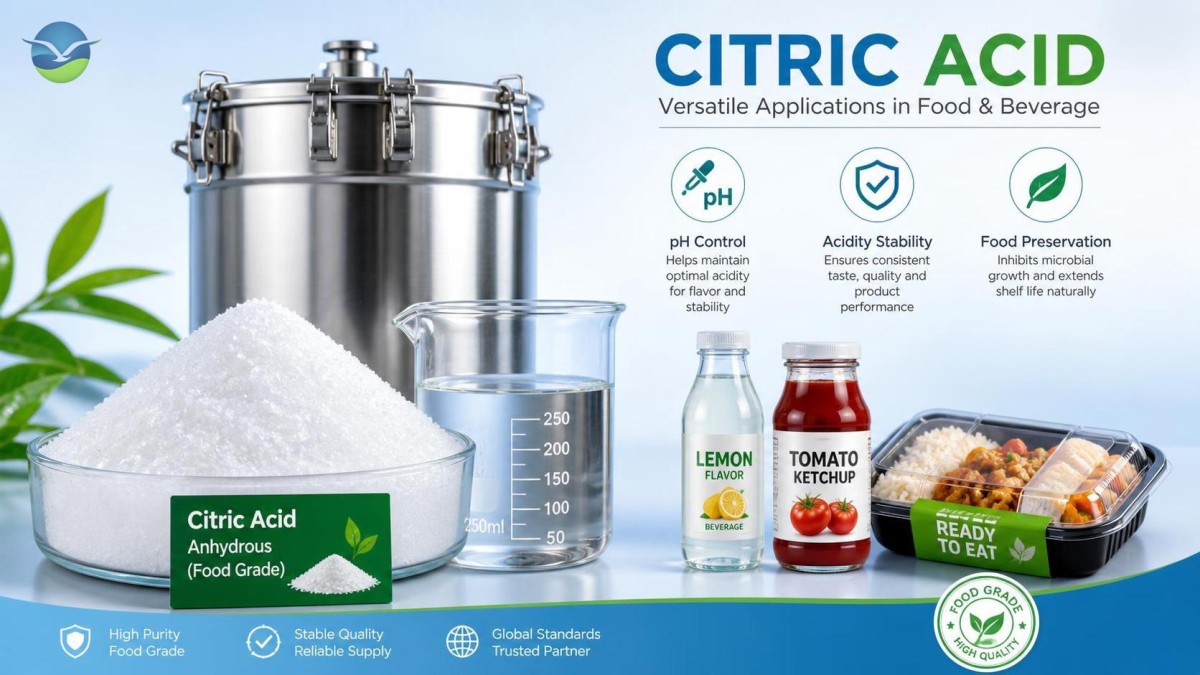
Ready meals add a different layer of difficulty because preservation is tied to multiple components in one package. A rice dish with sauce, vegetables, and protein may not have a uniform acidity profile. Citric acid can help preserve the sauce portion effectively, yet the full product still has to be assessed according to how moisture migrates, how phases interact during reheating, and whether the acid causes unwanted softening or flavor imbalance over time.
In these products, citric acid is often chosen because it can be fitted into a broader hurdle approach: pH reduction, thermal processing, salt or sugar contribution, chilled-chain control where relevant, and barrier packaging. The acid itself is useful, but the total preservation logic matters more than the ingredient name on its own. A ready meal that contains dairy elements, starch-thickened sauces, or delicate vegetable textures may need only moderate acidification, since pushing acidity too far can damage the eating quality before it delivers any practical benefit.
Stability beyond microbial control
Citric acid is also valued because it can help preserve product quality in ways that are not limited to microbial inhibition. It can bind certain metal ions, which may reduce catalytic reactions that contribute to oxidation, discoloration, or flavor deterioration in some formulations. This is especially relevant in products containing fruit components, oils, seasonings, or trace metal exposure from ingredients and equipment surfaces. A citric acid preservative may therefore support both shelf-life protection and flavor retention when the product is susceptible to oxidative change.
That said, this benefit depends on the full formula. Acidification can intensify certain flavor notes, expose bitterness in botanical systems, or alter protein behavior. In some recipes, switching from one acidulant to another changes the sensory profile more than expected even when the final pH is similar. Measuring pH alone does not fully predict the result; titratable acidity, buffering, and ingredient interactions also matter.
Handling and process details that often decide the outcome
Operationally, citric acid is straightforward, but the details still matter. Dry citric acid should be protected from moisture pickup before use, since caking can complicate accurate dosing. If it is prepared as a solution, concentration control matters because dilution errors can pass unnoticed until the final pH test. In batch production, acid addition usually benefits from staged incorporation rather than a single dump, especially in larger vessels where local low-pH zones can affect gums, proteins, or starch systems before the material is evenly dispersed.
Transport and storage conditions can matter indirectly as well. The ingredient itself is generally stable when properly stored, but formulation plants sometimes overlook how packaging exposure, warehouse temperature swings, or long pre-mix hold times influence the preserved product after acidification. A sauce adjusted correctly in the kettle may still drift in texture after extended hot holding. A beverage may remain microbiologically controlled yet lose its intended flavor balance after repeated temperature cycling. Preservative success is therefore linked to process discipline as much as to the raw material.
In broader chemical production environments, this kind of discipline is familiar. Raw material quality, dispersibility, dosing sequence, and compatibility checks affect outcomes across many formulations, whether the product is a food acidulant system or an unrelated industrial material such as Rutile Titanium Dioxide White Pigment Raw Material, where dispersion behavior and process order also influence final performance. The sectors differ, but the lesson is similar: material function depends heavily on application conditions.
Common misjudgments
- Assuming lower pH always means better preservation. Excess acid can damage flavor and texture while giving little extra practical value once the target process range is already achieved.
- Using a historical dosage without rechecking after formula changes. Fruit concentrates, salts, starches, proteins, and spice systems can all change buffering behavior.
- Relying on one end-of-line pH reading. Tank uniformity, equilibrium time, and sampling point can alter the number enough to mislead production decisions.
- Treating citric acid as a full preservation program by itself. In many ready meals and sauces, packaging, heat treatment, hygiene control, and storage conditions still define the actual shelf-life outcome.
Selection and release considerations
When choosing citric acid for regular production, the practical questions are usually simple: form, solubility behavior, consistency, documentation, and whether the material integrates smoothly with the plant’s batching and quality release process. For liquid applications, operators often prefer a predictable dissolution profile that avoids undissolved residues and shortens mixing time. For thicker products, the issue may be whether the acid can be incorporated without creating local over-acidification or disturbing the texture system.
Release risk tends to appear at the interface between formulation and execution. A formula may be correct on paper, but if acid is charged in the wrong sequence, if the batch is sampled too early, or if a hold tank is not mixed adequately before filling, the final product can fall outside the intended preservation range. This is why citric acid remains popular: it is effective, familiar, and adaptable, but it still rewards careful process control.
That is the main reason citric acid preservative systems continue to dominate beverages, sauces, and ready meals. They offer a workable way to manage acidity, support microbial control, and maintain flavor stability without forcing a complicated manufacturing change, provided the product matrix and process conditions are treated as part of the preservative decision rather than as an afterthought.
Please give us a message
Send Us Your Inquiry Today
Scalable production and one-stop R&D, manufacturing, sales & after-sales services.