






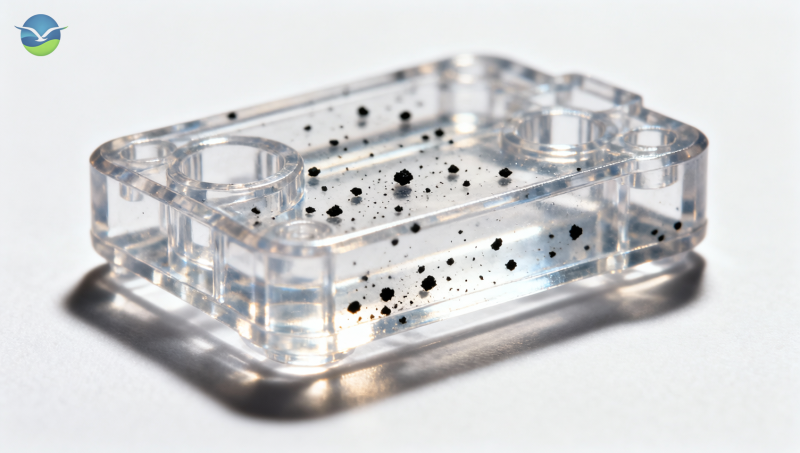
Black specks in parts molded from polycarbonate resin pellets usually indicate contamination or degraded polymer. Their appearance alone cannot establish whether the resin or equipment caused them.
The fastest investigation separates three possible sources: incoming material, handling equipment, and the molding system. Preserve samples before cleaning or adjusting settings so evidence remains available.
For operators, the priority is identifying when specks appear, where they occur, and which controlled change removes them. That approach reduces unnecessary purging and repeated downtime.
This guide follows a practical sequence covering retained pellets, conveying lines, dryer cleanliness, barrel residence time, screw deposits, and hot-runner contamination, with checkpoints for supplier discussions.
What does the black-speck pattern tell you first?
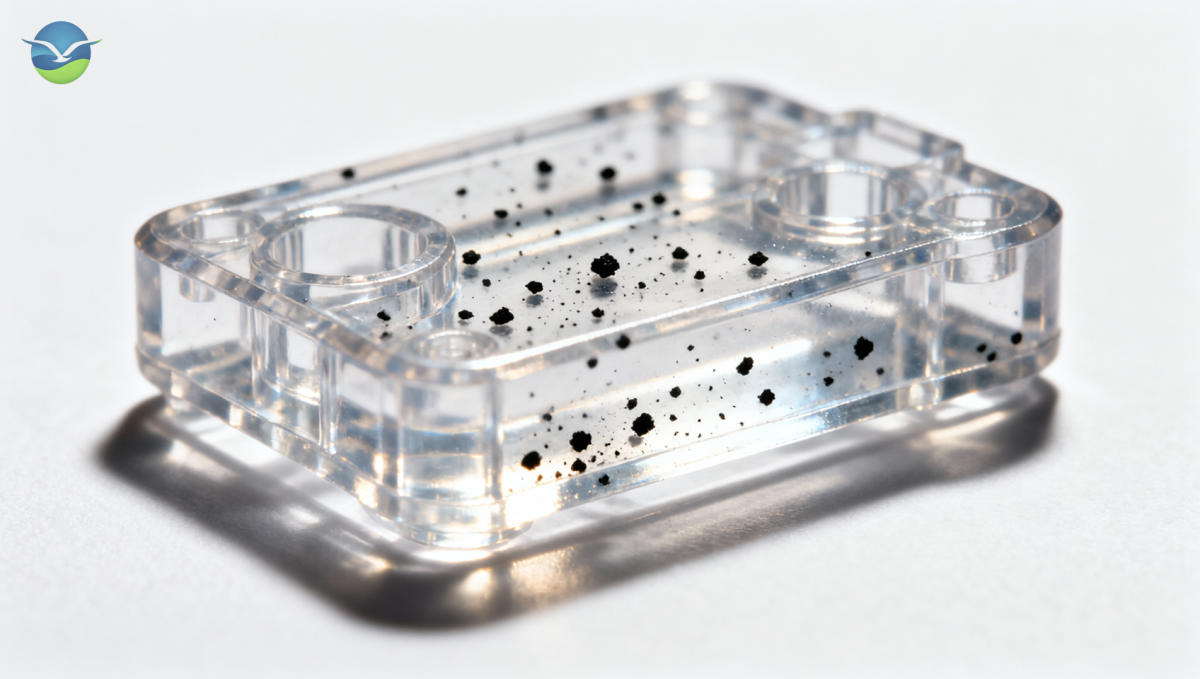
Before changing conditions, inspect consecutive molded parts under consistent lighting. Record the cavity, speck position, approximate size, frequency, and whether marks appear embedded or on the surface.
Use magnification where available. A dark inclusion, a surface smear, and a burn mark can look similar initially but require different investigations and corrective actions.
The patterns below guide your next check. Treat them as clues rather than proof, because contamination can travel through the melt and appear away from its source.
If a mark wipes off an unhandled part, investigate mold surfaces, handling, and downstream contact points. Embedded particles require closer examination of material and melt pathways.
Quarantine affected production according to site procedures and customer requirements. Keep suspect parts traceable to production time, material lot, machine, and cavity throughout the investigation.
Are the specks already present in the incoming pellets?
Start with retained material from the suspect lot and, where practical, an unopened bag. Compare these with samples collected at the hopper and dryer outlet.
Spread pellets in a thin layer on a clean, contrasting tray. Inspect multiple representative portions because occasional contamination can escape a quick check of one handful.
Separate visibly discolored pellets, loose dark particles, fines, and foreign fragments. Photograph them with a scale, and record the sample location and collection time.
A clean visual inspection does not clear the resin completely. Small inclusions may remain hidden inside pellets, and some contamination becomes visible only after melting.
Likewise, finding one dirty hopper sample does not prove the delivered lot was contaminated. Compare upstream samples before assigning responsibility or mixing additional material into production.
Where resources permit, laboratory microscopy and suitable identification methods can help distinguish degraded polymer, foreign resin, mineral particles, and metal. Appearance alone rarely identifies composition reliably.
Retain both suspect and apparently clean samples in labeled, sealed containers. Avoid collecting them with dirty scoops or reused bags that could introduce misleading evidence.
Check the dryer and conveying route before changing molding settings
Trace the complete route from bag opening to feed throat. Include loading wands, transfer hoses, receivers, filters, storage bins, magnets, and any shared conveying connections.
Inspect accessible surfaces for dust, old color, damaged seals, hose wear, and material trapped around joints. Follow site isolation procedures before opening equipment or removing components.
Check dryer hoppers for residue from previous production and accumulated material around screens or outlets. Verify that cleaning reaches hidden ledges, not just visible walls.
For polycarbonate resin pellets, confirm drying temperature, time, airflow, and dew point against the specific grade supplier’s instructions. Verify actual conditions rather than relying only on setpoints.
Moisture in polycarbonate more commonly causes splay and hydrolytic degradation than discrete black particles. Correct drying problems, but continue investigating particulate sources when embedded specks remain.
Review how regrind enters the system. Grinders, collection bins, and manual blending can introduce dust, foreign materials, or repeatedly processed resin with a different thermal history.
If the approved process permits, compare a controlled run using verified virgin material with the normal blend. Keep other conditions stable and document the transition.
Is the barrel overheating material or holding it too long?
Review actual barrel and nozzle temperatures, alarm history, and thermocouple behavior. A normal displayed value may not reveal a local heater-control problem or excessive shear heating.
Check measured melt temperature using the site’s approved method and suitable equipment. Compare the result with grade guidance while accounting for measurement limitations and operator safety.
Consider residence time alongside temperature. Small shots in a large barrel, slow cycles, interruptions, and extended standby periods can expose polycarbonate to prolonged thermal stress.
Estimate residence time from available barrel inventory, throughput, and machine guidance. Treat that estimate as a screening tool because actual flow includes mixing and stagnant regions.
Compare defect frequency before and after pauses. A recurring burst of black specks after restart suggests retained material or deposits, although it does not locate them conclusively.
Inspect the process history for unnecessary screw speed or back pressure. Excessive shear can increase melt temperature, but adjustments must preserve adequate melting and mixing.
Change one relevant variable at a time within the validated processing window. Record the change, stabilization period, and defect count so the outcome remains interpretable.
If cleaning becomes necessary, use a purging method compatible with polycarbonate, machine construction, and operating temperature. Follow resin, purge-material, and equipment instructions rather than improvising combinations.
When should you suspect the screw, nozzle, or hot runner?
Persistent specks after verified material handling and controlled process checks justify examining the melt path. Deposits can collect behind worn components, around restrictions, or in stagnant pockets.
The screw tip, check ring, nozzle, and interfaces deserve attention when contamination repeatedly returns after temporary improvement. Mechanical inspection should follow approved shutdown and maintenance procedures.
Review maintenance records for wear, leakage, damaged surfaces, or recent component replacement. These details help maintenance staff choose inspection points instead of repeatedly cleaning without diagnosis.
In hot-runner molds, compare cavities and temperature zones. A defect concentrated in one cavity can help narrow attention to its drop, gate, or local flow path.
Check actual zone behavior, heater faults, thermocouple connections, and leakage history. Correct temperature readings alone do not exclude deposits in poorly swept areas of the manifold.
Where approved tooling allows, a comparison using an alternative verified mold or melt route can help isolate the source. Document differences that could affect interpretation.
Ask maintenance to photograph deposits and record their exact locations. Repeated accumulation at the same interface may indicate a geometry, sealing, or wear problem requiring repair.
Could a previous resin or shared accessory be responsible?
Review the previous production order, including resin family, color concentrates, additives, and purge materials. Residual material can remain in loaders and accessories after the barrel appears clean.
Shared scoops, open bags, temporary containers, and incorrectly connected conveying lines create avoidable mixing risks. Clear labels and dedicated accessories make changeovers easier to verify.
Plants also processing PP Polypropylene Polyolefin Plastic Raw Material should segregate its storage and transfer equipment from polycarbonate streams, especially where loaders, grinders, or manual tools are shared.
This polypropylene material is offered in injection molding and extrusion grades for applications including containers and automotive components. It requires separate material identification and processing instructions.
Polypropylene contamination does not automatically explain every black speck. Depending on processing history, foreign resin may instead produce streaks, inclusions, or other appearance and performance defects.
After correcting a suspected mix-up, verify the entire material route before restarting. Cleaning only the machine leaves upstream contamination available to enter the next production run.
Run a controlled comparison and document what actually changed
Choose the comparison that best separates the remaining possibilities. A known-good lot on the same prepared machine tests a different question from changing machines and lots together.
Before comparing results, allow sufficient material turnover and process stabilization. Residual pellets and melt can otherwise blur the boundary between the original and replacement material.
Use a consistent inspection method and sample quantity for each trial. Report affected parts per inspected quantity, with cavity details where relevant, rather than saying “looks better.”
Record cycle time, temperatures, shot size, screw recovery conditions, drying history, regrind percentage, and interruptions. These variables help explain why apparently similar trials produce different outcomes.
A suspect lot producing defects across independently verified systems strengthens a material-related hypothesis. It still requires checking shared handling, preparation practices, and comparable processing conditions.
If several lots develop specks only on one machine, focus investigation there. Avoid declaring success after a few clean shots when previous defects were intermittent.
Set the verification period using the observed recurrence pattern and applicable quality requirements. Include relevant restarts or normal operating conditions before releasing the process as stable.
What should operators send to the resin supplier?
Provide the resin grade, lot number, bag identification, delivery details, and defect timeline. Include photographs of embedded specks, affected parts, and any unusual pellet findings.
Add retained samples from unopened packaging and the machine feed, clearly identifying each source. Provide processing records and controlled-trial results so technical staff can assess competing explanations.
Ask the supplier to review relevant production and quality records and advise on sample analysis. A certificate of analysis alone cannot resolve every intermittent contamination complaint.
For inquiries involving Qixiang Chemical, its Wuxi foreign trade team handles overseas communication, sample coordination, and after-sales documentation, while its production base is located in Shandong.
Request the applicable product documentation and confirm grade-specific technical support before planning trials. State-owned enterprise background or general manufacturing capacity cannot establish the cause of a defect.
Use the evidence to choose the next corrective action
Black specks in parts molded from polycarbonate resin pellets are best resolved by tracing evidence through incoming material, handling, and the melt path in sequence.
Preserve samples, map defect patterns, verify drying and thermal history, then test the strongest remaining explanation. Each controlled comparison should narrow where contamination enters or develops.
Close the investigation only after corrective action prevents recurrence under relevant production conditions. Keep the findings in changeover, cleaning, and maintenance records so operators can act faster next time.