






News Center
Is glycerin 99 suitable for a high-purity formulation?
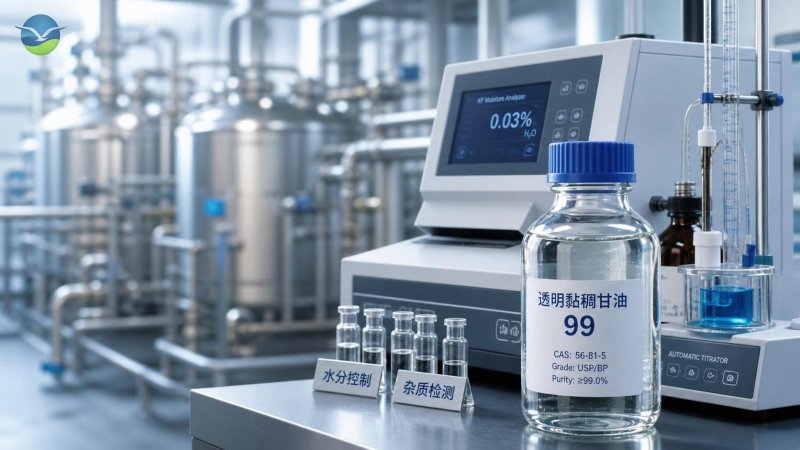
Determining whether glycerin 99 meets the needs of a high-purity formulation requires more than reviewing its nominal assay. Water content, impurity profile, batch consistency, traceability, and supporting quality documents can all influence final-product performance. For demanding chemical formulations, the relevant question is not whether a material is “99% glycerin” in isolation, but whether its complete and controlled specification fits the formulation’s functional, safety, regulatory, and process requirements.
Glycerin—also called glycerol—is widely used as a humectant, solvent, viscosity modifier, plasticizer, carrier, and processing aid. Its broad usefulness can create a qualification problem: grades that appear similar on a quotation sheet may behave very differently in a moisture-sensitive polymer blend, a low-odor personal-care product, an analytical reagent system, or a regulated pharmaceutical preparation. A 99% assay is often suitable for routine industrial use, but it is not itself evidence of high-purity suitability.
“99%” is an assay result, not a complete purity standard
The designation glycerin 99 commonly means that glycerol accounts for at least 99% of the material by mass. The remaining fraction may appear small, but in a high-purity formulation it can be decisive. That balance may consist mainly of water, yet it can also include residual salts, organic matter, color-forming compounds, aldehydes, fatty-acid-related residues, methanol, diethylene glycol, ethylene glycol, trace metals, or process-specific contaminants.
Two drums can both meet a 99.0% glycerol assay while having materially different suitability. One could be a well-refined, odor-controlled glycerol with tight moisture and impurity limits. Another may meet the same headline assay while having higher color, greater conductivity, more variable odor, or insufficient contaminant testing for the intended application. This is why “99%” should be treated as an entry point for assessment rather than a final grade designation.
The first qualification step is to define what “high purity” means in the actual formulation. In some industrial applications, a glycerol content above 99% with controlled water is fully adequate. In others, the specification must include pharmacopeial conformance, food-grade compliance, low UV absorbance, low residue on ignition, trace-metal limits, or validated testing for specific toxicologically relevant contaminants.
Start with the formulation’s failure modes
High-purity selection is most reliable when based on what can go wrong in the finished product. A generic request for “high-quality glycerin” usually leads to an incomplete supplier comparison. A more useful approach is to identify the formulation attributes most vulnerable to raw-material variation.
- Moisture-sensitive systems: Water contained in glycerin can change reaction stoichiometry, promote hydrolysis, reduce curing efficiency, alter drying time, or shift final viscosity. This is relevant in moisture-curing chemistries, certain esterification processes, reactive coatings, and some adhesive systems.
- Color-critical products: Glycerin with excessive color or a tendency to yellow on storage may be unsuitable for clear gels, transparent liquids, white formulations, and light-colored coatings.
- Odor-sensitive formulations: Trace organics may be detectable even where the chemical assay is acceptable. Fragrance-free products, oral applications, vapor-exposed systems, and enclosed consumer products generally require more stringent organoleptic control.
- Electrically sensitive or low-conductivity applications: Ionic residues and salts can affect conductivity, corrosion behavior, electrochemical stability, or compatibility with electronic materials.
- Regulated applications: For pharmaceutical, food, feed, cosmetic, and some medical or personal-care uses, the required grade is governed by the applicable legal framework and customer specification, not by glycerol assay alone.
- Long shelf-life products: The raw material’s acidity, peroxide-related behavior, aldehyde content, microbial condition where relevant, and stability under storage may affect appearance and performance over time.
In practice, the more sensitive the end product is to water, odor, trace contaminants, or regulatory scrutiny, the less useful a generic 99% description becomes.
Water is often the first issue—but not the only one
Because glycerin is strongly hygroscopic, moisture control deserves close attention. A specification showing 99.0% minimum glycerol theoretically permits up to 1.0% non-glycerol content, and water commonly represents most of that fraction. For many blending operations, this is manageable. For tightly balanced systems, it may not be.
The technical team should determine whether glycerin water content is being controlled by a direct method such as Karl Fischer titration or inferred from assay calculations. Direct water measurement provides a more meaningful control point, particularly where the formulation has strict water limits. It is also important to clarify whether the supplier’s assay is reported “as received,” whether density is used in release testing, and whether the certificate of analysis reflects the actual shipped lot.
Water also affects handling. Glycerin viscosity varies substantially with temperature and concentration. A small moisture difference may reduce viscosity enough to affect pumping, flow-meter calibration, blend timing, and gravimetric dosing. Conversely, a high-viscosity lot at lower ambient temperature may be misread as a quality issue when the real cause is temperature control. Incoming inspection should therefore record sample temperature and use a defined conditioning procedure before viscosity or density comparisons are made.
The impurity profile determines whether the material is genuinely fit for purpose
For high-purity use, a certificate listing only appearance, assay, density, and water is rarely enough. The necessary test package should be proportionate to risk, but it should identify contaminants that are technically or toxicologically meaningful for the intended end use.
Common specification items may include color, odor, acidity or alkalinity, ash or residue on ignition, specific gravity, refractive index, chlorides, sulfates, heavy metals, and reducing substances. More sensitive applications may call for gas chromatography, ion chromatography, ICP-based elemental analysis, or dedicated methods for volatile and semi-volatile impurities.
Particular attention is warranted for ethylene glycol and diethylene glycol. These are not routine formulation impurities that can simply be accepted under a broad “other organics” category; they are safety-critical contaminants in relevant regulated supply chains. Where the intended use warrants it, the supplier should provide a method-specific result, the reporting limit, and a clear statement of conformance to the buyer’s specification. A generic declaration is weaker than batch-level analytical evidence.
The production route matters because it influences what impurities are plausible. Glycerin may originate from oleochemical processing, biodiesel-associated streams, synthetic routes, or refined recovered materials. None of these routes should be automatically accepted or rejected solely by origin. The critical issue is whether the refining process, segregation measures, validation, and release testing control the impurity risks associated with that route. Technical qualification should ask for origin and process information sufficient to assess risk without relying on marketing labels such as “natural,” “vegetable,” or “refined.”
Grade names should be verified against documented standards
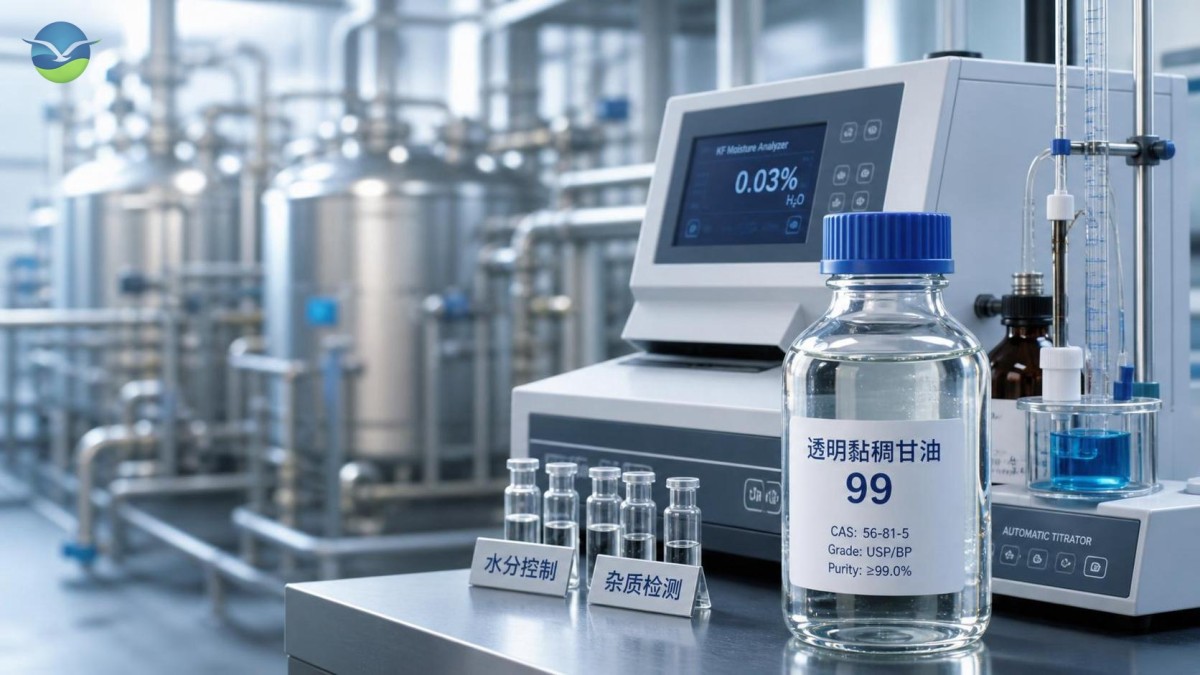
Terms such as technical grade, industrial grade, food grade, cosmetic grade, USP, EP, BP, and pharmacopeial grade are not interchangeable. “Food grade” may indicate compliance with a particular food-contact or food-additive framework, but it does not automatically establish suitability for pharmaceutical use. Similarly, “USP grade” should mean conformity to the current applicable monograph and associated requirements, not merely that the product is commonly sold into pharmaceutical markets.
When a formulation is regulated, the procurement specification should identify the exact standard or internal requirement being applied. It should also state whether a certificate of analysis, certificate of origin, allergen statement, GMO statement, residual-solvent declaration, animal-origin statement, or other supporting documentation is required. The relevance of these documents depends on the market and use case; requesting every available declaration can create paperwork without reducing actual risk.
For non-regulated industrial formulations, a technical grade can be entirely appropriate. For example, glycerin may function as a processing aid or plasticizing component in certain polymer compounds where color, water, and ash are controlled to internally agreed limits. In PVC-related applications, the choice of additive package should be evaluated as a system: glycerin quality, stabilizer chemistry, filler moisture, processing temperature, and migration requirements may all interact. The base resin itself—such as PVC Resin Polyvinyl Chloride Raw Material—has different quality indicators from glycerin, so suppliers should not use a general “chemical grade” claim to imply equivalent suitability across all ingredients.
Compatibility testing should reproduce the real process
Documentation narrows risk; it does not replace formulation testing. A laboratory compatibility study should use production-representative raw material, expected dosage, realistic mixing energy, and intended storage conditions. Testing only a freshly prepared beaker sample can miss effects that emerge after heat exposure, freeze-thaw cycles, accelerated aging, or contact with packaging materials.
For liquid formulations, useful checks may include clarity, color drift, odor development, viscosity, pH where applicable, density, phase stability, and assay of critical actives after aging. For polymer or coating systems, relevant observations may include mixing behavior, cure profile, tensile properties, tack, haze, surface defects, migration, and thermal discoloration. In reactive formulations, water contribution from glycerin should be included in the mass balance rather than treated as an incidental variable.
Compatibility with packaging is also frequently overlooked. Glycerin is stable under ordinary conditions, but its hygroscopic nature and solvent properties can affect closures, liners, labels, and certain packaging polymers. Bulk storage systems should be assessed for material compatibility, cleanliness, venting, moisture ingress, and the practicality of removing viscous residues from transfer lines.
Batch consistency is a qualification requirement, not a supplier promise
A compliant first sample is not sufficient evidence for a high-purity formulation. Variation between batches is often the point at which a seemingly acceptable glycerin source fails. Qualification should therefore examine at least several representative lots where feasible, preferably including material produced on different dates or from different production campaigns.
Rather than comparing every test result only with a pass/fail limit, calculate the expected operating range for critical attributes. If water, color, conductivity, or odor sits near the formulation’s tolerance boundary, the material may be technically compliant but operationally fragile. A supplier with a narrower normal variation can be a better choice than one offering a lower nominal price and a broad allowable range.
Lot traceability should extend from finished material to source feedstock, process batch, packaging date, and release testing. For high-consequence applications, change notification procedures matter as much as the initial specification. The buyer should know whether changes in feedstock source, purification equipment, test method, production site, packaging, or subcontracted logistics trigger notification and requalification.
Read the COA as a control document, not a sales attachment
A useful certificate of analysis identifies the lot number, manufacturing or packaging date, test methods or method references, specification limits, actual results, and release status. Results reported only as “conforms” can be acceptable for noncritical parameters, but numerical data are more valuable for trending critical properties. The document should clearly correspond to the delivered material and be issued under the supplier’s quality system.
Questions worth raising during supplier assessment include:
- Which tests are performed on every batch, and which are periodic or qualification-only tests?
- Are analytical methods validated, verified, or based on recognized compendial procedures?
- What are the method detection or quantitation limits for critical contaminants?
- How are out-of-specification results investigated and communicated?
- Can retained samples be made available if a downstream issue is identified?
- Is the supplied sample taken from routine production or prepared specifically for evaluation?
These questions are particularly important in cross-border transactions, where the commercial invoice, shipping documents, COA, safety data sheet, and container labels should all support consistent product identification. The safety data sheet is essential for transport and workplace handling, but it should not be mistaken for a full quality specification.
Storage and handling can erase the advantage of a better grade
Even high-quality glycerin can absorb moisture after delivery. Containers should remain tightly closed, and transfer systems should be designed to limit repeated exposure to humid air. Storage temperature should be controlled within the supplier’s recommended range to maintain pumpability and prevent avoidable variability in blending. If the material is transferred to internal vessels, cleaning validation and line-dedication practices should reflect the sensitivity of the formulation.
Sampling is another common weak point. Glycerin’s viscosity makes poorly mixed bulk tanks and contaminated sampling tools a real concern. A receiving sample should be representative of the container or tank, collected using clean equipment, labeled immediately, and retained under conditions that prevent moisture pickup. Comparing an uncontrolled open-bench sample with the supplier’s sealed retain can otherwise create misleading discrepancy investigations.
When glycerin 99 is sufficient—and when it is not
Glycerin 99 can be suitable for a high-purity formulation when the supplier demonstrates that the grade has controlled water content, a defined impurity profile, stable lot-to-lot performance, appropriate traceability, and documentation aligned with the intended market. It may be fully acceptable for many industrial, polymer-processing, coating, and formulated chemical uses after compatibility testing confirms there is no adverse effect.
It is not sufficient when “99%” is the only available quality claim, when critical impurities are not tested at meaningful detection limits, when the material’s origin and change-control process are unclear, or when the intended application requires a recognized regulated grade that has not been documented. In those cases, specifying a tighter assay alone may not solve the problem. The better solution is to build a fit-for-purpose specification around the actual failure modes of the formulation.
The practical decision is therefore not “Is 99% pure enough?” It is “Can this particular glycerin grade, from this controlled supply chain, repeatedly meet the formulation’s critical limits?” That distinction prevents a nominal assay from becoming an expensive qualification shortcut.
Please give us a message
Send Us Your Inquiry Today
Scalable production and one-stop R&D, manufacturing, sales & after-sales services.