






Industrial Chemical Manufacturer for Southeast Asia: What Buyers Expect in 2026
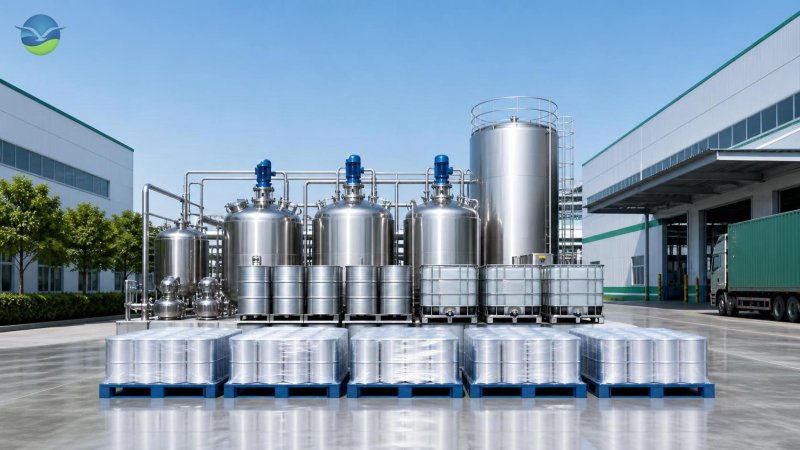
As an industrial chemical manufacturer for Southeast Asia, buyers in 2026 expect more than competitive pricing—they need stable supply, fast communication, compliant documentation, and scalable production. For distributors, agents, and wholesalers, choosing a partner with integrated manufacturing in Shandong and responsive foreign trade support in Wuxi can reduce sourcing risks, improve delivery confidence, and support long-term market expansion.
That shift matters because Southeast Asia is no longer treated as a secondary export destination. For many chemical suppliers, it has become one of the few regions where industrial growth, food processing expansion, packaging demand, construction activity, and manufacturing relocation are all happening at the same time. For channel players, this creates opportunity, but it also raises the standard for supplier selection. A low-price quote is easier to find than a supplier that can keep shipments stable through documentation changes, freight delays, formulation consistency issues, and customer audits.
By 2026, the question for distributors will not simply be which exporter offers the cheapest drum, bag, or container. The real question will be which industrial chemical manufacturer for Southeast Asia can support local market credibility while reducing operational friction across multiple orders and multiple end-use segments.
What is changing in Southeast Asia’s chemical buying behavior
Across Indonesia, Vietnam, Thailand, Malaysia, and the Philippines, chemical demand is becoming more fragmented. Growth is not coming from one single mega-sector. It is spread across food ingredients, coatings, water treatment, plastics modification, adhesives, industrial processing, and specialty applications. That changes how buyers evaluate suppliers.
In the past, many importers could tolerate slower documentation, looser technical communication, or limited after-sales support if pricing was attractive enough. That tolerance is shrinking. Local customers are asking distributors more technical questions, regulators are paying closer attention to labeling and documentation, and competition among importers is tighter than before. When a distributor loses time resolving a missing COA, a mismatch in packaging specs, or unclear HS-related paperwork, the cost is not only administrative. It can affect customer retention.
There are several reasons this is happening:
- Regional manufacturing is moving up from simple processing to higher-value products, which increases sensitivity to quality consistency.
- Food, coatings, and consumer-related sectors are under greater scrutiny for safety and traceability.
- Inventory strategies are changing. Many buyers still want to avoid overstocking, but they also no longer trust ultra-lean inventory when freight uncertainty remains possible.
- End users increasingly expect faster response times from local distributors, which means distributors need upstream suppliers that communicate clearly and quickly.
For exporters, this means the commercial side and the factory side can no longer operate as separate worlds. Buyers expect one coordinated system.
Why 2026 will reward reliable coordination more than aggressive quotations
Distributors and agents often work on narrow margins, but their biggest risk usually does not come from headline price differences. It comes from supply interruptions, customer complaints, specification drift, and avoidable delays. A supplier that saves 2% on paper but causes shipment instability can become the more expensive option within one or two quarters.
That is why buyers in Southeast Asia increasingly look for four capabilities together:
- Production control: not just access to product, but ownership or real control over manufacturing schedules and quality processes.
- Trade execution: accurate export documentation, sample management, order tracking, and response speed.
- Scalability: the ability to move from trial orders to repeat container volumes without changing product behavior.
- Issue resolution: a practical mechanism for handling complaints, retests, packaging adjustments, or replacement discussions.
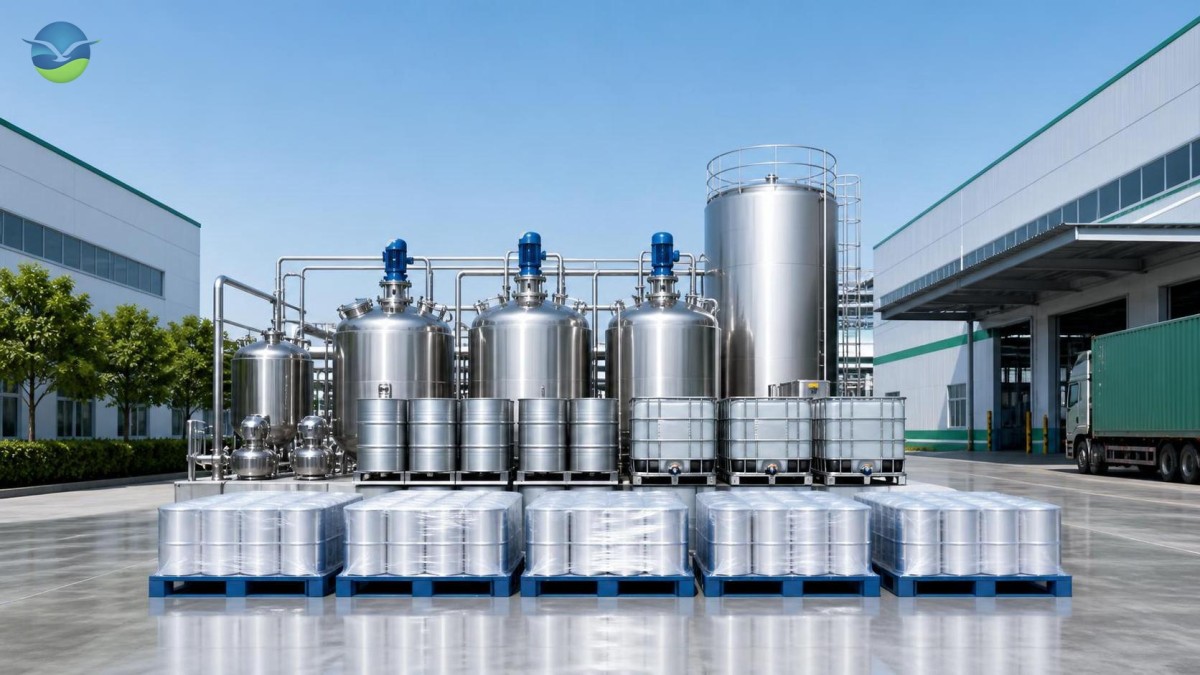
This is where dual-location operating models are gaining more attention. A foreign trade team in a commercially mature city such as Wuxi can improve communication efficiency, while a source manufacturing base in an established chemical production region such as Shandong can provide cost and production advantages. For overseas buyers, that combination is often more useful than dealing with a trader that lacks factory visibility or a factory that lacks export service discipline.
In practical terms, a responsive operations center can handle inquiries, sample dispatch, quote revisions, qualification documents, factory video inspections, shipping follow-up, and after-sales communication without forcing buyers to chase multiple departments. At the same time, a standardized production base with self-managed blending, processing, testing, and shipment documentation is better positioned to maintain repeatability when order volumes grow.
What distributors should actually test before committing to a supplier
Many sourcing mistakes happen because buyers test only the product, not the operating system behind the product. In 2026, that will be a weak screening method.
For Southeast Asia-focused distributors, a better evaluation framework includes the following questions:
How fast is the response loop?
A supplier may answer the first inquiry quickly, then slow down once technical files, sample changes, or booking details are involved. Buyers should watch response quality across the whole cycle, not just at lead capture stage.
Can the supplier support both sampling and scale-up?
Some partners are good at small-batch sample handling but weak in volume execution. Others focus on large containers and treat sample work carelessly. Distributors need both, because market development often begins with trials and moves toward repeat purchases.
Are quality documents routine or improvised?
COAs, MSDSs, packing lists, and shipment-related paperwork should be standard outputs, not special requests that delay every order. A supplier that prepares these consistently is easier to work with across customs, warehousing, and customer audits.
Does the factory control key processes directly?
If critical stages are heavily outsourced, consistency risk rises. Buyers should understand whether blending, granulation, reaction, packaging, and testing are internally managed or dependent on external partners.
Can pricing remain workable when volumes increase?
The cheapest sample-stage quote may not hold once the business becomes regular. Buyers should ask how raw material sourcing, plant capacity, and production scheduling support larger order flows.
This matters across product categories. For example, in food-related chemical ingredients, importers are not only checking commercial viability but also whether the supplier can provide the consistency and documents needed for downstream confidence. A product such as Sodium Erythorbate Antioxidant Food Raw Material may look straightforward at inquiry stage, but channel partners know the real test comes later: repeat batch reliability, packaging integrity, paperwork accuracy, and how efficiently questions are resolved when local customers request supporting files.
The rising importance of documentation discipline
One of the least visible but most important buying criteria in Southeast Asia is documentation discipline. This is not only about customs clearance. It is about whether the importer can confidently resell, register, warehouse, relabel, or explain the product in its own market.
Requirements differ by country and by application, and importers should always verify local obligations directly. Still, the general direction is clear: buyers want cleaner documentation chains, clearer product specifications, and faster access to supporting files. Claims that were once accepted through informal explanations now often require more structured evidence.
For distributors, poor documentation creates a multiplier effect. It delays customer onboarding, slows regulatory review, complicates internal compliance, and increases the burden on sales teams that should be focused on market expansion instead of chasing missing paperwork.
This is why the service structure behind the supplier matters. A dedicated foreign trade operations team that can process qualification documents, organize sample records, support remote factory reviews, and coordinate after-sales files gives buyers a more dependable operating experience than a model where all requests are pushed back to overloaded factory staff.
Price pressure will remain, but cost logic is changing
No serious distributor in Southeast Asia ignores price. Competitive pricing will remain a baseline requirement in 2026. But the cost logic behind purchasing decisions is becoming more layered.
Buyers increasingly separate three kinds of cost:
- Invoice cost: the quoted unit price.
- Execution cost: time spent on order correction, document chasing, complaint handling, and delayed shipment management.
- Market cost: lost customer trust when deliveries or quality are unstable.
Suppliers that combine Shandong’s manufacturing economics with professionally managed export coordination can be well positioned here. Shandong’s chemical industry cluster offers advantages in industrial infrastructure, available production resources, and raw material cost control. When that production base is linked to a Wuxi-based team handling overseas communication, buyers get a model that can reduce both price pressure and transaction friction.
That matters especially for distributors serving mixed customer portfolios. If part of the business is sample-based development and another part is FOB container movement, the supplier must support both without making one side of the business inefficient.
Why service responsiveness is becoming a competitive differentiator
In many chemical segments, product quality has become easier to compare than service capability. More suppliers can meet a basic specification; fewer can manage exceptions well.
For channel partners, exceptions are where supplier quality becomes visible:
- a customer requests an urgent reissue of a document;
- a packaging mark needs adjustment before shipment;
- a sample must be expedited for a qualification deadline;
- a batch question requires traceable testing records;
- a video factory review is needed before approval.
When these situations occur, buyers do not care about polished brochures. They care about who answers, who owns the issue, and how fast the matter is resolved. That is why 24/7 responsiveness, not as a slogan but as a real operating capability, is becoming more valuable in cross-border chemical trade.
A supplier with a front-end team dedicated to overseas coordination can often reduce communication lag significantly. For Southeast Asian buyers, where commercial cycles can move quickly and local customers may demand immediate answers, this responsiveness is a business tool, not an added bonus.
What buyers may underestimate in 2026
One common mistake is assuming that regional demand growth automatically makes all supply relationships safer. In reality, growing markets can expose weak suppliers faster. As order frequency rises, inconsistencies become harder to hide.
Another mistake is treating all “manufacturer” claims equally. Some exporters present themselves as factories but rely heavily on fragmented subcontracting or have limited control over quality and scheduling. Buyers should verify the degree of process ownership, not just the existence of a plant photo or workshop video.
A third blind spot is underestimating after-sales structure. In industrial chemicals, problems often appear after goods arrive: storage questions, customer test feedback, relabeling requirements, or specification clarifications. If post-shipment support is weak, the importer absorbs the operational burden.
Even in relatively established products, repeatability remains the central issue. This applies whether the business involves coatings inputs, granulated modified materials, anti-corrosion related products, or selected food-use ingredients such as Sodium Erythorbate Antioxidant Food Raw Material. Distributors rarely fail because they cannot find supply once; they fail when they cannot reproduce a successful shipment reliably enough to build a market around it.
How channel partners should prepare their supplier strategy now
For distributors, agents, and wholesalers planning for 2026, the useful move is not to expand supplier lists endlessly. It is to classify suppliers more clearly.
One group may be suitable for opportunistic spot purchasing. Another may fit low-risk commodity movement. A smaller set should be treated as long-term strategic partners capable of supporting market development, technical confidence, and repeat execution.
The suppliers most likely to gain share in Southeast Asia will be those that can show three things at the same time: source manufacturing credibility, disciplined export service, and the ability to move from inquiry to after-sales support without internal fragmentation.
That is the practical expectation behind today’s search for an industrial chemical manufacturer for Southeast Asia. Buyers are no longer choosing only a product source. They are choosing an operating partner that affects inventory confidence, customer retention, and speed of market response.
In that environment, a model built on a standardized Shandong production base and a Wuxi foreign trade center is strategically relevant for a simple reason: it addresses the real purchasing tension in regional chemical trade. Buyers want cost-effective sourcing, but they also want communication speed, documentation reliability, and supply continuity. By 2026, the suppliers that can deliver all of those together will be the ones distributors keep, expand with, and build regional business around.
Please give us a message
Send Us Your Inquiry Today
Scalable production and one-stop R&D, manufacturing, sales & after-sales services.