






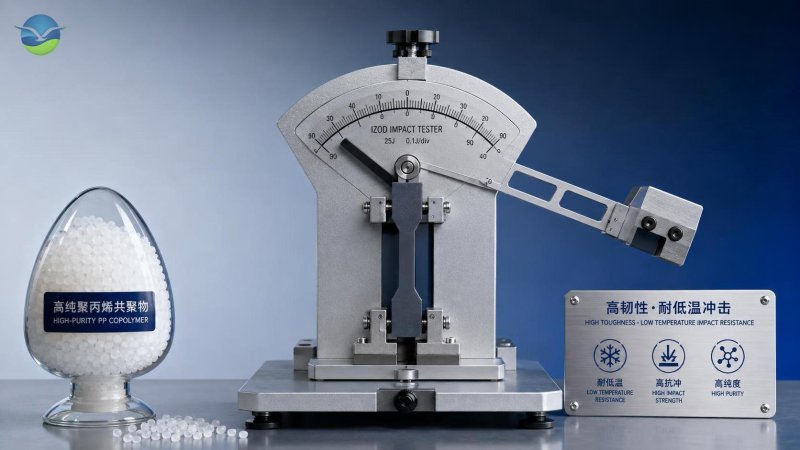
When polypropylene resin copolymer grades are selected for demanding applications, improved impact resistance can help technical evaluators balance toughness, processability, and cost across realistic service conditions.
Understanding how copolymer structure, test conditions, and application temperature affect performance is essential for choosing a grade that meets durability targets without creating avoidable molding or sourcing risks.
Start With the Failure Mode, Not the Copolymer Label
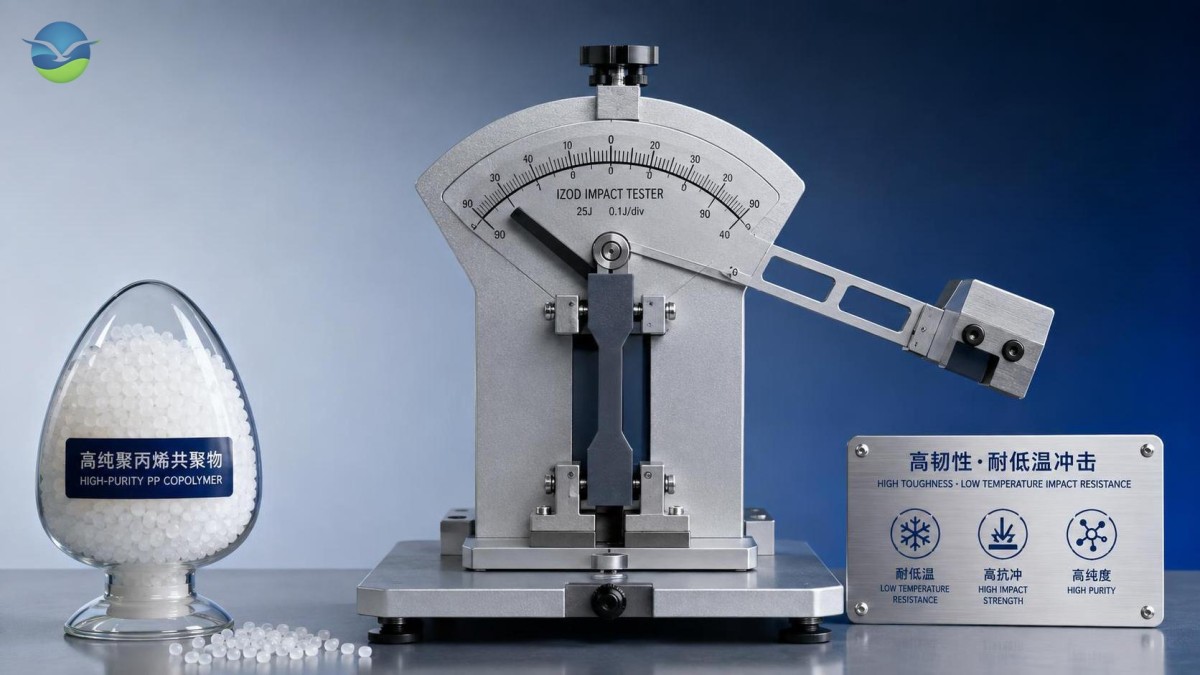
Polypropylene resin copolymer grades improve impact resistance when a part fails through sudden fracture, crack propagation, drop damage, or repeated mechanical shock under expected operating temperatures.
However, “copolymer” alone is not a sufficient selection criterion. Technical evaluators should first define the actual failure mechanism, loading direction, temperature range, wall thickness, and assembly constraints.
A grade that performs well in a room-temperature Izod test may still crack during low-temperature shipping, impact near a weld line, or stress concentration around fasteners.
The most useful question is therefore not whether copolymer polypropylene is tougher than homopolymer polypropylene. It is whether its measured toughness addresses the part’s specific failure risk.
For example, a thin-wall injection-molded housing can require high flow and balanced impact performance, while a thick industrial container may prioritize low-temperature ductility and crack resistance.
Automotive interior parts often need consistent behavior after heat exposure, whereas consumer packaging may need drop resistance after cold-chain storage or refrigerated transport.
Technical teams should also distinguish between one-time impact events and long-term fatigue. Copolymer structure primarily helps sudden-impact performance, but fatigue resistance depends on geometry, stress levels, and environmental exposure.
Defining acceptable damage is equally important. A cosmetic whitening mark may be tolerable in one application, while a small crack in a fluid container or safety-related component is unacceptable.
Why Copolymer Polypropylene Resin Is Usually Tougher
Standard polypropylene homopolymer consists primarily of propylene units. Its relatively regular molecular structure supports stiffness and heat resistance, but can limit toughness when impact energy must be absorbed quickly.
Copolymer polypropylene resin introduces ethylene units or rubber-like dispersed phases that interrupt crystallinity and create mechanisms for dissipating impact energy before brittle fracture develops.
Random copolymers typically contain relatively low ethylene content distributed through the polymer chain. They can improve clarity, flexibility, and moderate impact behavior compared with many homopolymer grades.
Impact copolymers, often called heterophasic copolymers, contain a polypropylene matrix with dispersed ethylene-propylene rubber domains. These rubbery domains absorb energy and slow crack initiation.
As impact energy reaches the material, localized deformation can occur around rubber particles. This reduces stress concentration and allows the polypropylene matrix to deform instead of fracturing immediately.
The toughness improvement is especially valuable below ambient temperature, where conventional polypropylene can become less ductile and more sensitive to notches, sharp corners, and molded-in stresses.
Yet more rubber content does not automatically mean a better commercial grade. Increasing elastomeric content often reduces stiffness, heat-deflection performance, surface hardness, and sometimes dimensional stability.
Material selection is therefore a balancing exercise. The correct polypropylene resin copolymer grade should provide enough impact modification to meet the target without overpaying for toughness that the application never uses.
Read Impact Test Data in Context
Impact values should be compared only when the test method, specimen geometry, conditioning environment, notch configuration, and reported units are equivalent across candidate materials.
Notched Izod and Charpy impact tests are common because the notch concentrates stress and provides a repeatable way to compare relative resistance to crack propagation.
Unnotched results can be useful, but they may hide sensitivity to real-world design features. Many molded components contain holes, ribs, corners, gates, snap-fits, and weld lines.
Temperature deserves particular attention. A polypropylene resin grade tested at 23 degrees Celsius may show satisfactory ductility, while the same grade can behave differently at zero or minus twenty degrees.
For outdoor equipment, returnable crates, refrigerated packaging, and transported industrial goods, low-temperature testing should reflect the lowest credible service or logistics condition rather than only laboratory room temperature.
Technical evaluators should request the full test condition from suppliers, including standard reference, sample preparation, thickness, notch details, test temperature, and whether results represent typical or minimum values.
Impact data should also be interpreted alongside tensile modulus, elongation at break, flexural properties, melt flow rate, and Vicat or heat-deflection temperature where relevant.
A material may have excellent notched impact strength but insufficient stiffness for a large panel. Another may meet stiffness requirements but require optimized part geometry to avoid brittle failure.
Choose Between Random and Impact Copolymer Grades
Random copolymer polypropylene resin is often appropriate when moderate impact improvement is needed alongside good transparency, lower sealing temperature, flexibility, and generally smooth processing behavior.
Typical applications include transparent food containers, medical packaging components, household goods, caps, closures, films, and injection-molded products requiring better toughness than standard homopolymer grades.
Impact copolymer grades are generally more suitable when parts encounter significant drop impacts, cold handling, repeated abuse, or thick-section molding where toughness is a primary requirement.
These grades are commonly evaluated for pallets, battery cases, appliance components, automotive parts, storage bins, paint pails, crates, industrial packaging, and durable consumer products.
The tradeoff is often visible in optical appearance. Impact copolymers are usually less transparent than random copolymers because their multiphase morphology scatters light within the polymer structure.
Surface appearance can also vary by grade, pigment package, mold design, and processing conditions. For visible parts, evaluators should validate gloss, flow marks, shrinkage, and color consistency on production-representative samples.
Where food-contact or consumer applications require several chemical ingredients, procurement teams may also coordinate materials such as Sodium Cyclamate Sweetener Food Raw Material through separate qualified supply channels.
That sourcing decision is technically independent from polymer selection, but it reinforces the need for clear documentation, traceability, regulatory review, and reliable coordination across a finished product supply chain.
Balance Impact Resistance Against Stiffness and Flow
Impact resistance should never be reviewed in isolation. The same copolymer modification that improves toughness can reduce flexural modulus, which may affect panel rigidity, stacking performance, and assembly precision.
For structural housings, reduced stiffness can cause deformation under load even when the material survives impact testing. Rib design, wall thickness, filler selection, and assembly loads must be evaluated together.
Melt flow rate is another important variable. Higher-flow polypropylene resin can support thin walls, intricate features, and shorter cycle times, but may not deliver identical impact behavior at every molecular-weight level.
Lower-flow grades can offer stronger melt strength and may support certain large or thick-wall parts. They can also require higher injection pressure or adjusted molding conditions.
Evaluators should compare candidates at similar flow ranges whenever possible. Comparing an ultra-high-flow grade with a low-flow grade can confuse the effect of copolymer chemistry with molecular-weight differences.
Mineral-filled polypropylene compounds require additional caution. Talc or calcium carbonate can improve stiffness and dimensional control, but filler loading may reduce impact strength if the formulation is not properly balanced.
Impact-modified filled grades can solve this compromise for some applications. Still, the final result depends on filler type, particle treatment, rubber phase, coupling strategy, and molding conditions.
A practical selection matrix should rank impact performance, stiffness, heat resistance, flow, appearance, density, cost, and regulatory requirements according to their actual importance for the intended component.
Processing Conditions Can Preserve or Reduce Toughness
A well-selected copolymer grade can underperform when molding conditions create residual stress, poor knit-line quality, degradation, voids, or uneven crystallization within the finished part.
Melt temperature should remain inside the supplier’s recommended processing range. Excessive heat exposure or residence time can degrade polypropylene resin and reduce mechanical performance, odor quality, or color stability.
Mold temperature affects crystallization and part morphology. An unsuitable mold-temperature profile can change shrinkage, surface quality, cycle time, and the balance between stiffness and impact behavior.
Gate location is particularly relevant for impact-critical components. Weld lines should be kept away from high-stress zones because they can become weak points under impact or snap-fit loading.
Sharp internal corners should be avoided whenever possible. Generous radii reduce stress concentration and may improve real-part durability more effectively than switching to a substantially tougher resin grade.
Regrind control also matters. While some polypropylene systems permit controlled internal regrind, excessive recycled content or poorly managed contamination can create variability in impact resistance and appearance.
For color concentrates, additives, and masterbatches, compatibility should be verified with the copolymer base resin. Incompatible carriers or excessive additive levels can affect dispersion, mechanical properties, and molding consistency.
Production trials should measure the molded article rather than relying solely on resin datasheet values. Finished-part validation captures the combined effects of tool design, cycle settings, additives, and real geometry.
Build a Supplier Qualification Plan Around Consistency
For technical evaluators, a single successful sample is useful but insufficient. A production-grade polypropylene resin program requires confidence that performance will remain stable from lot to lot and shipment to shipment.
Requesting certificates of analysis helps verify agreed properties such as melt flow rate, density, ash content where applicable, color, volatile content, and other customer-specific control parameters.
Material safety data sheets, regulatory declarations, and applicable food-contact or chemical compliance documents should be reviewed before commercial approval, especially when finished products cross international markets.
Reliable suppliers should be able to explain their manufacturing route, quality-control checkpoints, packaging format, lot traceability, sample process, and procedure for handling nonconforming material claims.
Qixiang Chemical supports overseas coordination through its Wuxi foreign trade operation center while managing source production from its Shandong manufacturing base, supporting sample and bulk-order communication.
For polypropylene resin evaluations, the practical value of this arrangement is responsive technical documentation, coordinated sampling, order follow-up, logistics support, and access to production-side quality records such as COAs and MSDSs.
Before approving a new grade, teams should establish incoming inspection criteria. These can include visual checks, packaging integrity, melt flow confirmation, moisture-related checks, and periodic mechanical-property verification.
When large-scale export supply is planned, technical qualification should also consider lead time, container loading requirements, packaging protection, shipping climate, customs documentation, and contingency arrangements for urgent replacements.
Use Application Trials to Confirm the Economic Choice
The lowest resin price is not always the lowest material cost. A lower-cost grade can create higher scrap rates, more part failures, slower cycle times, or unnecessary wall-thickness increases.
Conversely, an excessively tough polypropylene resin copolymer can add cost while reducing stiffness or flow, forcing compensating changes in tool design, part geometry, or production settings.
Prototype testing should use a defined acceptance plan. Include drop tests, cold conditioning, instrumented impact testing when justified, snap-fit cycling, assembly trials, and visual inspection after stress exposure.
Testing should include material from more than one production lot when the application is critical. This reveals whether the selected grade has adequate consistency for routine manufacturing rather than only initial qualification.
Where competitors or legacy materials are being replaced, test both materials in the same mold and under comparable processing conditions. This isolates resin differences from equipment or operator variability.
Documenting failure location is as important as recording pass or fail. A crack at the gate, weld line, corner, or fastener may indicate a design or processing issue rather than an inherent resin limitation.
Technical and purchasing teams should convert trial results into a total-cost comparison covering resin usage, cycle time, scrap, rejects, secondary operations, warranty exposure, and expected service life.
This evidence-based approach gives decision makers a clearer basis for selecting copolymer grades, negotiating specifications, and avoiding material substitutions that compromise durability after approval.
Conclusion: Select Toughness for the Real Service Environment
Polypropylene resin copolymer grades improve impact resistance by changing polymer morphology and enabling greater energy absorption before cracks propagate, particularly in applications exposed to cold, drops, or repeated handling.
The right choice depends on the complete performance requirement. Random copolymers can provide balanced flexibility and appearance, while impact copolymers are often better suited to demanding durable components.
Technical evaluators should compare equivalent test data, validate molded parts under realistic conditions, assess tradeoffs with stiffness and flow, and qualify suppliers for repeatable production performance.
When material structure, testing conditions, processing controls, and supply documentation are reviewed together, impact-resistant polypropylene resin becomes a measurable engineering decision rather than a broad product category.