





When chemical raw material container supply limits project delivery
When Chemical Raw Material Container Supply Limits Project Delivery
When chemical raw material container supply becomes constrained, the immediate problem may look like a purchasing issue. In practice, it quickly becomes a project delivery issue. A delayed container can interrupt commissioning, leave a blending line underutilized, force changes to production sequencing, or create a costly gap between site readiness and material availability. For projects involving coatings, daily chemicals, pharmaceuticals, food-related formulations, or personal care products, a missing raw material is rarely isolated from the rest of the schedule.
Project managers are therefore not simply trying to secure the lowest unit price. They need to understand whether a supplier can maintain a workable connection between specification approval, sample confirmation, production allocation, export documents, vessel planning, and delivery at the destination. The chemical itself matters, but so does the system behind it. A container is the visible unit of supply; the real question is whether every step before loading has been controlled well enough to protect the project milestone after arrival.
Why container constraints disrupt more than procurement
Chemical projects often operate with linked dependencies. A formulator may need to validate incoming material before releasing a finished-product batch. A contract manufacturer may have a fixed production window. A construction or plant-expansion team may need chemicals available before utility testing or equipment handover. If the required material is held up by incomplete paperwork, unavailable packaging, a missed shipping cut-off, or inconsistent production output, recovery is not always simple. The next vessel may not match the next available site window.
This is why chemical raw material container supply should be planned as a delivery workstream rather than treated as the final act of procurement. The purchase order is only one control point. Before it, the team needs agreement on grade, test items, packaging, labeling, shelf-life expectations, and destination requirements. After it, the project depends on production visibility, batch release, document accuracy, booking coordination, and a clear response path if an exception occurs.
The problem becomes sharper when a material serves several functions in a formulation. Glycerol, for example, may be selected for moisturizing, lubricating, solubilizing, or hygroscopic properties depending on the application. A substitute may be available on paper, yet still require reformulation checks, revised internal approvals, or new compatibility testing. That is not a practical contingency when the project clock is already tight.
The early signals that supply risk is building
Container problems rarely begin at the port. They usually become visible earlier, often in small inconsistencies that are easy to overlook when the schedule still appears comfortable. A quotation that does not distinguish sample timing from production timing, an unclear answer on available packaging, delayed batch documents, or repeated changes in the person handling the order all deserve attention. None automatically means a shipment will fail, but together they indicate weak control over the delivery chain.
Project teams should be especially cautious about four issues:
- Specification drift: descriptions such as “standard quality” are not enough when the application depends on appearance, purity, odor, viscosity, moisture behavior, or a specific grade.
- Document lag: a COA, MSDS, packing list, invoice, and other export records may be operationally critical, not administrative afterthoughts.
- Unconfirmed production ownership: a trading contact may be responsive, but the project still needs to know who controls blending, testing, release, and inventory at the source.
- Late logistics decisions: if vessel options, FOB responsibilities, container loading requirements, and destination handling are discussed only after production is complete, the margin for correction is already narrow.
A useful discipline is to create a material readiness date that sits before the required on-site date. That earlier date should include enough time for production, inspection, document review, loading, ocean transit, customs processes where applicable, and destination-side receipt. The exact buffer depends on the route and project, but the principle does not change: delivery dates should not be calculated from sailing time alone.
Start with the material’s operational requirements
A reliable supply plan starts with a requirement sheet that can actually be used by production, quality, logistics, and the receiving site. It should identify the intended application, required grade, acceptable test parameters, packaging format, storage conditions, batch traceability needs, and the documents required before shipment. If the material is being used in a regulated or sensitive end use, the buyer should separately confirm the standards and local requirements that apply to that use rather than assuming that a generic product description resolves them.
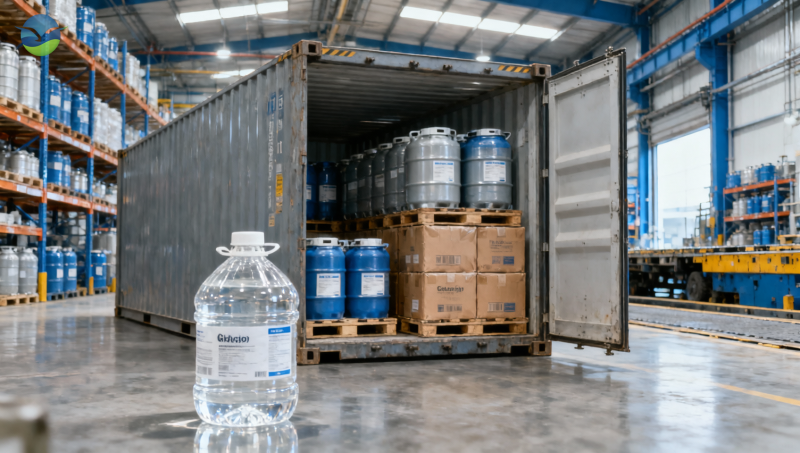
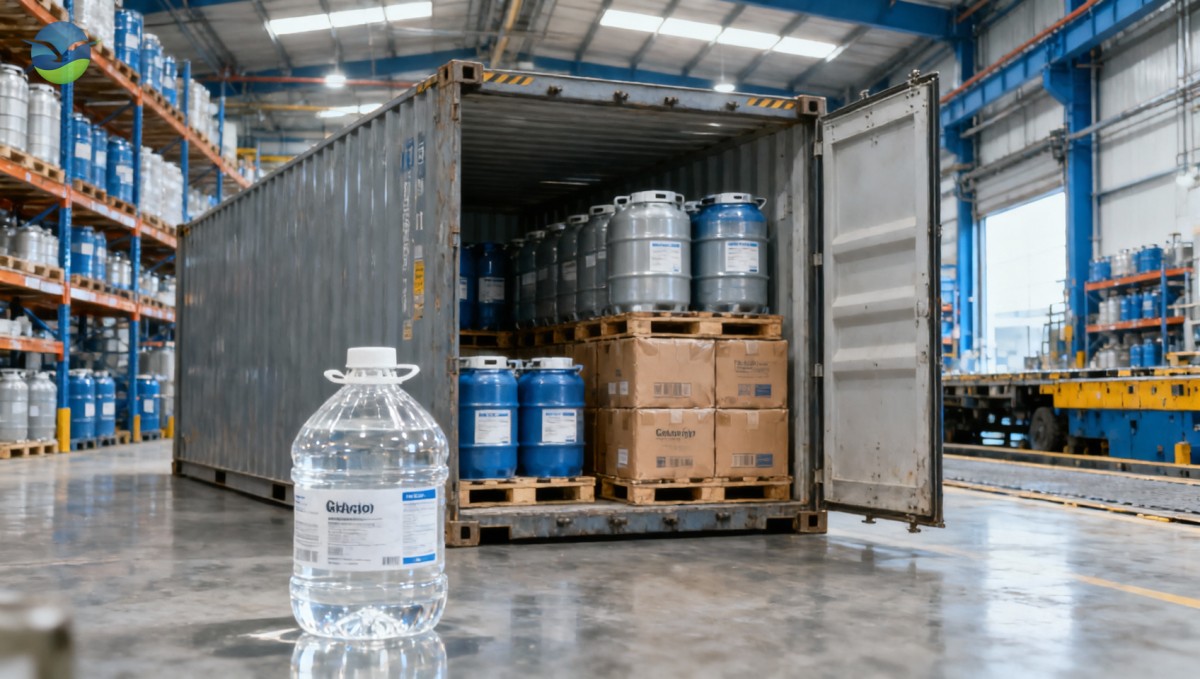
For a cosmetic-grade glycerin requirement, for instance, the relevant conversation may include the material’s appearance, packaging integrity, storage practice, and batch documents in addition to the basic identity of the substance. Glycerin Vegetable Glycerol Raw Material is identified as glycerin with CAS No. 56-81-5, molecular formula C₃H₈O₃, EINECS No. 200-289-5, and HS code 2905440000. It is offered as a colorless, viscous liquid in 25 kg barrels for cosmetic use. Those details are useful starting points, but a project should still verify that the proposed grade, packaging, and documentation match its own formulation and market requirements.
Storage is another point that can be missed during schedule pressure. For this type of glycerin, sealed storage in a cool, dry, well-ventilated location away from direct sunlight and high temperatures is specified, with a stated shelf life of 24 months. That does not merely concern warehouse housekeeping. It affects how much contingency stock a project can responsibly hold, how goods are received at site, and whether packaging will remain suitable until the production window opens.
Separate communication speed from manufacturing control—and require both
In cross-border chemical supply, a common weakness is the gap between the commercial contact and the factory. A sales team may answer quickly but have limited authority over production schedules. Conversely, a capable plant may be difficult for overseas buyers to reach when an urgent document correction or sample question arises. Neither model is ideal for project-critical procurement.
Qixiang Chemical’s operating structure addresses this division by separating customer-facing foreign trade execution from source manufacturing while keeping both within one coordinated supply arrangement. Its foreign trade operations center is in Wuxi, Jiangsu, within the Yangtze River Delta’s established cross-border trade infrastructure. The Wuxi team handles inquiries, quotations, sample coordination, order follow-up, logistics communication, qualification documents, and after-sales matters for overseas customers. It also supports video factory visits and responds to communication requests around the clock, which can be valuable when project decisions cannot wait for the next business day in another time zone.
The production base is in Shandong, where chemical-industry capacity and raw material access support scalable manufacturing. The company operates a standardized facility covering 10,000 square meters, with modified granulation lines, anti-corrosion coating reaction workshops, raw-material storage, and quality inspection laboratories. Not every product will pass through the same production route, but the key project-management point is clear: raw material blending, processing, product formation, and final testing are managed at the source rather than dispersed across unrelated parties.
This arrangement can reduce a familiar coordination burden. The Wuxi team remains responsible for the commercial and export-facing conversation, while the Shandong facility provides the manufacturing basis for production planning and quality release. For a project manager, it is more useful to have one accountable communication path connected to the plant than to spend time reconciling messages from an exporter, a factory, and a separate documentation agent.
Use samples as schedule controls, not just technical checks
Samples are often treated as an isolated quality step: pass the lab test, then place the bulk order. That approach can create false confidence. A better method is to connect sample approval to the exact commercial grade, packaging concept, and production specification intended for the container shipment. If an approved sample differs from the future bulk material in origin, process, grade, or handling method, the approval may not protect the project as much as assumed.
Before bulk release, ask practical questions. Will the container shipment be supported by a COA for the dispatched batch? Is an MSDS available in time for internal review and downstream transport arrangements? Can the supplier confirm the packaging count and marking format? Who will notify the team when production is complete, when inspection is released, and when the cargo is ready for loading? The answers establish a workflow, not merely a vendor relationship.
Where small-batch samples must transition into large FOB container exports, continuity matters. Qixiang Chemical’s Wuxi-based team coordinates sample delivery and foreign trade documentation, while its Shandong facility supports the production side. That dual-location setup is particularly relevant where a project needs early technical evaluation but later requires sustained volume rather than a one-off shipment.
Build an exception path before the exception happens
No export plan is immune to disruption. Vessel schedules can change, documentation can need revision, and receiving sites can alter their intake sequence. The differentiator is whether the supplier and project team have a clear way to manage the change. A dependable chemical raw material container supply plan should identify who owns each decision: production release, quality-document approval, booking confirmation, shipping instruction review, and post-shipment communication.
It is also sensible to distinguish a technical exception from a logistics exception. If a batch does not meet an agreed parameter, the issue belongs with quality control and production planning. If an approved batch misses a loading cut-off, the focus shifts to forwarding, booking, and milestone recovery. Combining both issues in one vague escalation usually slows the response. Clear ownership lets the team solve the right problem first.
Price still matters, especially for container-scale purchasing. Shandong’s chemical industry cluster can provide cost advantages through production capacity and access to raw materials. Yet the lower quoted figure is not necessarily the lower project cost if it comes with weak batch visibility, fragmented communication, or uncertain export execution. The more time-sensitive the downstream plan, the more value there is in evaluating the full delivery mechanism alongside the commercial offer.
A practical release decision for project teams
Before authorizing a container shipment, a project manager should be able to answer a short set of direct questions: Is the required grade unambiguously defined? Has the sample or relevant technical information been accepted? Is production capacity tied to the required delivery window? Are COA and MSDS expectations clear? Is the packaging compatible with receiving and storage conditions? Has the logistics responsibility under the agreed trade term been assigned? And does the supplier have a reachable team that can resolve document or shipment issues without a long handover chain?
If any answer remains uncertain, the risk should be visible in the project schedule rather than buried in procurement notes. Container supply becomes reliable when material, documentation, communication, and export execution are treated as one integrated commitment. For chemical projects, that is often the difference between a shipment that simply leaves the origin port and one that arrives ready to support the work it was purchased for.
Please give us a message
Send Us Your Inquiry Today
Scalable production and one-stop R&D, manufacturing, sales & after-sales services.