






Testing chemical resistance in injection molding resin for containers
A container can look acceptable after molding yet fail after contact with its intended contents. A detergent bottle may develop stress cracks around the handle, a laboratory container may become brittle after repeated cleaning, or a food-contact package may retain odor and discolor after filling. For quality and safety teams, these failures are not merely cosmetic: they can lead to leakage, contamination, worker exposure, rejected shipments, and questions about material suitability.
The practical answer is to test an injection molding resin for containers under conditions that reproduce the real chemical, temperature, stress, and contact time of the finished application. A resin should not be approved solely because its base polymer is generally described as “chemical resistant.” The molded container geometry, processing history, liquid concentration, storage duration, and residual stress can change the result substantially.
Begin with the actual failure risk, not a generic resistance claim
Chemical resistance is often treated as a single material property, but a container is exposed to a combination of conditions. A resin may tolerate a dilute alkaline cleaner at room temperature yet fail when the same cleaner is stored warm, repeatedly refilled, or placed in a thin-wall container with a tight snap closure. Likewise, a material may show little mass change after immersion but still lose impact strength or develop environmental stress cracking.
Before requesting laboratory work, define the use case in terms that can be tested. The most useful starting questions are:
- What substance will contact the inside, outside, closure area, and label-contact surface of the container?
- Is the substance aqueous, acidic, alkaline, oily, solvent-based, oxidizing, or a multi-component formulation?
- Will the container be stored at ambient temperature, refrigerated, exposed to sunlight, or subjected to elevated temperature during filling or transport?
- Is contact continuous, intermittent, or repeated through refill cycles?
- Will the container be stacked, squeezed, pressurized, dropped, or exposed to bending at handles, hinges, threads, or welded areas?
- What performance loss would be unacceptable: leakage, cracking, odor pickup, swelling, color change, reduced strength, or migration-related concerns?
This definition prevents a common mistake: immersing an unstressed plaque in a convenient chemical and assuming that the result predicts container performance. Plaque screening is useful, but it is not always sufficient for a molded package that carries load or has thin, highly oriented sections.
Identify the exposure conditions that make a resin vulnerable
Polyolefins, engineering thermoplastics, and modified compounds respond differently to chemical families. Acids and alkalis may have limited effect on one resin but accelerate degradation in another. Hydrocarbon oils can cause swelling in certain materials. Polar solvents may extract additives, alter surface appearance, or reduce mechanical properties. Surfactants are especially important because they can promote stress cracking in materials that appear stable during simple immersion.
The liquid in the product specification should be tested as supplied whenever practical. A surrogate chemical can be appropriate for early screening, but it must represent the challenging components of the formulation. For example, testing water alone does not represent an aqueous cleaner containing surfactants, fragrance oils, solvents, salts, or high-pH ingredients. Safety managers should also consider accidental external exposure during filling, cleaning, and handling, not only the intended internal contents.
Temperature frequently changes the severity of the test. Elevated temperatures can increase diffusion into the polymer, accelerate chemical reaction, and reveal stress-related defects sooner. Freezing and thawing may create a different risk by changing the pressure, viscosity, or expansion behavior of the contents. Therefore, a test plan should state both the exposure temperature and the conditioning temperature before mechanical evaluation.
Use staged testing rather than relying on one immersion result
A staged approach gives a clearer basis for material approval and reduces the chance of overlooking a failure mode. The exact procedure should be aligned with the relevant product requirement, internal specification, customer requirement, or applicable testing standard. Common reference frameworks for plastics exposed to chemicals include ASTM D543 and ISO 175, but the selected method must match the resin form, sample geometry, chemical medium, and acceptance criteria.
1. Screen the resin with controlled specimens
Initial screening may use molded plaques, tensile bars, or other standardized specimens prepared from the proposed formulation. Record the material grade, lot identification, moisture condition where relevant, molding parameters, specimen thickness, and conditioning period. These details matter because poor drying, excessive melt temperature, or inadequate molding control can create degradation or residual stress that is mistaken for intrinsic chemical incompatibility.
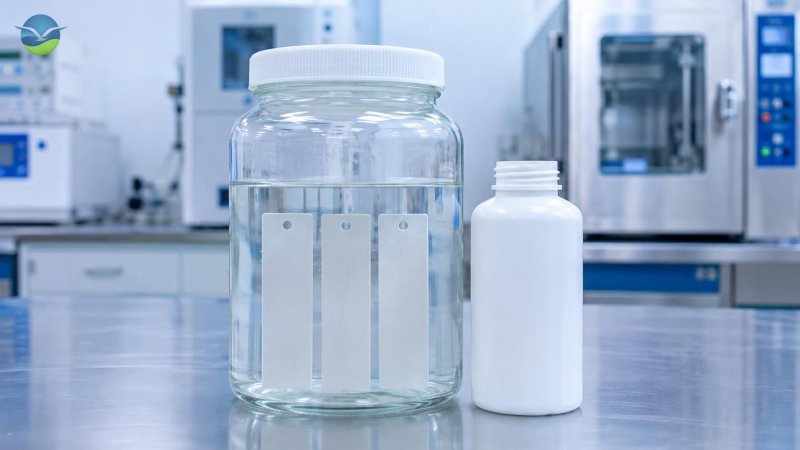
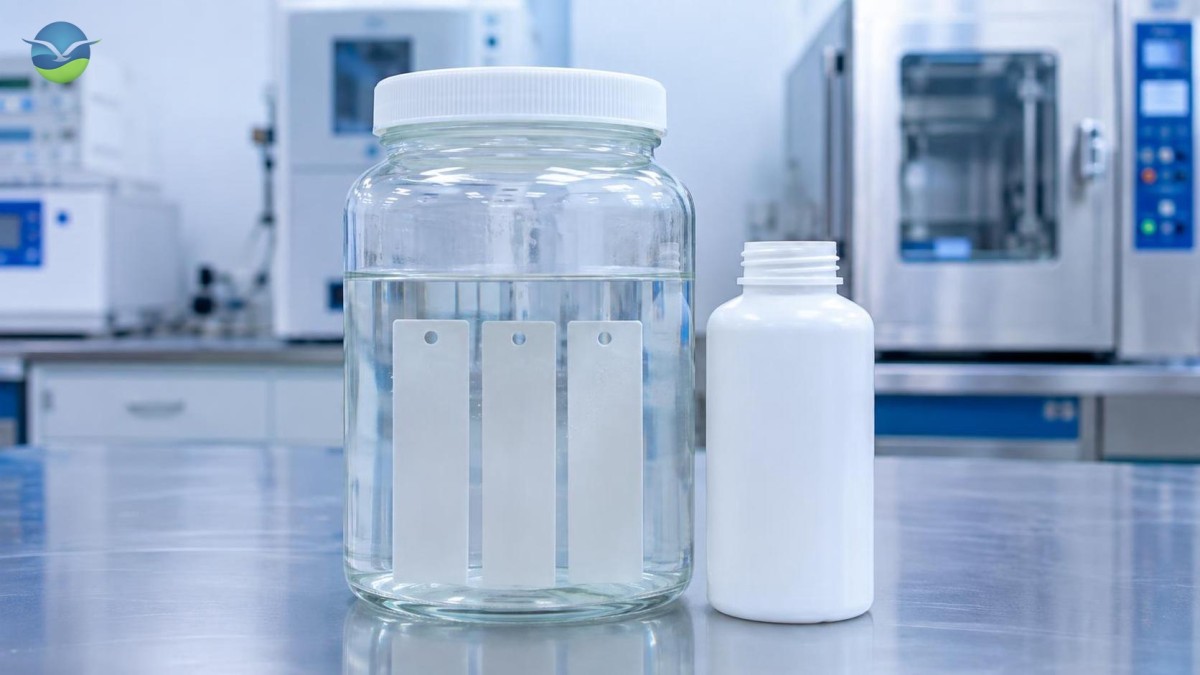
Expose the specimens by total immersion, partial immersion, surface contact, vapor exposure, or cyclic contact, depending on the intended use. The test medium should be clearly identified by concentration and preparation method. Record the exposure duration, temperature, container type, sample-to-liquid ratio, whether the liquid is renewed, and whether the vessel is sealed or vented.
2. Measure changes that can affect container function
Visual observation is necessary but not enough. Inspect for discoloration, haze, blisters, surface softening, pitting, crazing, cracking, warpage, and deposits. Then compare exposed specimens with unexposed controls using properties relevant to the risk. Typical measurements include mass change, dimensional change, tensile strength, elongation at break, flexural behavior, impact resistance, hardness, and surface appearance.
Mass gain can indicate absorption or swelling; mass loss may indicate extraction of additives or soluble components. Neither measurement alone proves pass or fail. A small mass change may still accompany a severe reduction in ductility, while a visible change may be tolerable if the container retains its mechanical and sealing functions. The acceptance limit should be defined before testing, based on the actual application rather than a generic expectation that no change is permitted.
3. Test the molded container under stress
For a container that will be squeezed, stacked, carried, capped, or pressurized, test the finished molded article or a representative section of it. This is where environmental stress cracking often appears. Residual stress can concentrate at corners, thread roots, handle transitions, gates, weld lines, and sharp changes in wall thickness. Contact with a surfactant-containing product or solvent blend may trigger cracks in these zones even when unstressed plaques remain intact.
Useful evaluations can include filled-container storage, closure torque retention, leak testing, top-load or stack-load assessment, repeated squeeze cycling, drop testing after chemical exposure, and visual inspection under magnification. A stressed sample should be compared with an unstressed exposed control. This distinction helps determine whether the chemical is directly attacking the polymer, the stress is the dominant factor, or both are required to produce the defect.
Watch for environmental stress cracking
Environmental stress cracking is one of the most important concerns in injection-molded containers. It may begin as fine crazing or whitening and progress to cracks that become visible only after days or weeks. The chemical does not always dissolve the polymer. Instead, it can lower the material’s resistance to crack initiation while mechanical stress supplies the driving force.
A test program should deliberately target high-stress regions. Use production-representative wall thicknesses and closures, because an overly thick or simplified test specimen can hide a problem. Examine gate areas, ribs, shoulders, handle joints, tamper-band structures, and corners after exposure. Where a container is intended for repeated dispensing, cycle the part in a way that reflects squeezing, opening, closing, or inversion during use.
Failure analysis should also review molding conditions. Excessive packing pressure, uneven cooling, poor gate location, and abrupt geometric transitions can increase molded-in stress. Changing the resin alone may not solve a crack pattern caused primarily by design or process conditions. Conversely, a design that works with one grade cannot automatically be transferred to a resin with different stiffness, crystallinity, or stress-crack resistance.
Set acceptance criteria before looking at the results
Without predefined criteria, teams can overinterpret a favorable visual result or debate whether a modest property change is acceptable after the test is complete. The acceptance standard should be linked to container function and the consequences of failure. A secondary transport container may tolerate minor surface haze; a package used for corrosive cleaning liquid may require much stricter leak resistance and crack-free performance.
Where regulations, product stewardship rules, or customer specifications apply, chemical resistance findings should be kept separate from broader compliance determinations. Passing an immersion or stress-crack test does not by itself establish suitability for food contact, pharmaceutical use, hazardous goods transport, or any other regulated purpose. Those decisions may require separate reviews of formulation, additives, migration behavior, labeling, transport requirements, and local market rules.
Control variables that can invalidate the comparison
Testing is only meaningful when exposed and control samples are comparable. Production teams should avoid comparing samples from different molding conditions without recording the difference. Resin moisture, regrind level, masterbatch addition, pigment concentration, residence time, and post-molding conditioning can all affect performance. A container molded from a pilot tool may also behave differently from one made on a production tool because gate design, cooling, and wall distribution are not identical.
Use enough replicate specimens to identify inconsistent performance rather than relying on a single part. Inspect samples at planned intervals instead of only at the end of a long exposure. Early whitening, localized softening, or a small crack near a thread can show where the failure mechanism begins. Preserve unexposed controls under defined storage conditions, and photograph observable changes with sample identification and exposure timing.
For volatile solvents, maintain a controlled exposure environment. An open vessel can lose active components and make the test less severe than intended. For oxidizing or reactive liquids, verify that the test vessel itself does not contaminate the medium or create an additional hazard. Laboratory risk assessments should address ventilation, chemical compatibility of equipment, spill response, labeling, and disposal of used test media.
Build a documentation package that supports release decisions
A defensible approval record should allow another qualified reviewer to understand exactly what was tested and why. At minimum, retain the resin identification, supplier lot or batch information, technical data sheet, certificate of analysis where provided, safety documentation, sample preparation details, molding conditions, test method, chemical formulation, exposure parameters, measurements, photographs, deviations, and final disposition.
For an injection molding resin for containers, it is helpful to maintain a matrix that connects each container grade and color formulation to its intended contents. This avoids assuming that an approval for natural resin automatically covers a pigmented version, a recycled-content blend, a foamed structure, or a modified grade. Colorants, fillers, impact modifiers, processing aids, and recycled material can change chemical interaction, stress distribution, or extractable content.
When a resin supplier provides COAs and MSDSs, these documents support traceability and safe handling, but they do not replace application-specific exposure testing. Request clarification when critical information is missing, particularly around lot consistency, additive changes, recommended processing windows, and known limitations with chemicals or temperatures relevant to the container.
When results are borderline, adjust the right variable
Borderline performance does not always require abandoning the material. First identify the failure mechanism. Swelling may call for a different resin family, a multilayer design, or a barrier approach. Stress cracking may be reduced through improved geometry, lower residual stress, revised processing conditions, or a grade designed for stronger resistance to the specific formulation. Leakage at the closure may be a dimensional or torque issue rather than a chemical-resistance failure.
Any change should be retested at the level affected by the decision. A revised molding condition may require a focused stress-crack confirmation. A new pigment, additive package, wall thickness, or chemical formulation may require a broader reassessment. The safest release decision comes from matching the test article and exposure conditions as closely as possible to the container that will actually enter service.
Please give us a message
Send Us Your Inquiry Today
Scalable production and one-stop R&D, manufacturing, sales & after-sales services.