






Powdered Citric Acid Uses in Food, Cleaning, and Formulation Work
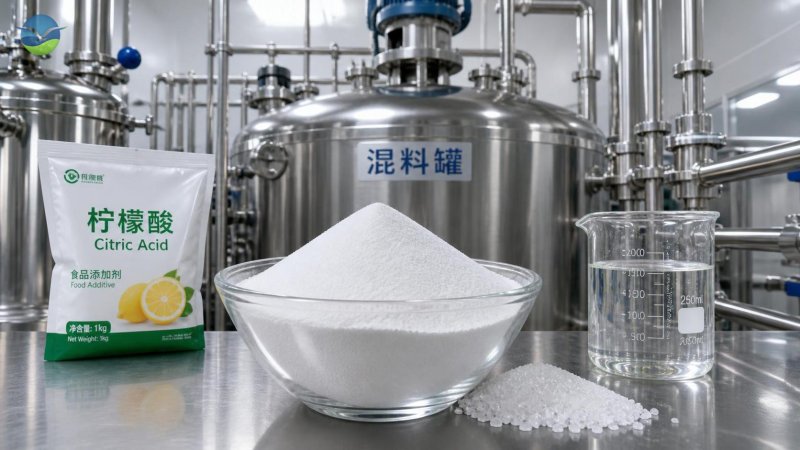
In many workshops and processing rooms, powdered citric acid is one of those materials that quietly solves problems without drawing much attention to itself. Operators reach for it when a beverage tastes flat, when hard-water scale builds up on a stainless surface, or when a formulation needs a more controlled acidic environment. Its value is practical rather than dramatic: it is easy to handle, broadly compatible with routine processes, and useful across food production, cleaning work, and formulation adjustment.
For users searching for real-world powdered citric acid applications, the main question is usually not “what is it?” but “where does it fit in my daily operation, and what should I watch out for?” The answer depends on the task. In some settings, it is a flavor-balancing acidulant. In others, it acts as a descaling agent or a pH-control component that helps a recipe or industrial blend perform more predictably.
Why powdered citric acid remains a workhorse material
Citric acid in powdered form is favored because it combines storage convenience with formulation flexibility. Compared with liquid acids, the powder can be easier to transport, portion, and incorporate into dry blends. Users can dissolve it as needed, which gives more control during batching and reduces the need to handle larger volumes of acidic liquid on site.
Its chemical behavior is also what makes it so widely applicable. Powdered citric acid provides acidity, chelates certain metal ions, and can help loosen mineral deposits. Those three functions alone explain why it appears in food systems, cleaning products, water-treatment-related maintenance work, personal care development, and selected industrial formulations.
That said, successful use depends on context. The same material that improves flavor in a powdered drink mix may behave differently in a metal cleaning bath or in a multi-ingredient product where pH, solubility, and ingredient compatibility all matter.
Food processing uses: more than just sourness
In food applications, powdered citric acid is often introduced as an acidulant, but that description is too narrow. Yes, it contributes tartness, and that is important in beverages, candies, jams, flavored powders, and fruit-based products. Yet operators often care just as much about how it shapes the total sensory profile. A small dosage change can sharpen fruit notes, reduce perceived sweetness, or create a cleaner finish.
It also plays a role in pH adjustment, which can influence product stability, texture, and process behavior. In some formulations, a lower pH supports preservation strategies or improves the performance of companion ingredients. In dry seasoning systems or instant drink powders, the powdered form is especially useful because it can be blended into the matrix before hydration.
Typical food-related uses include:
- Acidity adjustment in beverage powders and liquid drinks
- Flavor balancing in confectionery and fruit preparations
- Support for pH-sensitive formulations
- Use in dry premixes where uniform distribution matters
- Contribution to a cleaner, brighter taste profile
Operators should still be careful not to treat it as a simple “add more for more effect” ingredient. Overuse can create harsh sourness, destabilize a formula, or shift the balance of sweetness and aroma in ways that make a finished product feel thinner or less natural. The better approach is controlled bench testing with gradual dosage adjustments.
Cleaning and descaling: where powdered citric acid earns daily trust
If food use shows one side of powdered citric acid, maintenance work shows another. In cleaning tasks, it is commonly used to remove mineral scale, soap residue, and certain inorganic deposits from equipment and contact surfaces. This is especially relevant where hard water leaves visible build-up on kettles, pipelines, heat-contact parts, or sanitary fixtures.
Citric acid works well in descaling because it reacts with mineral deposits such as calcium-based scale, helping dissolve and loosen them for rinse-out. For operators, this can translate into more consistent cleaning performance, less manual scraping, and reduced interference with equipment efficiency.
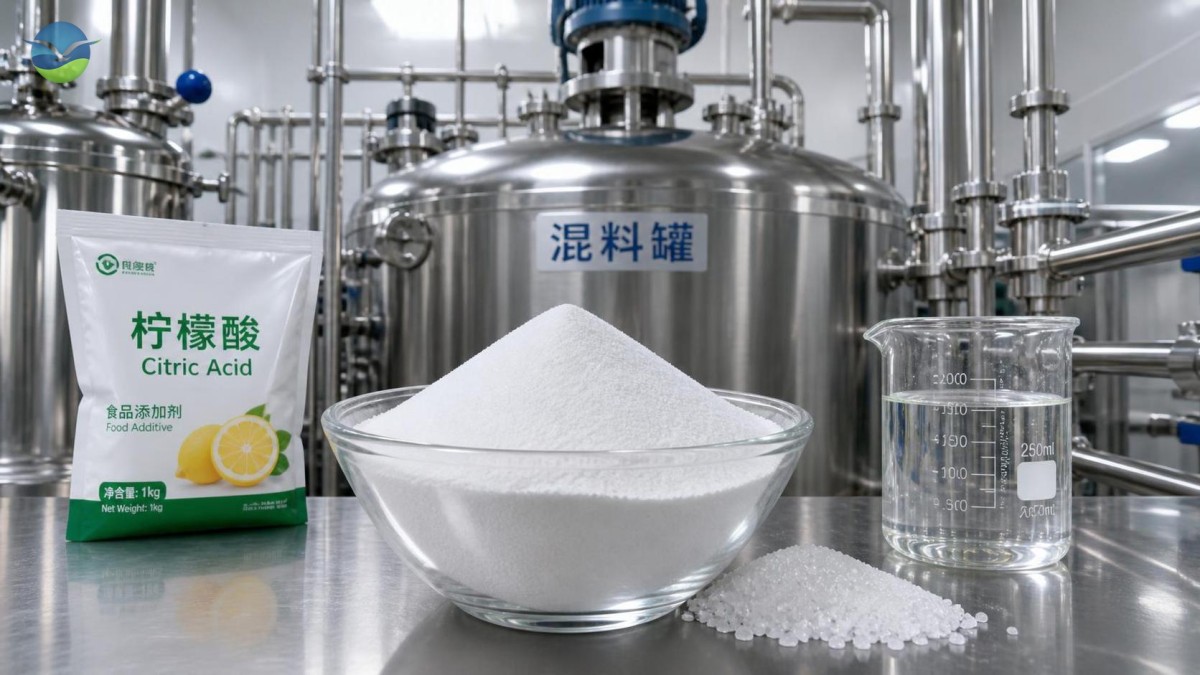
Common cleaning scenarios include:
- Descaling stainless steel vessels and process accessories
- Removing mineral film from heat-exchange surfaces
- Cleaning small equipment, nozzles, and removable components
- Household and institutional cleaning product formulation
- Maintenance cleaning in food-contact environments, subject to process controls
Even here, operators should not assume all soils respond equally. Powdered citric acid is especially useful on mineral deposits, but oily contamination, protein residues, or burnt-on organic matter may require surfactants, alkaline cleaners, or a multi-step cleaning sequence. Using the wrong chemistry for the wrong soil wastes time and may lead to unnecessary rework.
What formulation teams look for when using powdered citric acid
In formulation work, powdered citric acid often serves as a quiet balancing component rather than the star ingredient. Product developers use it to adjust pH, influence ingredient interaction, and support a target end-use experience. This applies in food, household products, selected personal care systems, and other chemical blends where acidity affects performance.
A practical example is dry product development. Because powdered citric acid can be added directly into dry systems, it helps simplify blending in sachets, granules, and powder concentrates. When later dissolved by the end user, it contributes to the expected acidic function without requiring a separate liquid-acid handling step during production.
Another reason formulators appreciate it is compatibility with broader innovation work. Teams that work across multiple raw materials may handle acids, humectants, active ingredients, and texture modifiers in parallel. In adjacent formulation fields such as cosmetics or functional care products, ingredient sourcing often overlaps operationally with materials like Sodium Hyaluronate Hyaluronic Acid Raw Material, where purity documents, stable supply, and communication speed matter just as much as the ingredient itself. Although the application is different, the procurement mindset is often similar: users need materials that fit process requirements and arrive with complete documentation.
Handling considerations that operators should not ignore
Powdered citric acid is widely used, but routine use can sometimes make teams overlook basic handling discipline. Because it is a fine acidic powder, dust generation should be minimized during opening, weighing, and charging. Local ventilation, clean transfer tools, and dry storage conditions all make a difference in preserving both operator comfort and product quality.
Several points are worth keeping in mind:
- Store in a dry environment to avoid caking and moisture absorption
- Use closed or semi-closed transfer where possible for cleaner handling
- Check material compatibility with packaging and nearby chemicals
- Avoid uncontrolled addition rates in formulations sensitive to pH shifts
- Review the intended concentration before using it as a cleaning solution
One common mistake is adding powdered citric acid directly into a system without considering dissolution behavior. In some processes, poor mixing can create local high-acid zones, affecting ingredient stability or causing uneven treatment. Pre-dissolving or controlled dosing may be the better route when batch consistency is important.
Choosing material quality: what matters beyond the label
From an operator’s perspective, not all sourcing decisions are about headline specifications alone. Particle consistency, purity stability, packaging integrity, and document availability can all affect day-to-day performance. A material that looks acceptable on paper may still create trouble if it cakes during storage, arrives with incomplete batch records, or varies too much between shipments.
This is one reason industrial buyers often value suppliers that can coordinate production and export support smoothly. For overseas customers, communication delays can be just as disruptive as material delays. Qixiang Chemical addresses this through a dual-location structure: foreign trade operations and customer communication are handled by the Wuxi team in Jiangsu, while manufacturing is managed at the Shandong production base. In practice, this means users can discuss samples, documents, logistics, or after-sales questions with a responsive trade team while still relying on source-manufacturer production control.
The Shandong facility operates its own standardized production setup with self-managed blending, processing, product formation, and final inspection. For operators and purchasing teams, that matters because it supports traceable supply and shipment documentation such as COAs and MSDSs. Meanwhile, the Wuxi foreign trade center helps reduce friction in inquiries, quotation follow-up, qualification paperwork, and export coordination. For buyers dealing with both small sample requests and full container shipments, that arrangement can be more practical than working through fragmented intermediaries.
Where powdered citric acid may not be the right answer
Good application decisions also require knowing the limits. Powdered citric acid is not a universal cleaner, not a substitute for every acid, and not automatically suitable for every formulation. If a system requires a different acid strength, a distinct reaction profile, or tighter control over buffering behavior, another ingredient may be a better match.
Similarly, if deposits are primarily organic rather than mineral, or if equipment soils include heavy grease and carbonized residues, citric acid alone may deliver disappointing results. In those cases, it is better used as part of a sequence rather than as a one-step solution.
For food formulations, users should also remember that acidity changes can ripple through the whole product. Flavor, color stability, microbial strategy, and ingredient solubility are often connected. A simple pH adjustment can unexpectedly change the finished experience.
A practical way to evaluate fit before scaling up
When deciding whether powdered citric acid fits a specific process, a small pilot approach usually saves time. Start with the real issue: taste correction, scale removal, pH adjustment, or formula stabilization. Then test at working concentrations under actual process conditions rather than relying only on theory.
Useful evaluation questions include:
- Does it solve the target problem without introducing a secondary one?
- Is the dissolution and mixing behavior manageable in your process?
- Does it interact well with the other ingredients or surfaces involved?
- Can the required quality grade be sourced consistently?
- Are the support documents and after-sales communication adequate for your compliance workflow?
That final point is often overlooked until something goes wrong. In many export-oriented chemical supply relationships, the product itself is only half of the experience. The rest is sample coordination, specification confirmation, document turnaround, and the ability to resolve issues without delay. This is why buyers managing diverse raw material categories, including items such as Sodium Hyaluronate Hyaluronic Acid Raw Material, often look for suppliers with both manufacturing depth and responsive trade support.
Used thoughtfully, powdered citric acid remains one of the most adaptable materials in routine chemical and processing work. It helps operators tune flavor, remove scale, and support formulation control without adding unnecessary complexity. The key is not just knowing that it has many uses, but understanding which use matches your process, your soil type, your product system, and your handling conditions. When those pieces line up, powdered citric acid does exactly what busy users want from a functional material: it works reliably, fits into the workflow, and solves real problems without fuss.
Please give us a message
Send Us Your Inquiry Today
Scalable production and one-stop R&D, manufacturing, sales & after-sales services.