






How to manage change control for DMF in pharmaceutical synthesis
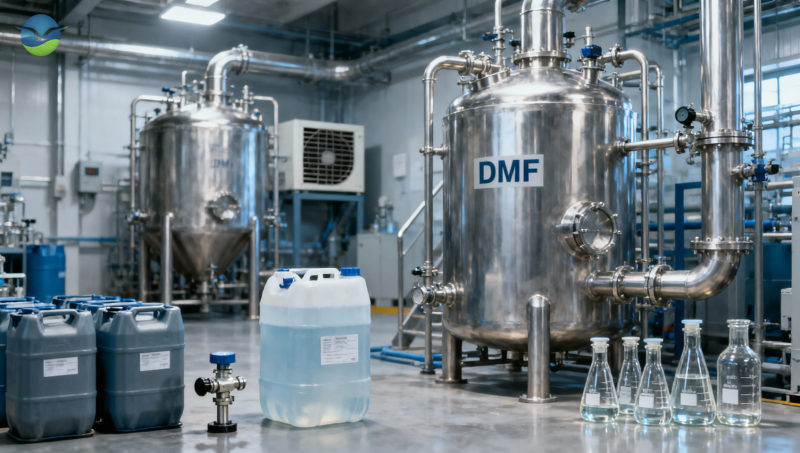
How to Manage Change Control for DMF in Pharmaceutical Synthesis
In pharmaceutical synthesis, DMF usually means dimethylformamide, not a Drug Master File. That distinction matters from the first quality review. Dimethylformamide is a useful polar aprotic solvent, but it is also a material that demands disciplined control because a seemingly small change can affect reaction behavior, impurity formation, residual-solvent clearance, operator exposure, waste handling, and the supporting regulatory file.
For quality control and safety managers, change control for DMF for pharmaceutical synthesis should not be treated as a document-routing exercise. The real question is whether the proposed change could alter the state of the solvent, the process, the product, or the evidence used to release the material. If that question is answered late—after a new batch has arrived, after production has started, or after an analytical trend appears—the investigation becomes much harder than it needed to be.
A practical system starts with one operating principle: no change is “administrative only” until the technical owner, QC, safety, and supply-chain functions have agreed that it is. A revised COA layout may be administrative. A revised specification limit, analytical procedure, sampling point, storage condition, manufacturing location, or transport route is not.
Define exactly what is being controlled
The change-control record should identify the DMF material in a way that avoids ambiguity. “Same product, new supplier” is not enough. Record the supplier legal entity, manufacturing site, grade, specification revision, packaging configuration, batch-number format, country of origin where relevant, and the applicable incoming-test plan. If the material is purchased through a trader, separate the trader from the actual producer. This is a common blind spot in solvent qualification.
The control boundary should also include activities surrounding the drum or container: unloading, sampling, transfer to bulk storage, nitrogen blanketing if used, dispensing, recovery, and disposal. DMF can pick up contaminants from poorly managed hoses, valves, intermediate tanks, sampling devices, or reused packaging. A supplier change may be well assessed while the new container connection or cleaning approach is not; the batch then carries a risk that no supplier COA can reveal.
At minimum, classify proposed changes into material, supplier, process, analytical, packaging and logistics, documentation, and safety or environmental changes. One request may sit in several categories. For example, switching from small drums to an ISO tank can change packaging, incoming sampling, exposure controls, cleaning requirements, and the probability of moisture introduction during transfer.
Start with impact, not with approval signatures
A useful assessment asks what could realistically change in the chemical process. For DMF, the answer often reaches beyond assay. Water content, non-volatile residue, acid or base content, unknown organic impurities, color, particulate matter, and trace contaminants can matter differently depending on the reaction. A moisture-sensitive coupling step may be highly affected by water that would be irrelevant in another synthesis. A high-temperature operation may be more sensitive to degradation-related impurities than a room-temperature dissolution step.
The team should map the solvent to the actual route of synthesis: where DMF enters, how long it remains in contact with reactants, whether it is heated, whether it is recovered and reused, and how it is removed later. Do not rely only on a generic solvent specification. The process owner needs to state which attributes are critical for this route and why.
DMF is addressed in ICH Q3C as a Class 2 residual solvent. The guideline should be consulted in its current applicable form when setting product-specific controls. It is not enough to quote a concentration figure without considering dose, purge capability, the finished-product specification, and the analytical method. In practice, a change in DMF quality may require confirmation that the existing purge argument remains sound rather than an assumption that downstream drying will always compensate.
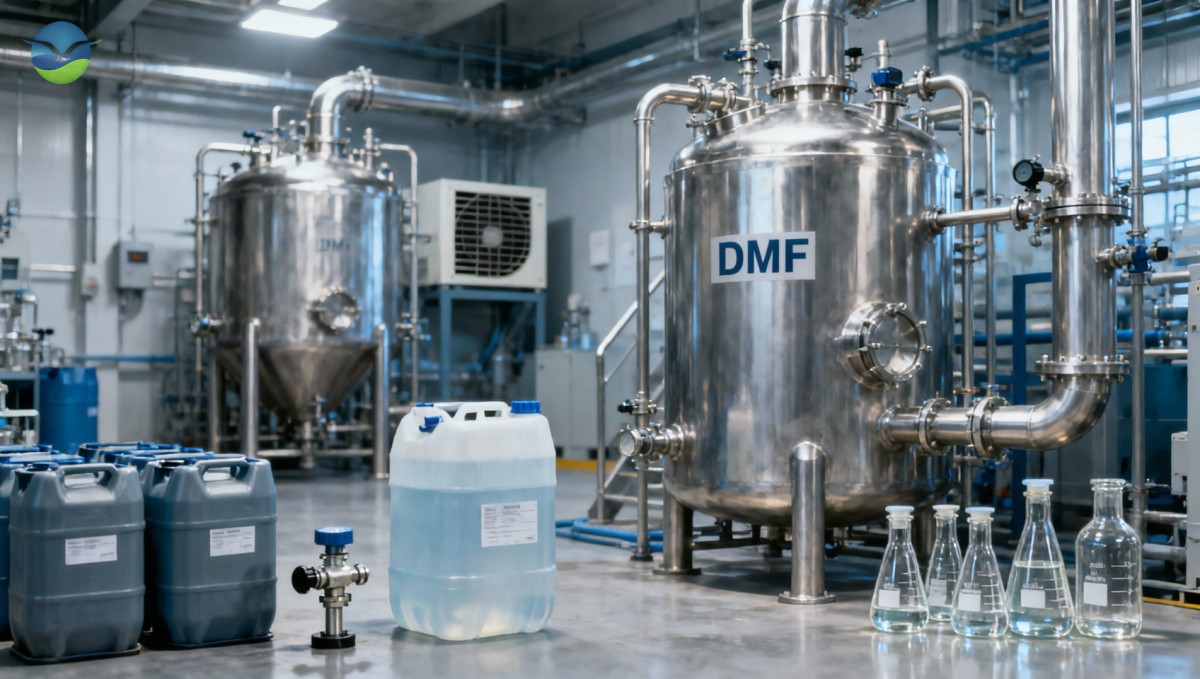
Risk ranking works best when it is specific. A change from one approved lot to another is routine. A new manufacturing site, altered purification train, revised impurity limit, or new recovery practice is normally higher risk. Changes to a test method may be particularly deceptive: if a method changes its detection capability, a trend can disappear from the paperwork without disappearing from the solvent.
Build a change package that can withstand a later investigation
The most reliable change records explain both the decision and the evidence behind it. A reviewer should be able to open the file months later and understand what changed, what risks were considered, what was tested, who approved the decision, and what conditions had to be met before implementation.
For a moderate- or high-impact DMF change, the package will commonly include:
- the current and proposed material specifications, with differences highlighted rather than buried in separate files;
- supplier questionnaires, site and manufacturing information where available, and a clear statement of who actually manufactures the solvent;
- representative COAs, safety data sheets, transport and packaging details, and change-notification commitments;
- an assessment of process compatibility, including water sensitivity, impurity risk, reaction performance, and expected solvent removal;
- analytical comparability work appropriate to the risk, which may include identity, assay, water, non-volatile residue, chromatographic impurity profile, or other route-relevant tests;
- safety review covering ventilation, closed transfer, spill response, personal protective equipment, storage compatibility, and waste-stream handling;
- implementation criteria, such as engineering-batch review, enhanced incoming testing for initial lots, or a defined period of trend monitoring.
Not every change needs a full laboratory comparability program. Repeating analysis because “that is what we always do” wastes time and may obscure the actual risk. Conversely, accepting a revised supplier COA without testing because assay remains unchanged is weak control. The sensible level of evidence depends on the change and on the synthesis step where DMF is used.
Supplier and logistics changes deserve closer scrutiny
International sourcing introduces a second layer of change control: the physical material may remain nominally the same while the documentation, transport lane, warehouse, or customer-facing contact point changes. These changes can affect lead times, seal integrity, document traceability, and the ability to investigate deviations quickly.
For overseas buyers working with Qixiang Chemical, the foreign-trade operations team in Wuxi handles enquiries, samples, quotations, order follow-up, logistics coordination, qualification documents, and after-sales communication. Its location in the Yangtze River Delta can make document exchanges and remote factory-visit arrangements more responsive for international customers. The source manufacturing base is in Shandong, where production, raw-material handling, quality inspection, and shipment documentation are managed within the operating facility.
That dual-location arrangement can be helpful, but quality teams should define responsibilities in writing. Who issues the COA? Who confirms a manufacturing-site change? Who receives a complaint involving a batch? Who can provide original testing records, and within what escalation route? Fast communication from a trade office is valuable, but it does not replace direct traceability to the producing site. A sound supplier-approval file connects both functions rather than treating them as interchangeable.
The same discipline applies when a supplier has a broad chemical portfolio. For example, a listing for Citric Acid Food Acidity Regulator Raw Material may describe citric acid as a white crystalline material supplied in anhydrous or monohydrate form, commonly packed in 25 kg bags. Such information can be relevant to a general supplier review, but it must not be used as evidence that a pharmaceutical DMF supply chain, quality system, test method, or storage practice has been qualified. Product-specific evidence is non-negotiable.
Make safety approval a real gate
Change control is often initiated by procurement or production, while safety is asked to sign after the decision is effectively made. With DMF, that sequence is risky. Changes in pack size, delivery method, transfer pump, drum-opening procedure, or recovery operation can change the exposure profile even when the chemical specification is identical.
Safety review should look at actual work, not only the SDS. Ask whether operators must disconnect hoses more often, take more frequent samples, clean spills in confined areas, or handle damaged packaging. Review whether local exhaust ventilation remains suitable, whether closed-transfer equipment is compatible with the revised container, and whether emergency arrangements reflect the new operating condition. If the proposed logistics change introduces longer storage or summer transit, assess whether seals, labeling, segregation, and inspection upon receipt remain adequate.
A particularly important decision is whether solvent recovery is included in the proposed change. Recovered DMF should never be treated as equivalent to fresh material merely because its assay is acceptable. The recovery process, contamination controls, testing strategy, permitted reuse point, and maximum reuse conditions need separate technical justification.
Implementation should be controlled, then verified
Approval is not the endpoint. Before the first changed batch is used, confirm that purchasing specifications, ERP material codes, warehouse instructions, sampling plans, laboratory methods, batch records, safety procedures, and training documents all point to the same approved state. A mismatch between the approved specification and the warehouse release instruction is enough to defeat an otherwise careful assessment.
For higher-risk changes, set a defined verification period. This may involve tighter incoming review for the first agreed number of lots, review of reaction yield and impurity data, comparison of residual-solvent results, and review of deviations or operator feedback. The point is not to manufacture extra paperwork. It is to prove that the assumptions made during risk assessment held true under normal operating conditions.
Close the change only when all commitments are complete. If a supplier promised revised impurity data, a translated quality agreement, or a specific notification procedure, those items should be received and reviewed before closure. Leaving actions open after implementation turns a controlled change into an undocumented risk carried by future batches.
The practical test of a good DMF change-control system
A good system does not reject every change; it distinguishes routine adjustments from changes that could affect patient protection, product quality, or worker safety. It also gives production and procurement a clear path to move quickly when the risk is genuinely low. The quality of the decision rests on whether the team understood the specific DMF use, checked the evidence at the correct level, and preserved a traceable record of why the material remained acceptable.
When uncertainty remains—especially around manufacturing-site history, impurity profile, recovered solvent, or residual-solvent clearance—the right response is not a faster signature. It is a narrower implementation scope, additional data, or a temporary enhanced-control plan. That is usually far less disruptive than explaining an avoidable deviation after the solvent has already entered a pharmaceutical batch.
Please give us a message
Send Us Your Inquiry Today
Scalable production and one-stop R&D, manufacturing, sales & after-sales services.