






How to dry ABS raw material pellets to prevent molding splay
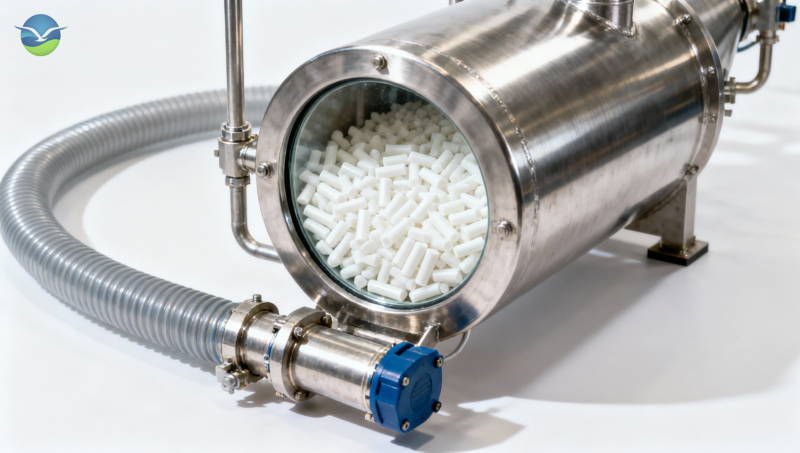
To prevent moisture-related splay, dry ABS raw material pellets under the conditions specified for the exact grade, confirm that pellet moisture meets its processing limit, and keep the dried resin protected until it enters the molding machine. Raising the dryer temperature without checking airflow, residence time, or moisture pickup can leave the underlying problem unresolved and expose the material to unnecessary heat.
Silver streaks form when gas stretches along the surface as the melt fills the cavity. Moisture is a common source, but trapped air, excessive shear, contamination, and thermal degradation produce similar marks. Establishing whether the pellets are adequately dry gives the investigation a reliable starting point.
Start with the grade’s drying requirements
ABS absorbs moisture from its surroundings. A pellet surface that looks dry does not establish that moisture within the pellet has been removed. Drying must supply enough heat to support moisture movement through the resin while circulating sufficiently dry air to carry that moisture away.
Use the current material technical data sheet or processing guide to establish the drying temperature, minimum drying time, and maximum permissible moisture content. Confirm any limit on cumulative heat exposure or repeated drying. Flame-retardant, reinforced, colored, and other modified ABS grades can require different treatment from unmodified resin.
If the documentation gives a temperature and time without a moisture limit, request the acceptance criterion and test method for that grade. A completed timer alone cannot establish that the material is ready, particularly after prolonged exposure to humid air.
Keep three temperature readings distinct: the dryer setpoint, the actual air temperature entering the hopper, and the temperature reached by the pellet bed. Heat loss, restricted airflow, or a faulty sensor can separate these values. Increasing the setpoint to compensate for an unidentified fault makes the process harder to control.
Make the drying conditions real inside the hopper
A desiccant dryer is a practical choice for controlling the drying-air moisture level when ambient humidity varies. Its performance still depends on airflow, regeneration, hose condition, and hopper loading. A hot-air dryer draws on ambient air, so a recipe that works during dry weather can become inadequate when the incoming air contains more moisture.
Compare the measured process-air dew point with the dryer specification and the resin supplier’s requirements. A reading taken near the desiccant unit can look satisfactory while leaking hoses admit humid air farther downstream. Record the measurement location so that successive readings remain comparable.
Restricted filters, crushed hoses, leaking connections, and obstructed air distributors reduce effective drying. Examine these when the dryer reaches its temperature setpoint but pellet moisture remains high. Desiccant regeneration faults also deserve attention when the air initially dries well and then deteriorates during production.
Hopper capacity must match material consumption. For a simple estimate, divide the usable resin mass in the hopper by the molding machine’s hourly consumption. If a hopper holds 60 kg of usable resin and the machine consumes 20 kg per hour, the nominal residence time is three hours. These illustrative values show the calculation; they do not define an ABS drying recipe.
The estimate assumes reasonably uniform material movement. Funnel flow, dead zones, or frequent large additions can give some pellets much less drying time. Use the hopper’s usable capacity rather than its maximum nameplate capacity, and reassess the calculation whenever cycle time, shot weight, or the number of operating cavities changes.
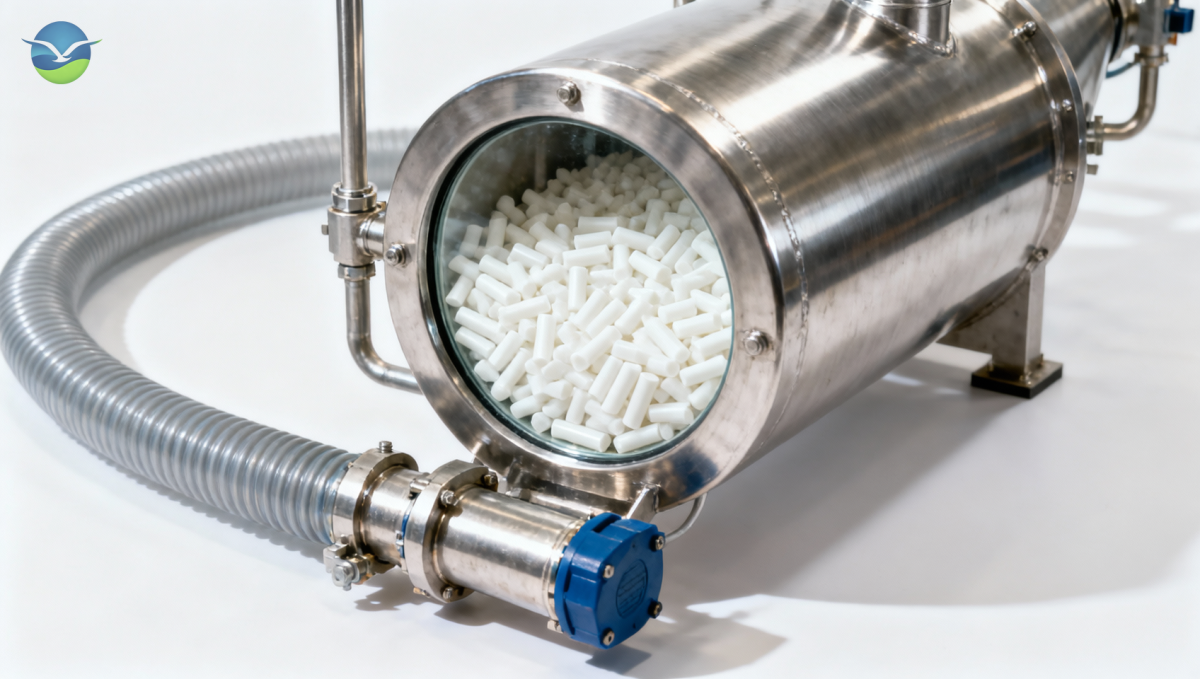
Verify moisture where the resin reaches the machine
Sample dried pellets near the hopper discharge or machine feed point using a safe sampling arrangement. A sample taken only from the top of the dryer can represent recently loaded material rather than the resin being processed. Conversely, material sampled upstream of an exposed transfer stage cannot reveal moisture absorbed during that transfer.
Transfer the sample promptly into a dry, sealed container. Keep the sampling method, handling time, and test procedure consistent. Leaving warm pellets in an open cup introduces an uncontrolled exposure that weakens comparisons between shifts or trials.
Use a moisture test method validated for the grade and the required measurement range. Karl Fischer testing measures water specifically when the sample preparation and method are suitable. A loss-on-drying analyzer measures mass loss; other volatile components can influence its result. Its heating program must therefore be appropriate for the material, rather than selected solely to obtain a faster reading.
Record the result together with the grade, lot, drying conditions, and sampling point. Compare it with the supplier’s limit using the same units. For example, 0.1% equals 1,000 ppm; confusing percentage and ppm creates a substantial acceptance error.
Dryer readings describe the equipment’s operating conditions; a suitable pellet moisture measurement establishes whether the resin meets the moisture requirement. When those two sources of evidence disagree, investigate the sampling method and the drying system before changing the molding recipe.
Protect dried ABS during transfer and interruptions
Keep dried resin in a closed, controlled feed path. Open bins, uncovered machine hoppers, and repeated manual transfers allow contact with ambient air. The significance of that exposure changes with humidity, temperature, exposure time, and the grade’s moisture absorption behavior.
Dry-air conveying or a protected machine hopper can preserve the condition achieved by the dryer. With ambient-air conveying, evaluate the transfer distance, frequency, and exposure under actual production conditions. A satisfactory moisture result at the dryer outlet does not automatically qualify the material at the feed throat.
Cold, unopened bags brought into a warm, humid molding area present a separate problem: condensation when opened. Allow sealed packaging to equilibrate with the processing environment before opening it. If water is already visible, keep the material segregated until its condition and appropriate drying treatment have been established.
During a stoppage, track both ambient exposure and time spent hot. Repeatedly restarting a full drying cycle without considering prior heat exposure can affect color or material performance. Follow the supplier’s holding and redrying guidance, and reduce the quantity kept hot when production demand falls.
Use the streak pattern to guide the next trial
Appearance alone cannot prove that splay comes from moisture. Its timing and location, combined with a moisture result, help select a useful trial. Change one relevant variable at a time and allow enough material turnover for the revised condition to reach the cavity before judging it.
- Streaking begins after a fresh material addition. Compare loading records with the onset of the defect. Newly added pellets may be reaching the outlet before completing the required drying period, especially when the hopper runs low.
- Parts improve after controlled drying and protected transfer. This supports a moisture-related explanation. Confirm the corresponding pellet moisture result before treating the new drying condition as established.
- Marks remain concentrated near a gate despite acceptable moisture. Investigate local shear and filling behavior. A controlled injection-speed adjustment can help test the relationship, while gate restrictions may require tooling review.
- Streaking appears after a long interruption, accompanied by discoloration or black specks. Excessive melt residence time, stagnant material, or contamination warrants investigation. Additional drying will not remove degraded resin from the barrel.
Odor changes can accompany degradation, but do not deliberately smell process fumes as a diagnostic method. Use normal extraction and assess the process through material condition, machine records, and part appearance.
When verified dry pellets still produce splay
Confirm actual melt conditions against the grade’s processing guidance. Barrel settings alone do not describe melt temperature because screw rotation, back pressure, and restrictions add shear heating. Excessive thermal exposure can generate volatile degradation products even when incoming pellet moisture is acceptable.
Excessive screw decompression can draw air into the melt preparation zone. Evaluate decompression against the amount needed to control drooling, then observe whether a controlled adjustment changes the defect. Avoid changing decompression, back pressure, and injection speed simultaneously; the result would provide little evidence about which mechanism mattered.
Restricted cavity venting is another route to gas-related surface defects. Marks near the last area to fill, particularly with localized burning, justify inspection of the relevant vents and filling sequence. Use the tool’s maintenance procedure rather than enlarging vents without a dimensional assessment.
Separate regrind and material-change effects
Regrind introduces a different moisture and handling history from sealed virgin pellets. Its fines, variable particle size, and storage exposure also affect feeding and drying consistency. Keep it covered and identified, and qualify the drying treatment and blend proportion against the requirements for the finished part.
If splay starts after a regrind addition, compare a controlled run using verified dry virgin resin with the current blend. Allow enough turnover to replace the previous material. An immediate judgment after changing the feed can mistake resin still in the hopper and barrel for the new condition.
Material identification matters during changeovers. Polyethylene products such as PE Polyethylene Polyolefin Plastic Raw Material have different moisture behavior and processing requirements from ABS. Polyethylene is generally non-hygroscopic, although surface moisture still requires attention. An ABS drying recipe should not be transferred to PE, and accidental PE contamination in an ABS feed stream requires investigation rather than additional drying.
Color concentrates and other additives also need compatible handling instructions. When the base resin meets its moisture limit but streaking begins with a new concentrate lot or dosing change, assess that feed separately. Increasing the ABS drying temperature can obscure the actual source while exposing the entire blend to unnecessary heat.
Once a stable condition is established, retain the grade-specific drying recipe alongside the measured moisture result, usable hopper loading, consumption rate, and transfer arrangement. If splay returns, those records reveal whether the change began in drying, material handling, or molding conditions and give the next trial a clear starting point.
Please give us a message
Send Us Your Inquiry Today
Scalable production and one-stop R&D, manufacturing, sales & after-sales services.