






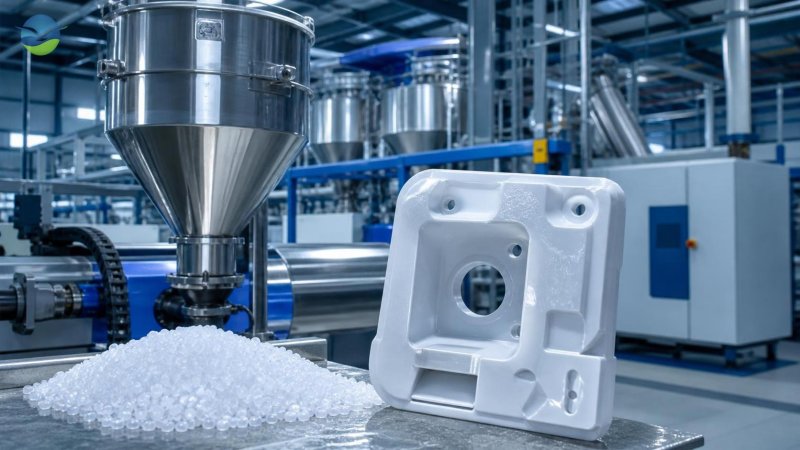
It often starts with a part that looks almost acceptable until the light hits it. A molded surface that should be smooth shows silver streaks, tiny bubbles, dull patches, or a rough scattered texture that was not there in the previous run. The machine settings may look unchanged, the mold may seem clean, and the resin may be from the same grade. Yet the finish keeps drifting. In many shops, this is the point where people begin adjusting barrel temperature, injection speed, holding pressure, or mold temperature one by one, hoping the surface will recover.
One common reason gets missed because the pellets themselves still look normal: moisture. Even though HDPE is not usually described as highly hygroscopic, moisture on the pellet surface, condensation during storage or transfer, and contamination from the surrounding environment can still interfere with stable molding. When that happens, the effect is not always dramatic enough to stop production immediately, but it can be enough to create visible defects, unstable appearance, and extra sorting work. If you work with hdpe pellets and surface quality matters, moisture deserves a closer look than it usually gets.
Why a small amount of moisture can still leave a visible mark
HDPE processes differently from strongly moisture-sensitive plastics, so operators sometimes assume drying is irrelevant. That assumption is where a lot of confusion begins. The issue is not only water absorbed into the polymer structure. In real production, trouble often comes from surface moisture, humid storage conditions, open bags left near warm-cold transitions, or pellets exposed during conveying.
Once those pellets enter the barrel, moisture can turn into vapor as temperature rises. That vapor has to go somewhere. During plasticizing and injection, it may disturb the melt front, create tiny voids near the surface, or leave streak-like marks as trapped gas escapes. On parts with glossy finishes, these defects become especially easy to notice. On textured parts, the appearance may show up instead as uneven gloss, a washed-out look, or random patches that make the production lot seem inconsistent.
The difficult part is that these defects can overlap with symptoms caused by other issues. Silver streaking may also be linked to excessive shear, contamination, degraded material, or poor venting. Splay can be confused with decomposition marks. Tiny blisters may lead people to suspect packing problems or mold temperature variation. Moisture does not always announce itself clearly, which is why it tends to stay on the suspect list longer than it should.
What surface defects usually point in this direction
When moisture is involved, the molded surface often gives indirect clues rather than one perfect signal. A few patterns are seen repeatedly in daily processing:
Fine streaks radiating from the gate or flowing along the melt path are a common one. Sometimes they look silvery; sometimes they look like faint brush marks. Another clue is a sudden change in gloss from one shot to the next, even though the machine settings and cycle look stable. Small pinholes, blisters, or a slightly pitted feel can also appear, especially on thicker sections where gas escape becomes less predictable.
Operators may also notice a practical process symptom before they notice the cosmetic one: the purge does not look as smooth as expected, or the cushion behavior becomes slightly less consistent. If a run starts well and then surface quality worsens after material has been sitting exposed near the hopper, moisture becomes a stronger possibility. Likewise, if defects become more frequent during humid weather or after pellets move from a cool warehouse into a warmer molding area, that timing matters.
Why people often diagnose the wrong cause first
It is understandable to blame temperatures or pressure before anything else. Surface defects are visible on the part, so the instinct is to adjust the visible process variables. But moisture-related problems are often upstream. By the time the defect appears on the molded surface, the actual cause may have happened during storage, conveying, regrind handling, or hopper exposure.
Another reason for misdiagnosis is that HDPE can continue running while still producing saleable-looking parts some of the time. If the defect is intermittent, the line may seem to “fix itself” after a process adjustment that was not actually related. That creates false confidence. Then the issue returns on the next shift, with the next lot opening, or when the weather changes.
Contamination can complicate the picture further. If pellets pick up dust, fines, or packaging residue along with moisture, the surface defect becomes less cleanly identifiable. In modified materials or blended systems, this gets even more confusing because additives may change the way vapor, shear, and surface appearance interact.
Start with the material path, not the control panel
When you suspect moisture, it helps to trace the pellets from storage to screw rather than only watching the molding cycle. Look at where the material was kept, how long it stayed open, whether bags or boxes went through temperature changes, and whether the conveying system allows humid air into the stream. If pellets were brought from a cooler area into a warm production floor, condensation may form even when the resin itself is not “water-loving” in the usual technical sense.
Regrind deserves separate attention. It often has more surface area, more exposure time, and more chances to pick up ambient moisture or contamination. If the defect becomes worse when regrind ratio increases, that is useful information, even if the virgin resin appears stable on its own.
At this stage, some teams also review other raw material handling habits across the plant. Even where the main work is polyolefin processing, people may already be familiar with moisture control because of other materials used in related production or packaging support. In procurement and material management discussions, it is not unusual to compare handling discipline across very different products, from polymers to specialty ingredients such as Sodium Hyaluronate Hyaluronic Acid Raw Material. The point is not that these materials behave the same, but that consistent storage rules often prevent avoidable quality drift before it reaches the machine.
Practical ways to confirm whether moisture is involved
You do not need to turn every investigation into a long lab exercise. In a production setting, a few controlled comparisons usually tell you more than random parameter changes.
One useful approach is to isolate a small amount of material that has been protected from open-air exposure and compare it with pellets that have been sitting in the normal feed path. Run them under the same molding conditions if possible. If the protected material gives a cleaner surface, that difference is meaningful. Another practical check is to inspect hopper and conveying conditions during shift changes, breaks, or periods when the machine is idle. Moisture-related issues often become worse after these pauses because the material path has more time to interact with ambient air.
If drying equipment is available, a limited trial can help clarify the diagnosis. The goal is not to assume every HDPE grade needs aggressive drying as standard practice. The goal is to see whether temporary drying or better sealed handling changes the defect pattern. If the surface becomes noticeably more stable after that trial, moisture was likely contributing even if it was not the only cause.
It also helps to inspect the mold venting before closing the case. Moisture and poor venting can reinforce each other. A small amount of vapor that might otherwise pass harmlessly can become a visible defect if gas has nowhere to go. So if you dry the material but ignore blocked vents, you may only solve part of the problem.
Process adjustments that help once the source is understood
After moisture is identified as a factor, the best correction is usually better material handling first, then process tuning second. Operators naturally want a machine-side answer, but trying to “burn through” the problem with temperature or speed adjustments often creates new variation.
That said, some processing changes can reduce the visible effect while upstream corrections are being put in place. Excessive barrel temperature can intensify vapor-related marks by making gas generation and melt disturbance more noticeable, so bringing the profile back to a reasonable range may help. Very high injection speed may stretch streaking along the flow path, while very low speed can create its own appearance issues, so the answer is usually balance rather than an extreme change.
Back pressure should also be reviewed with care. Too little mixing can leave the melt less uniform, but too much shear may create a different cosmetic problem that masks the original one. If the screw recovery phase appears unstable or unnecessarily harsh, smoothing that part of the cycle may improve appearance consistency.
Mold temperature matters too, not because it removes moisture, but because it influences how the surface forms and how gases escape. A colder mold can freeze the skin quickly and trap defects in place. A slightly more stable mold temperature may reduce the visual severity of streaks or haze, though it will not compensate for poor pellet handling over time.
Storage habits that make more difference than expected
Many recurring surface problems do not begin at the press. They begin with ordinary handling shortcuts that seem harmless at the time. Open bags left near the machine, partially used material returned to storage without proper sealing, and pallets moved between different temperature zones are all common examples. None of these guarantees a defect, but together they raise the odds.
For hdpe pellets, it is worth keeping transfer time short and exposure controlled, especially in humid conditions. If material must wait before use, sealed containers are safer than open liners. If the plant regularly moves material from a cool warehouse to a warmer molding area, letting it stabilize before opening can reduce condensation risk. The same logic applies to regrind bins and conveying hoppers, which often receive less attention than virgin material packaging.
Documentation matters here more than people think. If one shift records when a bag was opened and another does not, troubleshooting becomes guesswork. A simple habit of noting exposure time, regrind percentage, and storage condition can make pattern recognition much easier. That kind of discipline is common in many material supply chains, whether the product is a bulk polymer grade or something more specialized like Sodium Hyaluronate Hyaluronic Acid Raw Material, where handling consistency is part of basic quality protection.
When the defect is probably not only moisture
Not every streak, haze, or pinhole on an HDPE part comes from water exposure. If improved material protection does not change the result, widen the search. Check for degraded resin sitting too long at temperature, contamination in regrind, nozzle issues, dead spots in the barrel, blocked mold vents, or an unfavorable gate design. Surface defects often have mixed causes. Moisture may be the trigger in one run and only a secondary factor in another.
A good rule is to compare timing, not just appearance. If defects correlate with certain lots, weather shifts, storage transitions, or longer hopper residence times, moisture remains a strong candidate. If defects correlate instead with specific tools, one cavity, one barrel setup, or one speed range, another root cause may be more important.
Keeping the problem from coming back
The most effective prevention usually looks less dramatic than the troubleshooting phase. Keep material sealed until needed. Avoid opening more than the shift is likely to consume. Watch for condensation risk when moving pellets between temperature zones. Treat regrind as a separate moisture-control task rather than assuming it will behave like fresh resin. Maintain hopper covers, conveying lines, and venting so the machine is not working against avoidable environmental exposure.
When surface appearance suddenly changes, start by asking where the pellets have been, not just what the machine is doing. That simple shift in thinking can save a lot of unnecessary adjustment. Moisture in hdpe pellets may not always be the first suspect, but when the defect pattern is inconsistent, weather-sensitive, or tied to material exposure, it is often one of the most practical causes to check early.