






How LLDPE granules improve puncture resistance in packaging film
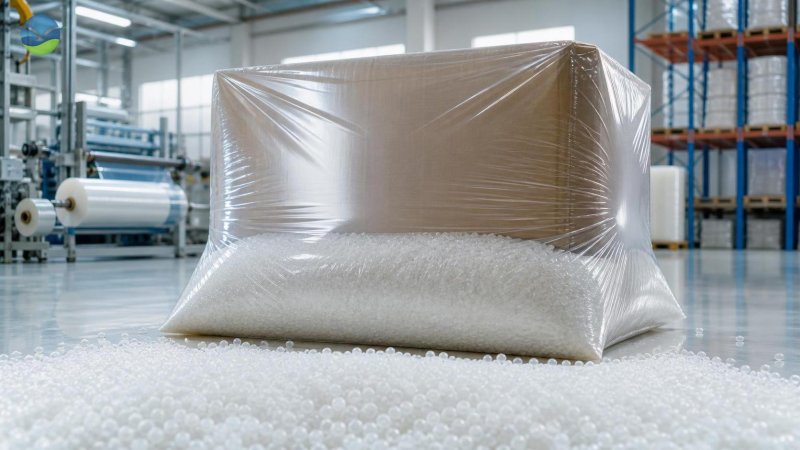
A packaging film rarely fails in a laboratory-perfect way. More often, it is a pallet corner pressing from below, a sharp product edge shifting in transit, or a frozen surface turning a small weakness into a tear. That is why puncture resistance matters so much in real-world film performance. For converters and buyers evaluating material choices, lldpe granules are often central to the answer. They help films absorb impact, stretch under stress, and resist localized damage that would quickly break more brittle structures.
In practical terms, puncture resistance is not only about making film “stronger.” It is about balancing toughness with sealability, flexibility, downgauging potential, and stable processing. This is where linear low-density polyethylene has maintained its relevance across industrial, agricultural, food, and protective packaging applications. When the resin is selected and processed well, the resulting film can better survive handling, filling, warehousing, and transport without becoming overly stiff or difficult to run.
Why puncture resistance is such a decisive property in film packaging
Many packaging failures begin at a single point of concentrated force. A protruding corner from boxed goods, a metal component inside a bag, or a stacked load shifting during shipment can all create pressure in one small area. Films with poor puncture resistance may initially look acceptable in thickness tests, but under actual logistics conditions they can rupture suddenly.
For this reason, film manufacturers do not judge performance by tensile strength alone. A packaging film needs to deform without instantly breaking. It should distribute stress, maintain integrity as load conditions change, and resist crack growth after the first impact. In demanding sectors such as heavy-duty liners, stretch hood films, collation shrink films, and agricultural wraps, this balance is especially important.
LLDPE granules are widely used because their molecular structure supports that balance. Compared with materials that may offer rigidity but limited elongation, LLDPE contributes a combination of elasticity, toughness, and resistance to tear propagation. That combination is often what keeps a puncture event from becoming a full packaging failure.
What lldpe granules are really doing inside the film
The advantage of LLDPE is not just a generic idea of “better plastic.” Its linear polymer backbone with controlled short-chain branching allows the film to behave differently under stress. When force is applied to a small point, the film can stretch and redistribute that force instead of cracking immediately. This is especially useful in blown film applications where impact toughness and dart drop performance are closely watched.
In film structures, LLDPE often improves:
- Resistance to puncture from sharp or irregular edges
- Tear strength and toughness during handling
- Elongation before break
- Load retention in flexible packaging formats
- Downgauging potential without severe loss of durability
That does not mean every grade performs the same way. Density range, melt index, comonomer type, blend ratio, and film design all influence final results. But as a material family, LLDPE remains a preferred foundation when puncture resistance is a priority and the film still needs to stay workable on production lines.
How film structure and processing affect puncture performance
It is easy to assume that switching to lldpe granules automatically solves a film failure problem. In reality, resin selection is only one part of the equation. Film performance comes from the interaction between material choice and processing conditions.
For example, a well-chosen LLDPE grade may underperform if extrusion temperatures are unstable, bubble control is poor, or thickness distribution is inconsistent. Thin spots can become puncture initiation points even when the base resin is suitable. Similarly, excessive orientation in one direction may improve some mechanical properties while weakening resistance in another.
Manufacturers usually look at several factors together:
- Film thickness uniformity: uneven gauge increases localized failure risk.
- Blend composition: LLDPE is often combined with LDPE or other resins to fine-tune stiffness, clarity, sealing, or processing behavior.
- Layer design: in co-extruded films, puncture resistance can be improved by placing tougher layers strategically.
- Cooling and orientation: processing history affects molecular arrangement and impact behavior.
- Additive package: slip, antiblock, and other additives can influence handling and surface performance, though they must be selected carefully.
This is why packaging converters usually ask not just for a resin name, but for application guidance. A resin that works beautifully in a heavy-duty bag may need a different formulation approach in a high-speed food packaging line.
Where lldpe granules make the biggest difference
Some applications expose film to only light contact and low transport stress. Others are far less forgiving. In those harsher environments, the contribution of LLDPE becomes much more visible.
Industrial packaging often involves metal parts, machine components, resins, powders, or boxed loads with hard corners. Bags and stretch films in these settings need to absorb abrasion and concentrated force without opening pathways for contamination or product loss.
Agricultural film faces puncture risks from uneven ground, plant stems, and installation handling. Toughness matters because the film may be stretched, folded, and exposed to fluctuating conditions before it even reaches full use.
Transport and pallet wrapping require films that can hold unstable loads securely. If a stretch film punctures too easily, containment performance drops quickly, and a minor damage point can spread during shipment.
Flexible liners and sacks for granules, chemicals, and bulk-packed materials also benefit from LLDPE’s toughness. In these applications, puncture resistance protects not only the package but the broader logistics chain.
Across these uses, the aim is similar: prevent small contact points from becoming expensive failures.
Choosing the right grade: what buyers should actually ask
If you are researching materials for a packaging project, the most useful question is not “Is LLDPE good?” but “Which LLDPE grade suits my film structure and end use?” That shift matters.
Buyers and technical teams should look beyond generic descriptions and ask suppliers about:
- The intended film application of the grade
- Melt flow characteristics and processing stability
- Recommended blending approaches
- Expected contribution to impact and puncture resistance
- Compatibility with mono-layer or multi-layer film production
- Consistency between batches
- Availability of COA and MSDS documentation
Supply reliability also matters more than many first-time buyers expect. A film formula developed around one resin profile can become difficult to control if incoming material varies too much. Stable production quality helps converters avoid repeated machine adjustments, scrap generation, and property drift from batch to batch.
In chemical sourcing, this broader view of material control is not unique to polyolefins. Even in other industries, whether the application involves film additives or ingredients such as L-Ascorbic Acid Vitamin C Cosmetic Raw Material, buyers tend to favor suppliers who can combine technical documentation, production traceability, and responsive export coordination rather than simply offering a low initial quote.
Why supplier structure matters for overseas packaging buyers
For international customers, selecting lldpe granules is not only a technical decision. It is also an operational one. Delays in samples, missing paperwork, slow responses, or inconsistent factory coordination can turn a straightforward procurement process into a drawn-out problem.
This is where an integrated operating model becomes valuable. Qixiang Chemical draws on the background of a state-owned chemical enterprise while organizing customer-facing foreign trade operations in Wuxi, Jiangsu, one of China’s strongest commercial and export regions. For overseas buyers, that means inquiries, documentation, quotations, sample coordination, logistics communication, and after-sales follow-up can be handled through a dedicated team close to major cross-border trade infrastructure.
At the same time, production is anchored in Shandong, where the company’s source manufacturing base supports scalable output. The facility includes modified granulation lines, raw material storage, and quality inspection capabilities, allowing the production process to remain under direct control from blending through final testing. This dual-location setup is especially relevant for buyers who need both communication efficiency and dependable manufacturing coordination.
In packaging resin procurement, those practical details matter. A technically suitable material still needs to arrive with the right supporting documents, predictable lead times, and clear contact points when formulation questions come up.
Common misunderstandings about puncture-resistant film
One common mistake is assuming thicker film automatically means safer packaging. Thickness certainly influences durability, but it does not replace proper resin design. A poorly structured thick film can still fail under sharp-point stress, while a well-optimized LLDPE-based film may achieve stronger practical performance at a reduced gauge.
Another misunderstanding is treating puncture resistance as a single-number property. In reality, performance depends on test method, temperature, film orientation, and the kind of object causing the damage. A film that performs well against blunt impact may behave differently against a narrow sharp edge. That is why end-use simulation is often as important as standard lab testing.
There is also a tendency to separate cost from performance too rigidly. Lower-priced material may seem attractive at purchase stage, but if it causes line instability, seal failures, or higher damage rates in shipment, the total packaging cost can rise. Material selection works best when resin price, film efficiency, and field performance are considered together.
What a sensible material evaluation process looks like
For companies comparing film materials, a practical evaluation path usually begins with the package’s actual failure mode. Is the issue corner puncture, drop damage, load creep, or tearing during filling? Once that is clear, resin choice becomes more precise.
From there, converters often test several options under production-relevant conditions. They compare not only puncture resistance but also extrusion behavior, sealing, haze, stiffness, and throughput. This is where dependable lldpe granules can stand out: not because they solve everything in isolation, but because they fit into a broader performance package that packaging teams can work with consistently.
For information-focused buyers, the most valuable outcome is clarity. You want to know whether the resin supports your film design, whether the supplier can maintain stable quality, and whether the logistics and documentation process is manageable for repeated business. If those three pieces align, puncture resistance becomes something you can build into the package rather than troubleshoot after failures appear in the field.
In modern film production, durability is rarely about brute thickness alone. It is about smart material behavior under stress. That is exactly why lldpe granules continue to matter: they help packaging films stay flexible, absorb impact, and resist puncture in the places where real damage usually begins.
Please give us a message
Send Us Your Inquiry Today
Scalable production and one-stop R&D, manufacturing, sales & after-sales services.