






Dye Intermediate Chemical Selection: Performance Factors That Affect Color Fastness and Yield
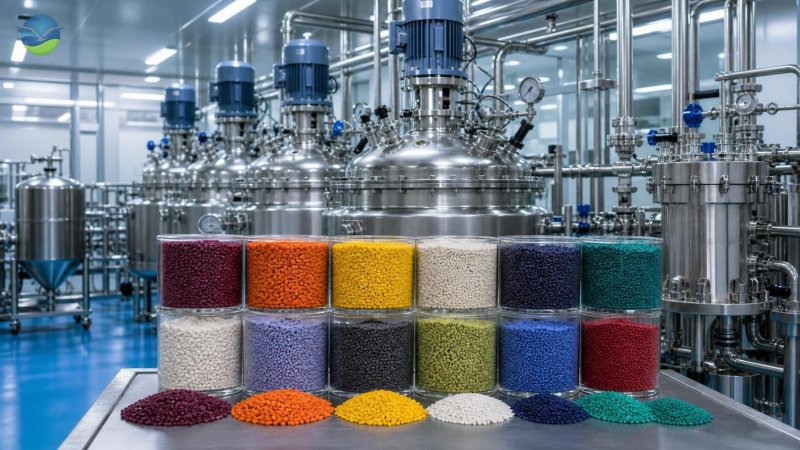
Selecting a dye intermediate chemical starts with the final shade target, but the real decision is made by how the intermediate behaves during reaction, purification, and downstream dyeing. A material that looks acceptable in a specification sheet can still produce weak color fastness, unstable yield, or filtration trouble if its impurity profile, moisture level, or particle behavior is wrong for the intended process. For that reason, the first filter is not nominal purity alone; it is whether the intermediate can support the same outcome across repeated batches under the actual plant conditions.
In practice, the most useful performance data are often tied to reaction behavior rather than only product identity. Solubility in the chosen solvent system, melting behavior, acid-base response, and tendency to form local overconcentration during charging all affect conversion efficiency. When a dye intermediate chemical dissolves too slowly, the reaction zone can become uneven and side products may rise. When it dissolves too quickly, heat release may become harder to control. Both cases can affect the final chromophore distribution and the apparent depth of shade. Small differences in crystal form or milling history sometimes matter as much as the stated assay.
Color fastness is also shaped by how cleanly the intermediate enters the intended coupling, condensation, or substitution step. Residual salts, trace oxidants, and unreacted starting materials may not look severe in routine testing, but they can interfere with final dye stability. In wet processing, these traces may influence migration, rubbing behavior, or resistance to wash and light. If the downstream formulation depends on stable chromophore formation, the intermediate should be evaluated for impurity patterns that are compatible with the dye class, not simply for general purity. This is one reason laboratories often compare several lots before locking the route.
Moisture control deserves more attention than it usually gets. A hygroscopic intermediate can shift weighing accuracy, alter feed consistency, and change local concentration in the reactor. In granulated or compacted forms, excessive moisture may also affect caking during storage and unloading. For bulk handling, the issue is practical: a material that bridges in bins or forms hard lumps can interrupt dosing and cause batch-to-batch variation. When the intended process window is narrow, even moderate moisture drift can move the reaction away from its expected conversion profile.
Particle size distribution is another hidden variable. Fine powders improve dispersion in some systems, but they can also create dusting, static accumulation, and faster oxidation if the chemistry is sensitive to air exposure. Coarser material may flow better and reduce handling losses, yet dissolve more slowly and leave unreacted residues if the mixing regime is weak. The right choice depends on reactor geometry, agitation strength, solvent choice, and whether pre-slurrying is part of the process. In a few routes, a controlled granule can be more reliable than a highly milled powder because it gives a steadier feed rate.
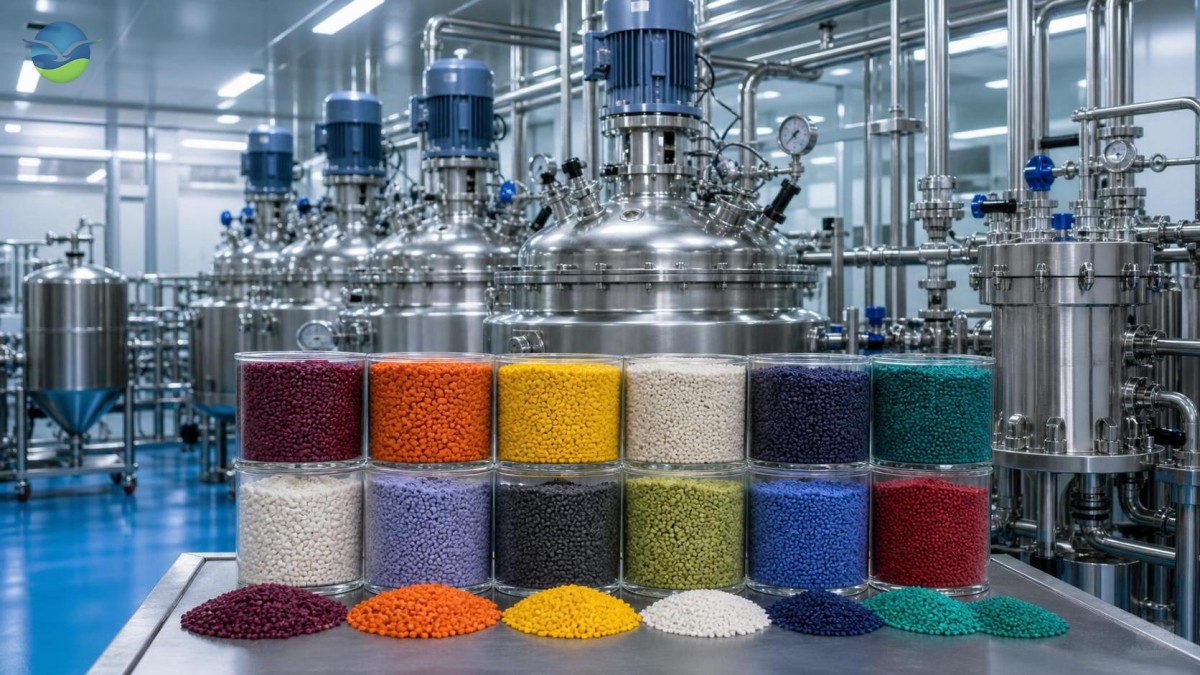
Thermal stability should be reviewed before any scale-up decision. Some dye intermediate chemical types tolerate normal warehouse conditions, but begin to discolor, soften, or decompose when held too long at elevated temperature. That matters during summer transport, container storage, and hot-weather unloading. If an intermediate slowly degrades before use, the change may not be obvious until the dye batch shows higher byproducts or reduced reproducibility. Packaging choice therefore needs to match both chemistry and logistics. Moisture-barrier bags, lined drums, or sealed inner packs can be appropriate, but only if they do not trap heat or create condensation risk after transit.
Compatibility with the next step in the route is often underestimated. A material may meet a general analytical standard and still perform poorly if it interacts with catalysts, bases, acids, or solvents used later. For example, trace metal contamination may affect oxidation-sensitive routes; excessive inorganic residue can complicate filtration and washing; residual solvent can shift equilibrium or change the apparent solids loading. Technical evaluation should therefore read the intermediate together with the full process sequence, not as a standalone commodity.
Yield depends on more than chemical purity. Feed accuracy, charge sequence, agitation intensity, and heat removal all play a part, but the intermediate still sets the ceiling. If the material contains a broad impurity spectrum, more side reactions are likely and the isolation step becomes heavier. If it is too reactive, yield may fall because of premature coupling or overreaction. If it is too inert, conversion slows and unreacted loss increases. The best option is usually the one that gives a predictable window, even if a slightly more aggressive grade appears attractive on paper. For high-volume routes, predictability often matters more than a narrow lab value.
Procurement specifications should translate these process needs into measurable acceptance points. Assay alone is insufficient. A useful specification may include residual solvent limits, water content, ash, particle size range, appearance, pH behavior in solution, and limits for trace metals or colored bodies, depending on the route. If the material is shipped internationally or stored before use, stability data under transport-like conditions are also worth requesting. Documentation such as COA and MSDS supports this review, but the actual evaluation should still focus on fit for the intended synthesis path.
Supply form matters as much as chemistry. The same active intermediate may be offered as powder, flake, granule, or pre-dried solid, and each form changes handling, dust, and dissolution behavior. In a plant with automated charging, free-flowing material may reduce operator variation. In a small batch setup, a slower-dissolving solid may be acceptable if it avoids splashback or localized overheating. The form should match the equipment, not just the target compound.
Transport conditions can quietly change performance before the material reaches the reactor. Long sea transit, hot loading yards, and repeated transfer between warehouses can all affect caking, oxidation, and moisture pickup. A dye intermediate chemical that performs well in a sealed laboratory sample may behave differently after a humid shipment. That is why incoming inspection should compare not only label information but also physical state, flow, and color tone against retained samples. Small deviations at this stage can signal larger changes later in the process.
In some development programs, a related raw material such as Sodium Cyclamate Sweetener Food Raw Material may be studied alongside the main route to understand shared handling or purification behavior, especially when salts, crystallization habits, or drying sensitivity are part of the process review. That comparison is only useful when the chemistry is actually relevant; otherwise it adds noise rather than clarity.
When evaluating alternatives, the practical question is whether the material supports stable processing at scale. A candidate that gives acceptable lab color but unstable filtration, slow washing, or frequent batch adjustment is usually a poor fit. A stronger choice is the one that keeps the reaction controllable, limits impurity carryover, and gives a repeatable dye profile without forcing unusual operator intervention. For dye systems, that balance between reaction behavior and downstream quality is where selection work really ends.
Please give us a message
Send Us Your Inquiry Today
Scalable production and one-stop R&D, manufacturing, sales & after-sales services.