





Building a Chemical Solvent Transportation Plan for Multi-Site Manufacturing Supply
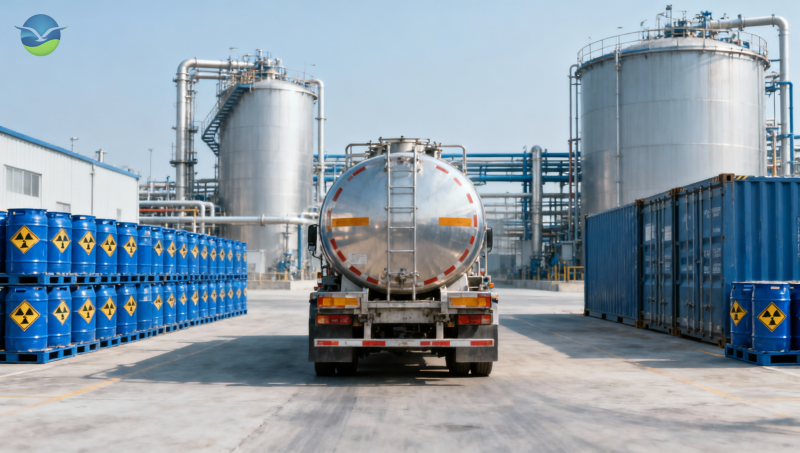
A reliable chemical solvent transportation service is essential for multi-site manufacturing projects where safety, timing, compliance, and supply continuity directly affect production performance.
This guide outlines how project managers can coordinate Shandong production, export documentation, hazardous-material handling, and global delivery requirements while maintaining scalable, cost-effective supply.
Start with the Operational Decision, Not the Freight Booking
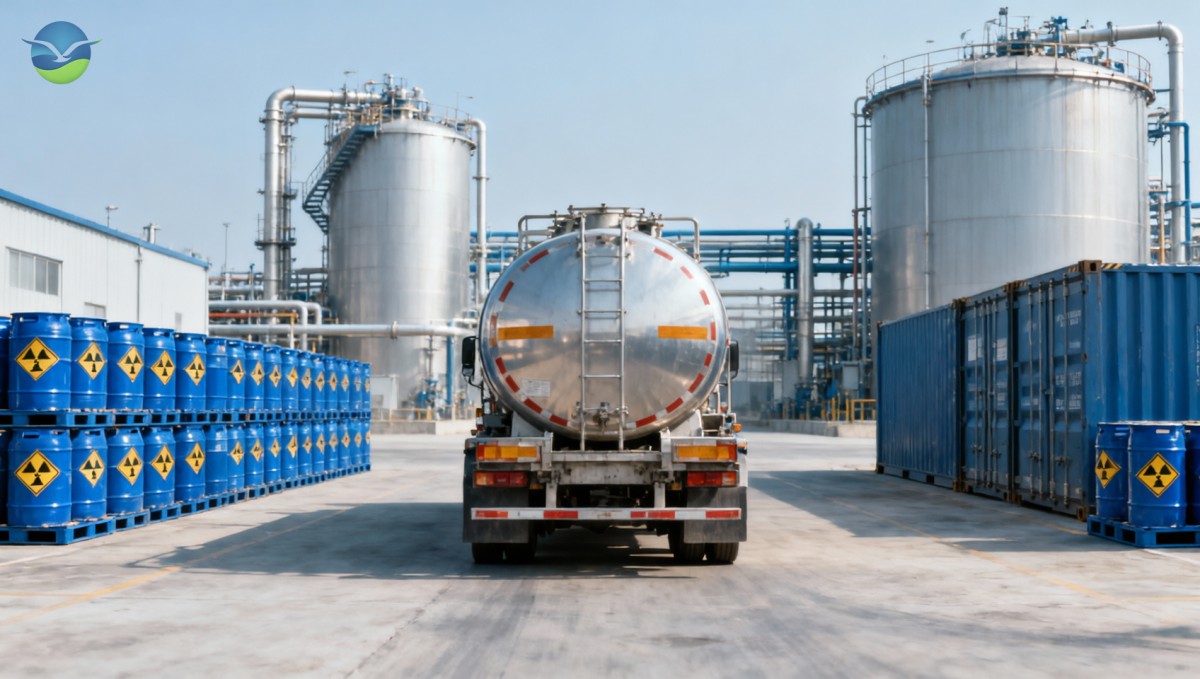
Project managers searching for a chemical solvent transportation service usually need more than a carrier. They need a transport plan that protects production schedules across several facilities.
The central question is whether supply can arrive in the correct quantity, condition, packaging format, and regulatory status before each site reaches its reorder threshold.
A workable plan therefore begins with production consumption data, site storage constraints, shipment lead times, and the specific hazard classification of each solvent product.
Freight rates matter, but an apparently low-cost route can become expensive when it causes delayed customs clearance, rejected documentation, damaged packaging, or emergency replenishment purchases.
For multi-site operations, transportation should be managed as part of supply continuity. It cannot be treated as an isolated outbound logistics activity after manufacturing is complete.
The strongest plans connect procurement, plant scheduling, safety teams, warehouse operators, customs brokers, and overseas receiving sites through one shared set of shipment controls.
This approach helps project leaders evaluate logistics providers based on operational reliability, not only quoted transportation prices or promised delivery windows.
Map Demand by Site Before Choosing Transport Modes
Each manufacturing location may consume solvents differently. One site may require regular bulk replenishment, while another needs smaller deliveries for trials, maintenance, or specialized production batches.
Create a site-level demand map that records monthly volume, minimum inventory, maximum storage capacity, approved unloading capability, and the consequences of a supply interruption.
Classify sites by criticality. High-priority plants should receive more conservative safety stock and earlier shipment release triggers than facilities with flexible production schedules.
Do not assume one delivery pattern suits every destination. Consolidated container shipments can reduce unit freight costs, but they may increase local inventory pressure and exposure.
Smaller, more frequent deliveries can improve inventory control, although they require dependable local carriers, stronger appointment management, and more rigorous packaging inspection procedures.
For international projects, calculate lead time from confirmed purchase order through production, quality release, export declaration, ocean or air transit, customs clearance, and local delivery.
Build the schedule around the longest credible lead time, rather than the fastest transit estimate. This protects production plans from port congestion, inspections, weather, or documentation corrections.
A practical demand map also identifies opportunities to combine compatible materials. Coordinated shipments may reduce freight costs without compromising segregation, safety requirements, or delivery priorities.
Confirm Chemical Classification and Packaging Requirements Early
Every chemical solvent transportation plan should begin with verified product data. Incorrect classification creates safety risks and can stop a shipment at the terminal, port, or border.
Collect the latest safety data sheet, transport classification, UN number where applicable, packing group, flash point, marine pollutant status, and emergency response information.
Different jurisdictions may apply additional restrictions for flammable liquids, toxic substances, corrosive products, or products transported under temperature-sensitive conditions.
Project teams should verify whether the selected route involves road, rail, sea, or air transport because each mode may impose different dangerous goods requirements.
Packaging decisions must match both chemical compatibility and the handling environment. Drums, intermediate bulk containers, flexitanks, and bulk tanks offer different cost and risk profiles.
Drums can support flexible shipment sizes and easier segregation. However, they require more handling, create more potential leak points, and increase receiving-site labor requirements.
Bulk transport may lower packaging waste and unit logistics costs for stable, high-volume demand. It also requires compatible unloading systems, trained personnel, and adequate tank capacity.
Specify palletization, drum orientation, closure protection, labels, overpacks, and moisture controls in writing. These details prevent different suppliers or logistics partners from making assumptions.
Before every first shipment, confirm that receiving teams can safely unload, inspect, store, and use the selected packaging configuration without unplanned equipment changes.
Build Documentation into the Production and Export Workflow
Documentation should be prepared alongside manufacturing, not after goods have reached the loading stage. Late paperwork is a common cause of avoidable export and customs delays.
Typical documents include commercial invoices, packing lists, bills of lading, certificates of analysis, safety data sheets, dangerous goods declarations, certificates of origin, and insurance records.
Assign document ownership clearly. The manufacturer should control technical product information, while export operations should manage declarations, shipping instructions, and destination-specific commercial requirements.
Qixiang Chemical's Wuxi foreign trade operations team can support customer communication, sample coordination, quotations, export follow-up, logistics alignment, and after-sales document handling.
This separation can be valuable for overseas project teams because Shandong production personnel can focus on manufacturing consistency while Wuxi specialists coordinate external trade processes.
A documentation checklist should include document version control, product name consistency, shipment quantity reconciliation, consignee details, container references, and destination import requirements.
Use the same agreed product description across purchase orders, invoices, packing lists, labels, and declarations. Inconsistent wording can trigger customs questions or clearance delays.
For regulated chemicals, retain records of classification decisions and supporting data. This creates traceability if authorities, insurers, customers, or internal safety teams request evidence later.
Project managers should request documents before vessel departure whenever possible. Early review allows corrections while the cargo remains accessible at the origin terminal or warehouse.
Design Supplier-to-Port Controls for Shandong-Based Production
Transport planning should account for the full origin journey, including collection from the plant, staging, loading, inland transfer, port gate procedures, and export release.
A Shandong manufacturing base can offer strong production capacity and access to chemical-industry supply networks, but inland coordination still determines whether export schedules remain dependable.
Set defined loading windows between production release, laboratory approval, packaging completion, and carrier collection. This avoids containers waiting unnecessarily near sensitive chemical cargo.
Quality release is particularly important. Cargo should not be dispatched merely because the production batch is physically complete; it must meet the agreed specifications and documentation requirements.
For each shipment, establish a loading inspection covering container condition, cleanliness, odor, moisture, flooring integrity, placard placement, cargo securing, and package count verification.
Photographic evidence at loading can support claims management and help resolve disputes about package condition, labeling, or container suitability at the destination.
When planning full-container exports, identify alternative ports and trucking options before peak shipping seasons. Diversion decisions made after a disruption are usually slower and more costly.
Maintain a written escalation path for missed cutoffs, container shortages, terminal restrictions, and late laboratory results. Project managers need prompt decisions rather than fragmented updates.
Choose a Transportation Model That Matches Risk and Volume
There is no universal best transport model for chemical solvents. The right choice depends on volume, hazard profile, delivery frequency, receiving infrastructure, and schedule sensitivity.
For stable international demand, full-container ocean shipments often provide the most economical structure. They are generally suitable when sites can hold enough inventory to absorb transit variability.
For urgent commissioning work, samples, or unexpected production recovery, air freight may be considered for eligible materials. However, dangerous goods restrictions can limit availability and sharply increase cost.
Regional truck distribution can support frequent replenishment after import clearance. Its reliability depends on approved carriers, local road restrictions, driver qualifications, and destination appointment controls.
Do not select transport modes using price alone. Compare the total landed cost, including packaging, insurance, terminal handling, demurrage exposure, local delivery, inventory carrying costs, and disruption risk.
A chemical solvent transportation service should also provide shipment visibility. Milestone updates should cover cargo release, container loading, port arrival, vessel departure, transshipment, customs status, and final delivery.
Visibility is useful only when paired with accountability. Define who contacts the carrier, who informs site managers, and who approves recovery actions when delivery milestones are missed.
For high-risk lanes, establish a backup route, alternate carrier, and emergency local sourcing assessment. Contingency planning prevents a single logistics failure from becoming a production shutdown.
Control Inventory Without Creating Hidden Safety Exposure
Multi-site manufacturing projects need enough solvent inventory to protect operations, but excessive inventory may increase working capital, fire load, storage complexity, and insurance exposure.
Set reorder points using average consumption, demand volatility, transport lead time, customs risk, and the time required for replacement production in Shandong.
Safety stock should be expressed in days of production coverage, not simply as a fixed quantity. This makes inventory decisions easier to compare across sites and products.
Review inventory parameters whenever production volume changes, a new site begins operation, a route changes, or a supplier introduces a new packaging format.
Receiving sites should inspect shipments promptly for leakage, damage, label accuracy, seal integrity, quantity differences, and relevant quality documentation before transferring goods into storage.
Any discrepancy should be reported quickly with photographs, shipment references, and batch details. Delayed claims often make responsibility difficult to establish and increase recovery costs.
Track inventory by lot and expiration requirements where applicable. This protects product traceability and supports first-expired, first-out practices where shelf-life management is necessary.
Although not every chemical material is a hazardous solvent, the same discipline benefits related inputs. For example, Sodium Bicarbonate Food Grade Raw Material requires controlled documentation and handling planning across food, feed, water-treatment, and chemical applications.
That material is supplied as white crystalline powder with purity of at least 99%, a 24-month shelf life, and 25-kilogram cardboard barrel packaging, requiring different logistics controls.
Measure Performance Through Production-Relevant KPIs
Transportation performance should be measured through indicators that show business impact. On-time vessel departure alone does not prove that a manufacturing site received usable material when needed.
Track on-time, in-full delivery to the destination site, not merely to the port. Include quality release status and documentation completeness in the delivery definition.
Useful metrics include shipment lead-time variance, customs clearance duration, damage rate, document correction rate, emergency freight cost, and production interruptions linked to material availability.
Review these results by route, carrier, product class, origin facility, and receiving site. This identifies whether recurring failures are operational, regulatory, packaging-related, or communication-related.
Set practical service-level targets. A critical production solvent may require stricter reliability standards than a non-critical cleaning chemical or material used only during planned maintenance periods.
Conduct regular reviews with suppliers and logistics partners. Discuss upcoming demand changes, regulatory updates, port conditions, packaging concerns, claims, and planned corrective actions.
Projects benefit from a shared exception log. Recording the cause, cost, resolution, and preventive action for each disruption turns operational incidents into useful planning data.
The objective is not to eliminate every delay, which is unrealistic in global freight. The objective is to prevent foreseeable delays from stopping manufacturing activity.
Use a Practical Implementation Sequence
Begin by collecting site demand forecasts, material specifications, storage limits, and current inventory positions. This creates the factual base for route, packaging, and replenishment decisions.
Next, verify chemical classifications and destination-country import requirements with qualified technical, regulatory, and logistics personnel before contract terms or shipment dates are finalized.
Then define the preferred transport mode, backup options, packaging standards, loading inspections, document list, communication timetable, and escalation contacts for every supply lane.
Run a pilot shipment before relying on a new route, packaging format, carrier, or overseas distribution arrangement for critical manufacturing supply.
Use the pilot to test paperwork accuracy, loading quality, transit visibility, customs handling, final-mile delivery, and receiving-site capability under normal operating conditions.
After the pilot, adjust lead times and safety stock using actual data. Forecast assumptions should be replaced with observed results as quickly as possible.
Finally, convert the plan into a controlled operating procedure. Document who makes decisions, what information is required, and when each stakeholder must be informed.
Conclusion
A dependable chemical solvent transportation service is built through coordinated planning, verified compliance, disciplined documentation, appropriate packaging, and measurable delivery performance across every manufacturing site.
For project managers, the most valuable transportation plan is one that connects Shandong production capacity, export coordination, global freight, and site-level inventory into a single operating system.
When supply risks are identified before dispatch, teams can control costs, protect safety obligations, reduce emergency purchases, and keep multi-site production schedules stable as demand grows.
Please give us a message
Send Us Your Inquiry Today
Scalable production and one-stop R&D, manufacturing, sales & after-sales services.