





Best Practices for Chemical Solvent IBC Transportation to Prevent Leakage
For project managers and engineering directors overseeing hazardous materials, ensuring the safe and compliant chemical solvent IBC transportation is absolutely critical to preventing costly leaks, environmental hazards, and severe project delays. Discover the industry best practices to secure your supply chain, optimize logistics, and maintain strict safety compliance throughout the entire transit process. By implementing these proven strategies, you can ensure your operations run smoothly, protect your assets, and achieve maximum efficiency in every shipment.
The Hidden Physics of IBC Leakage
Let’s be honest: most IBC leaks don’t happen because the container was fundamentally flawed. They happen because of a misunderstanding of how liquids behave in transit. When you are moving chemical solvents across different climate zones, thermal expansion is your biggest enemy. If an IBC is filled to maximum capacity at a cool 15°C in a warehouse, and then sits inside a shipping container baking at 45°C on a tarmac, the solvent will expand. Without adequate ullage (empty space), the pressure builds until it finds a weak point—usually the valve seal or the cap gasket.
Another common failure point is the valve itself. Standard DN50 butterfly valves are fine for many applications, but for highly volatile or low-viscosity solvents, they can weep if the torque isn't perfectly calibrated or if the PTFE seal degrades. You can't just assume the supplier's standard setup will work for your specific chemical profile. This requires a conversation about the exact solvent properties before the IBC is even filled.
Pre-Transit Preparation: Compatibility and Fill Strategy
Before any liquid goes into the tank, chemical compatibility must be verified. HDPE (High-Density Polyethylene) bottles are standard, but certain aggressive solvents can cause the plastic to soften or permeate over time. In some cases, fluorinated bottles or specific inner liners are non-negotiable.
This is where having direct control over the manufacturing and quality assurance process pays off. At our standardized production facility in Shandong, which spans 10,000 square meters, our quality inspection laboratories don't just test for purity. We verify the chemical compatibility of the solvents with the IBC materials. The entire process, from raw material blending to final testing, is fully self-managed. Every shipment leaves the plant with comprehensive quality documentation, including detailed COAs and MSDSs, ensuring that the physical and chemical properties match the transit requirements perfectly.
When it comes to filling, the rule of thumb is to leave at least 5% to 10% of the IBC's volume empty, depending on the solvent's coefficient of thermal expansion. It feels like a waste of space, but it’s cheap insurance against a ruptured container.
Loading and Stacking: Securing the Load
An IBC is essentially a large, top-heavy pendulum when it's moving. The liquid sloshes, putting immense dynamic stress on the container and the pallet beneath it. The most overlooked component here is the pallet. A standard wooden pallet might look fine, but if one of the bottom blocks is cracked or missing, the IBC will shift under braking forces. Once it shifts, the cage can twist, putting lateral pressure on the valve.
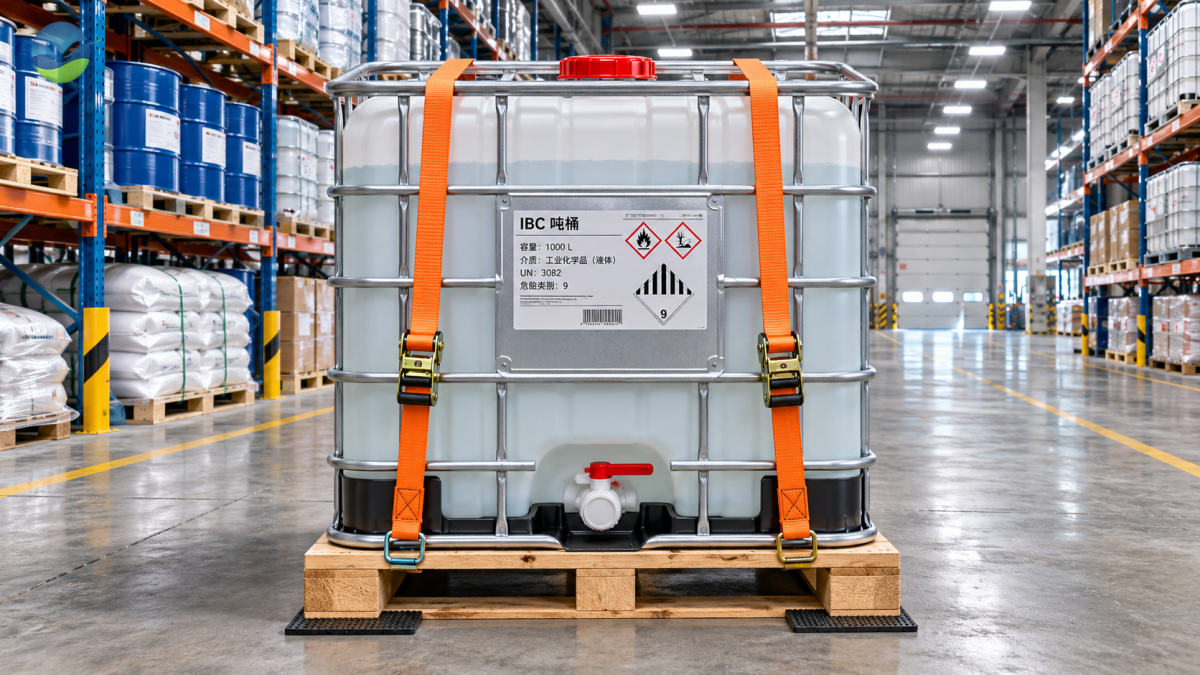
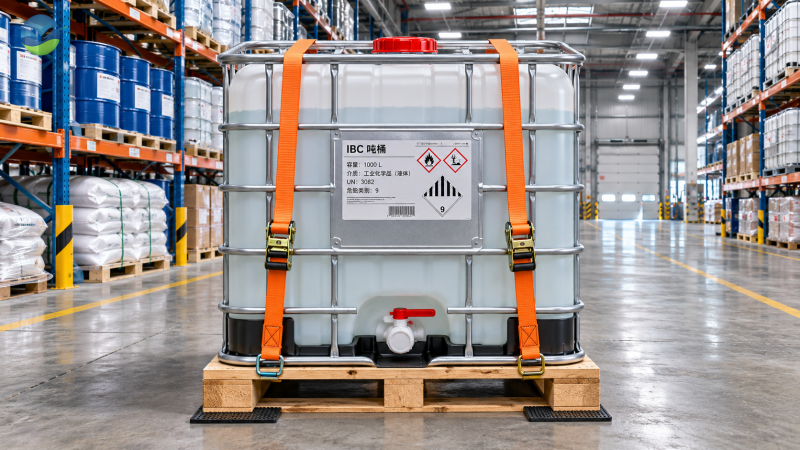
Inside the container, proper lashing is mandatory. Strapping the IBC directly to the container walls without edge protectors can crush the HDPE bottle. You need to use friction mats beneath the pallet and appropriate tension straps across the top metal cage, ensuring the load is immobilized without deforming the plastic tank. If you are stacking two IBCs, ensure the upper unit is in perfect alignment and that the lower IBC is rated for that specific stacking load. Never stack a liquid IBC on top of an empty one, and be highly cautious when stacking different densities.
Documentation and Cross-Border Coordination
Physical safety is only half the battle. The other half is paperwork. A missing or incorrect MSDS, a misdeclared HS code, or an unsigned dangerous goods declaration will leave your container stuck at the port. In international trade, time is money, and demurrage charges can wipe out your profit margin.
This is where a dual-location operational layout provides a distinct advantage. By leveraging a dedicated foreign trade operations center in Wuxi, the customer engagement process is streamlined. The Wuxi team handles the entire lifecycle for overseas clients—inquiry responses, sample delivery, quotation preparation, and crucially, logistics coordination and after-sales issue resolution. Because they operate 24/7 in a major time zone, communication requests and qualification document processing are handled without the usual delays. If a customs officer at the destination port questions the MSDS formatting, the Wuxi documentation team can adjust and resubmit it immediately, keeping the supply chain moving.
Managing the Broader Project Supply Chain
A complex engineering project doesn't run on liquid solvents alone. You are likely coordinating multiple material streams simultaneously. While managing 1000-liter IBCs requires specific hazard protocols, managing solid raw materials requires its own logistical rigor.
For instance, when sourcing PVC Resin Polyvinyl Chloride Raw Material for downstream applications like plastic pipes, profiles, or wire cables, the coordination required for 25kg bag packaging and container loading follows similar strict principles. Even though PVC resin is a thermoplastic polymer with stable chemical properties and isn't classified as a hazardous liquid, ensuring it is stored away from light and moisture during transit is critical to maintaining its excellent processability. The ability to consolidate different types of materials—whether it's hazardous liquid solvents in IBCs or technical-grade solid polymers in bags—into a single, well-coordinated FOB container export is what separates a reactive supply chain from a proactive one.
Final Checks Before the Doors Close
Before the container doors are sealed, conduct a final physical walk-around. Check that the IBC caps are tightened to the manufacturer's specified torque. Ensure the valve lever is fully closed and, if possible, secured with a tamper-evident seal or a secondary locking mechanism. Look for any signs of weeping on the valve stem. Verify that the UN certification mark on the IBC is legible and matches the documentation.
Preventing leaks in chemical solvent IBC transportation isn't about finding a magic solution; it's about respecting the details. It’s about understanding thermal dynamics, verifying material compatibility, securing the physical load, and ensuring the paperwork is flawless. By combining rigorous on-site production controls with responsive, round-the-clock foreign trade coordination, you can mitigate the risks and keep your project on schedule. The goal isn't just to move the product from point A to point B, but to ensure it arrives exactly as it left—safe, compliant, and ready for use.
Please give us a message
Send Us Your Inquiry Today
Scalable production and one-stop R&D, manufacturing, sales & after-sales services.