






News Center
What affects the delivered cost of vegetable glycerin bulk?
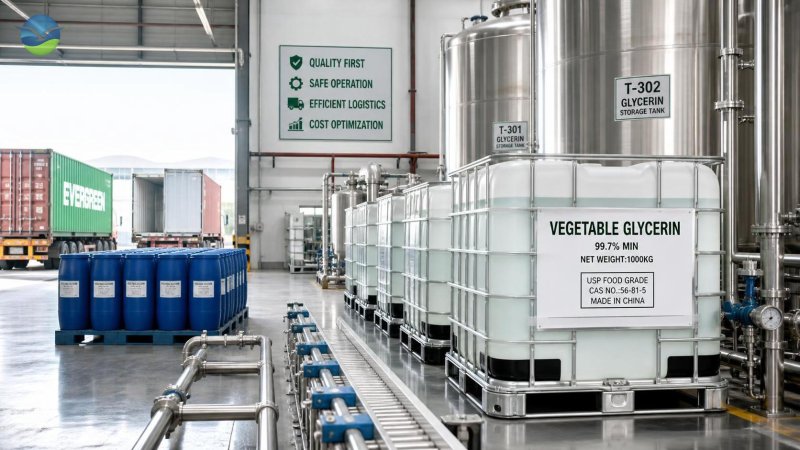
The delivered cost of vegetable glycerin bulk is the amount paid to receive usable material at the intended facility, rather than the number printed beside a supplier's quoted price. A low ex-works price can become expensive after packaging changes, domestic haulage, port handling, ocean freight, import charges, inspection delays, and inventory carrying costs are added. A sound comparison starts by placing every quotation on the same commercial basis: identical glycerin grade, concentration, packaging, Incoterm, destination, currency, payment timing, and validity period.
Vegetable glycerin is commonly specified as a clear, hygroscopic liquid derived from plant-based feedstocks. Its delivered cost can move when the underlying feedstock market changes, but the cost effect depends on the production route, purification requirement, and supply-chain position. Material originating from biodiesel-related streams may require additional refining to meet a particular purity, color, odor, water-content, or residue specification. A quotation that omits these details may not represent the same material as a higher-priced offer.
Grade and specification change the starting cost
“Vegetable glycerin” is not a complete purchasing specification. The request should state the intended grade and measurable acceptance limits. Depending on the application, relevant items may include assay, glycerol concentration, moisture, density, color, odor, ash, chloride, sulfate, methanol, heavy metals, and microbiological limits. A specification calling for a higher glycerol content generally leaves less room for water and impurities, which can affect refining yield, energy use, testing, and price.
Compliance documentation can also affect the delivered figure. A certificate of analysis should correspond to the shipped lot and identify the actual results against the agreed limits. A safety data sheet, origin statement where required, allergen or non-GMO declarations where relevant, and application-specific supporting documents may involve preparation time and administrative charges. The cost is not necessarily the document itself; it is the risk of a shipment arriving without the evidence needed for release or internal approval.
Sampling deserves the same attention. A laboratory sample can indicate appearance and basic conformity, but it does not replace a lot-specific test plan. If incoming inspection will include identity testing, water determination, color measurement, or impurity screening, those methods and limits should be aligned before an order is issued. Otherwise, disputed test methods can turn an apparently favorable purchase price into a chargeback, return, or production hold.
Raw material route and manufacturing controls
Feedstock availability influences the factory-gate cost of vegetable glycerin bulk. Vegetable-oil processing, oleochemical production, and biodiesel manufacturing can create different supply conditions. The glycerin stream may vary in crude composition, salt content, residual organic matter, and water level. More variable crude feed typically requires more treatment before it reaches a consistent commercial grade. The relevant question is therefore not simply whether the material is vegetable-derived, but whether the declared grade is consistently achieved from batch to batch.
Refining can include pretreatment, neutralization, separation, concentration, filtration, deodorization, distillation, and final blending. Each stage may affect yield. A supplier offering a narrow color or odor limit may be reflecting tighter process controls and additional rejection risk. Conversely, a broad specification may be suitable for certain industrial uses but create hidden cost where formulation consistency or appearance is sensitive.
Ask whether the quoted product is virgin refined glycerin, a blend, or material requiring further processing before use. That distinction affects handling, quality assurance, and the practical comparison between offers. A lower-cost product that needs dilution, filtration, or additional testing after receipt should be evaluated with those internal costs included.
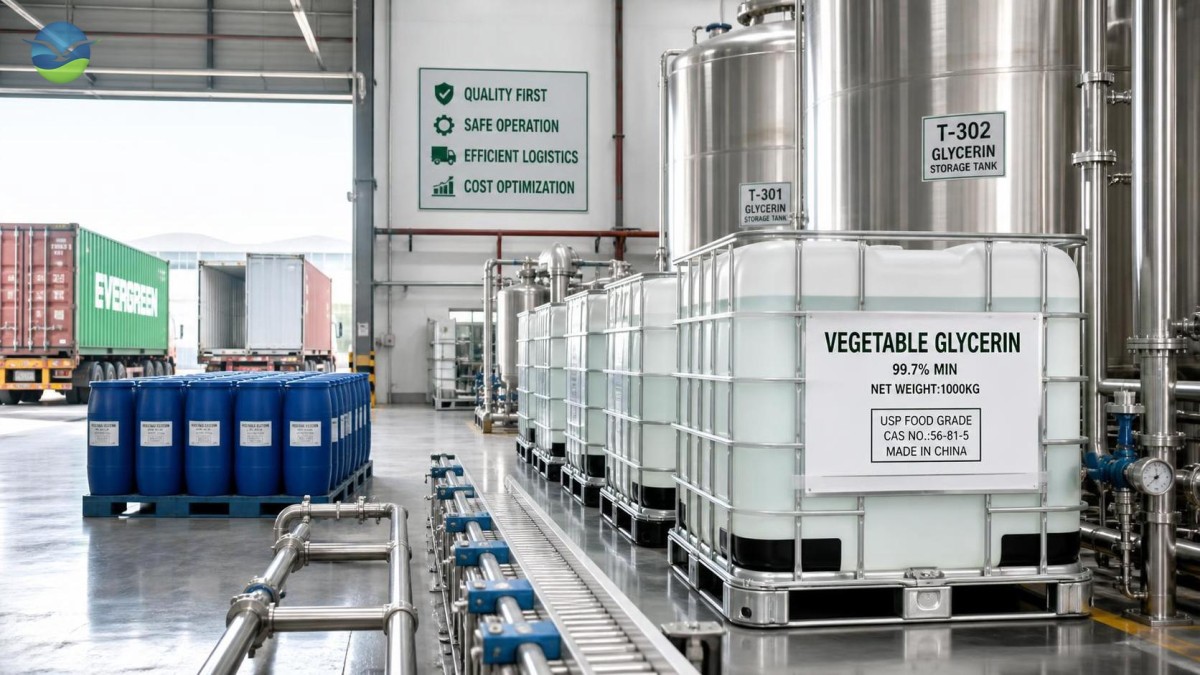
Packaging is a logistics decision, not a minor line item
Vegetable glycerin is dense and viscous, so package selection affects freight efficiency and receiving labor. Small containers may simplify distribution into multiple production areas, while drums, intermediate bulk containers, and bulk tank transport can reduce packaging cost per kilogram. The lowest packaging cost is not always the best delivered-cost option. It may create more unloading work, require dedicated transfer equipment, or leave difficult-to-manage residues.
Drum and IBC quotations should identify net weight, tare weight, pallet arrangement where applicable, closure type, liner use, and whether the container is returnable. Bulk movements need equivalent clarity on tank cleanliness, hose connection requirements, pumping capability, heating arrangements if needed, and demurrage exposure. Glycerin can become harder to pump in low temperatures because viscosity rises. If a receiving site lacks suitable unloading equipment or temperature control, delays can generate storage, detention, labor, or emergency handling costs.
Container utilization should be calculated using the permissible payload, product density, package weight, and local road restrictions. A full container in cubic volume may still be limited by weight. Comparing freight only on a per-container basis can therefore distort the cost of vegetable glycerin bulk. The useful measure is landed cost per usable kilogram after product weight, packaging, and foreseeable handling losses are considered.
Order volume and timing alter unit economics
Larger orders may spread fixed activities such as laboratory release, export processing, tank cleaning, loading, and document preparation across more material. They can also reduce the number of inbound deliveries. However, volume discounts should be weighed against inventory exposure. Glycerin has a meaningful shelf-life and storage requirement even when it is chemically stable under appropriate conditions. Long dwell times can tie up working capital, increase warehouse handling, and raise the consequence of contamination or package damage.
Order cadence matters as much as annual volume. A forecast that supports repeatable load sizes can reduce expediting and fragmented shipments. A purchase pattern made of irregular small releases may attract higher packaging and transport charges. Where consumption is uncertain, a staged agreement with clearly defined release quantities may offer better budget control than committing to a large physical delivery without a storage plan.
Quoted price validity also needs to match the approval and shipping timeline. Feedstock costs, foreign exchange, freight surcharges, and port charges can change between quotation, purchase order, production release, and vessel departure. A quotation should distinguish between fixed components and variable components, then state when each becomes firm. Without that separation, a stated unit price may create a false impression of cost certainty.
Incoterms determine where responsibility becomes cost
Incoterms allocate tasks, risks, and named delivery points; they do not by themselves state every cost. An ex-works offer may exclude loading, domestic trucking, export customs formalities, terminal charges, and international transport. An FOB offer may include delivery to the loading port and export clearance, but ocean freight, insurance, destination handling, customs clearance, duty, tax, and inland delivery may remain outside the price. A delivered-duty-paid structure can simplify comparison in some situations, although the scope of included duty, tax, clearance, and destination charges must be explicit.
For imports, the full route should be mapped from filling point to receiving tank or warehouse. Typical cost nodes may include collection from the plant, hazardous or non-hazardous classification handling as applicable, export documentation, terminal receiving, container loading, sea freight, insurance, destination terminal charges, customs brokerage, inspections, demurrage, chassis or trucking, and final unloading. Some charges are quoted in local currency and can change independently of the product price.
Customs classification must be verified against the actual product and destination rules. The applicable tariff treatment may depend on glycerin grade, origin, intended use, and documentary support. Misclassification can produce delayed clearance, reassessment, or unbudgeted fees. Country-of-origin evidence should be treated as an import-control item rather than a generic marketing statement.
Freight volatility and route design
International freight is often one of the most visible variables, but it is rarely a single line. The base rate may be accompanied by equipment imbalance fees, peak-season charges, fuel-related adjustments, security fees, terminal charges, documentation fees, and destination delivery charges. Transit time matters because it affects cash tied up in goods in transit and the time available before a production requirement. The cheapest sailing can be less economical if it has a higher transshipment risk or an uncertain arrival window.
Inland transport is frequently underestimated. The distance between the port and the receiving site, delivery appointment restrictions, local axle limits, return conditions for reusable containers, and waiting time at the gate can materially affect the final invoice. Bulk road tanker delivery may reduce package waste but may require a compatible unloading bay and cleaning protocol. Packaged delivery can be more flexible, yet it typically adds unit packaging and warehouse handling cost.
Insurance should be evaluated by coverage terms rather than treated as a nominal percentage. The cargo value, exclusions, deductible, claims procedure, and point at which risk transfers all matter. A loss during transit can also cause replacement freight, expedited production, and schedule disruption beyond the insured value of the material.
Payment terms, currency, and working capital
A quoted glycerin price may be denominated in a currency different from the currency used for internal budgets or sales. Exchange-rate movement between payment, shipment, and receipt can change the real purchase cost. The exposure is different for advance payment, payment against shipping documents, open-account terms, and letters of credit. Bank fees, confirmation costs, discrepancy charges, and the administrative effort needed to correct documents should be included where they apply.
Payment timing also creates a working-capital effect. An attractive invoice price with a large prepayment requirement can carry a higher economic cost than a slightly higher price with payment after shipment or receipt. The appropriate comparison uses the same assumed payment date, currency conversion method, and financing treatment across all bids. Separate product price from freight and duties where possible, because their payment dates may differ.
Application fit can prevent a misleading comparison
Glycerin is used across food, personal care, pharmaceutical-related, tobacco, resin, coating, and industrial formulations, but the acceptable specification changes with the process. A product intended for a moisture-retention function may require different controls from a product used as a processing aid or chemical intermediate. Choosing a grade above the actual requirement raises cost; choosing one below it may create batch failures, additional purification, or restrictions on finished-product release.
Related formulation materials should also be budgeted according to their own specifications and logistics. For example, a high-intensity sweetener used in beverage, confectionery, baked-food, supplement, food, pharmaceutical, or cosmetic production may arrive as a white crystalline powder in 25 kg fiber drums and have a different freight profile from liquid glycerin. Product declarations such as purity, storage conditions, package type, and HS classification should remain product-specific. The relevant reference is Sucralose High Sweetness Sweetener Raw Material, which should not be used as a substitute specification for glycerin.
Build a comparable landed-cost schedule
A practical approval record separates the quoted unit price from all additions and assumptions. It should record product grade and test limits, net quantity, package format, Incoterm and named place, origin, loading date assumption, currency, payment terms, freight basis, insurance, duty and tax treatment, destination charges, inland delivery, expected inspection costs, and any allowance for container detention or special handling. Each item should show whether it is firm, estimated, or excluded.
- Normalize every offer to one unit of usable glycerin delivered to the same receiving location.
- Keep recoverable taxes separate from irrecoverable duties, freight, and handling charges.
- Record the evidence needed for release, including lot-specific quality documents and shipping papers.
- Flag assumptions that depend on route availability, foreign exchange, customs treatment, or a minimum shipment quantity.
The final delivered-cost view should leave room for uncertainty rather than bury it inside a single average. Where freight, duties, exchange rates, or quality-release outcomes remain variable, show the condition that changes the number. That makes the cost basis traceable when the shipment arrives and avoids treating a preliminary quotation as a complete landed-cost commitment.
Please give us a message
Send Us Your Inquiry Today
Scalable production and one-stop R&D, manufacturing, sales & after-sales services.