






Silicone Oil Manufacturers: How to Audit Capability, Consistency, and Compliance
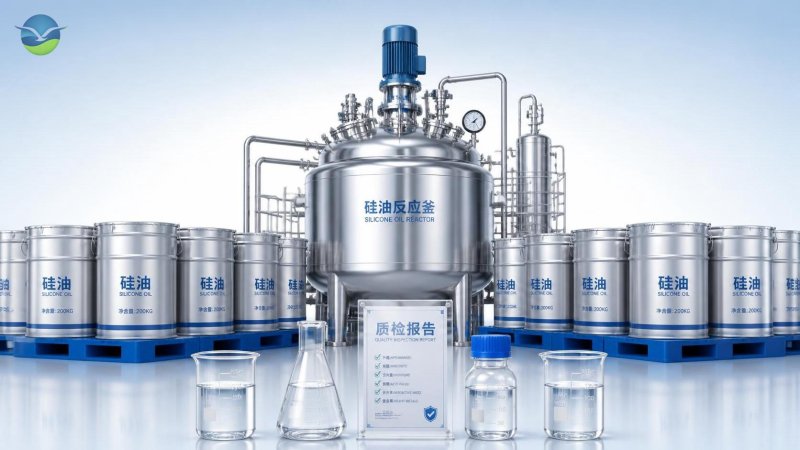
The core purchasing question is straightforward: can this supplier repeatedly deliver the specified silicone oil, with traceable documentation, under commercial export conditions?
For business evaluators, a low quotation is useful only when supported by verifiable manufacturing control, predictable lead times, and responsive problem resolution.
Reliable silicone oil manufacturers should be assessed as supply-chain partners, not simply as vendors capable of sending an initial sample or issuing a catalog.
Start With Manufacturing Capability, Not Marketing Claims
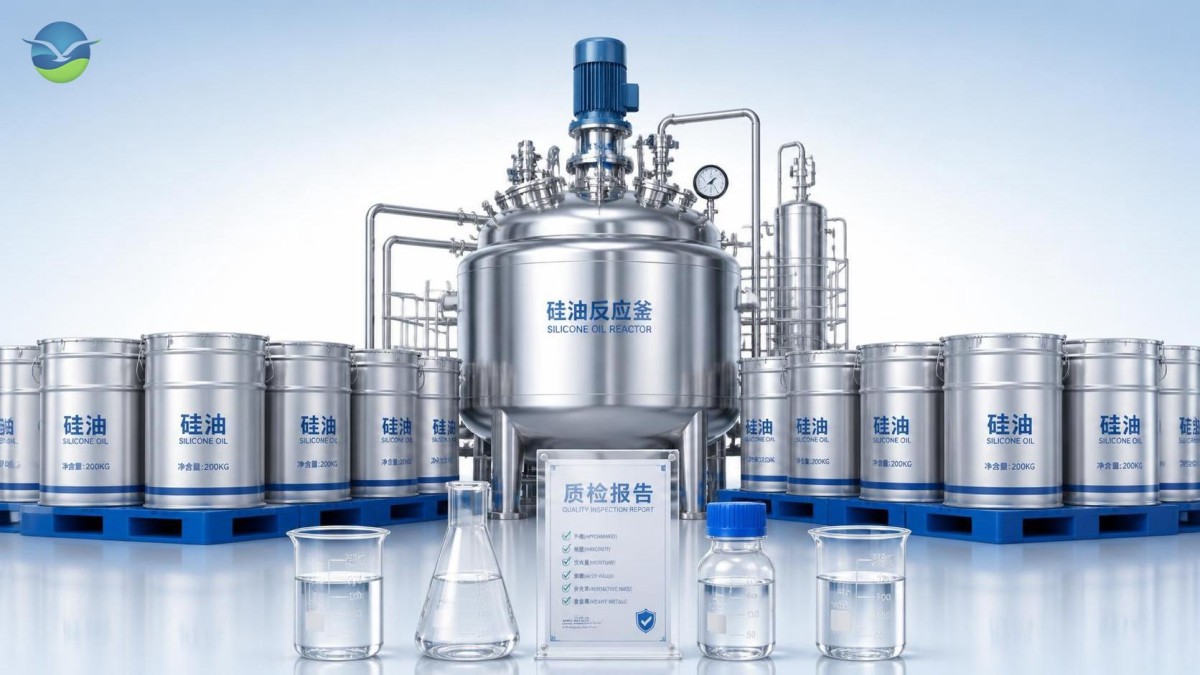
A manufacturer should clearly explain where silicone oil is produced, how raw materials are controlled, and which process stages remain under direct operational management.
Ask whether the supplier owns its production site, operates dedicated reactors, or relies mainly on outsourced blending, repacking, or temporary contract capacity.
These operating models can all serve certain markets, but they carry different risks for formulation stability, traceability, production scheduling, and corrective action ownership.
For silicone fluids, production capability is not measured only by annual tonnage. It also depends on reactor flexibility, purification procedures, filtration, storage discipline, and packaging capacity.
A supplier should identify its standard viscosity range, modification capabilities, minimum batch quantities, and the practical limits for customized product development.
Request a process overview that distinguishes raw material preparation, polymerization or blending, filtration, in-process testing, finished-product release, and shipment preparation.
Business evaluators should be cautious when a supplier provides broad specifications but cannot describe how product quality is maintained between laboratory trials and commercial batches.
Plant verification can be conducted through a physical audit, live video walkthrough, equipment photographs, batch records, or independently reviewed factory documentation.
A credible video inspection should show more than warehouse inventory. It should include production areas, laboratory instruments, labeling practices, and documented quality-release procedures.
Location also matters operationally. A production base in a chemical manufacturing cluster may support raw-material sourcing, technical staffing, and competitive production economics.
However, a factory location alone does not guarantee export performance. Buyers should confirm who manages quotations, logistics documents, samples, technical replies, and post-sales coordination.
Test Batch-to-Batch Consistency Before Committing Volume
Silicone oil can appear visually uniform while still varying in viscosity, volatile content, color, water content, or compatibility with the buyer’s downstream formulation.
That is why the first sample should be treated as a starting point for qualification, rather than proof that long-term production will remain equivalent.
Ask for certificates of analysis from several recent production lots, ideally covering the same grade, viscosity range, package format, and intended application.
Compare the reported values against specification limits and against each other. Narrow, realistic variation is generally more meaningful than unusually perfect repeated numbers.
For dimethyl silicone oil, viscosity is often the central commercial parameter, but density, refractive index, flash point, appearance, and volatile matter may also matter.
Modified silicone oils require additional scrutiny because functional groups, emulsification behavior, surface activity, compatibility, and curing interactions can influence actual end-use performance.
Request the supplier’s internal test methods and instrument references when a product will enter sensitive coatings, textiles, personal-care, electronics, release-agent, or lubricant applications.
Where applicable, buyers should define acceptance criteria in the purchase specification rather than relying solely on a supplier’s general technical data sheet.
A practical qualification process includes retaining a control sample, testing trial material internally, and comparing the first commercial delivery with the approved reference sample.
It is also useful to establish a formal change-notification requirement covering raw materials, process adjustments, test methods, production location, packaging, and specification updates.
Without documented change control, a technically acceptable initial product can gradually shift, creating downstream troubleshooting costs that exceed any apparent sourcing savings.
Audit the Quality System and Supporting Documentation
Quality documents are not administrative extras. They provide the evidence needed to release incoming materials, investigate deviations, satisfy customers, and support internal audit requirements.
At minimum, request a current technical data sheet, safety data sheet, certificate of analysis template, product specification, and packaging information before placing a meaningful order.
The certificate of analysis should identify a batch number, manufacturing date, test results, specification limits, release status, and responsible quality authorization.
Confirm that batch numbers on the certificate, product label, packing list, and shipping documentation can be connected without ambiguity after goods leave the factory.
A useful audit question is simple: if a downstream customer reports a defect six months later, can the supplier trace the batch and investigate it promptly?
Evaluate whether the supplier maintains retained samples, calibration records, nonconformance procedures, corrective action processes, and a documented system for complaint handling.
Testing capability should match the claims being made. A laboratory does not need every advanced instrument, but critical product properties must be measured competently and consistently.
When third-party testing is used, ask which parameters are outsourced, how frequently verification occurs, and who approves final release before shipment.
For cross-border procurement, document turnaround time matters. A delayed COA, incorrect MSDS, or inconsistent product label can delay customs clearance or customer production.
Suppliers with dedicated foreign-trade and documentation teams may reduce this risk, especially when the manufacturing site and international customer service office operate in different locations.
For example, a product listing such as Sodium Cyclamate Sweetener Food Raw Material should be accompanied by the same disciplined approach to traceability, safety documents, and export classification.
Verify Compliance Against the Actual Destination Market
Compliance is not a generic certificate checklist. Requirements depend on the silicone oil chemistry, intended use, importing country, customer industry, and regulatory status.
Begin by defining whether the product will be used in industrial processing, cosmetics, food-contact systems, pharmaceuticals, electronics, automotive manufacturing, or another controlled application.
Then identify the documentation expected by the destination market, including chemical inventory status, hazard communication, transport classification, restricted-substance declarations, and customer-specific statements.
A supplier should not casually claim that a material is compliant worldwide. Responsible suppliers explain the scope, limitations, version dates, and basis of each declaration.
For European business, buyers may need REACH-related information, SVHC declarations, and applicable restrictions. For other markets, local chemical inventory obligations may apply.
Where silicone oil enters consumer-facing products, regulatory evaluation may extend beyond the base polymer to additives, residuals, impurities, fragrance interactions, and packaging materials.
Ask whether the MSDS follows the relevant destination-market format and whether the supplier can update it when local regulations or customer requirements change.
Shipping compliance deserves equal attention. Confirm the correct HS code, dangerous-goods classification where applicable, container suitability, labels, and transport documentation before booking freight.
Business evaluators should also examine whether compliance documents are product-specific. Generic statements copied across unrelated grades are weak evidence and create avoidable liability.
If a supplier cannot answer technical compliance questions directly, determine whether qualified regulatory staff, laboratory personnel, or external specialists can provide controlled written responses.
Assess Export Responsiveness and Commercial Control
Even capable factories can create costly friction when overseas communications, samples, documentation, freight coordination, and issue management are handled without clear ownership.
Evaluate response quality during the quotation stage. Accurate questions, realistic lead-time commitments, and specific technical replies are stronger indicators than rapid but vague messaging.
A supplier should be able to coordinate samples, confirm courier details, prepare commercial invoices, arrange packing lists, and support pre-shipment documentation without repeated correction.
For global buyers, time-zone coverage and communication structure can influence launch schedules. Dedicated foreign-trade teams often improve response speed and accountability for open actions.
Qixiang Chemical’s Wuxi foreign-trade operations center can coordinate customer communication, sample delivery, order follow-up, logistics documentation, and after-sales support for overseas buyers.
Its Shandong production base supports source manufacturing, raw-material handling, in-house processing, quality testing, and scalable production for sample orders and container-level exports.
This dual-location structure can be commercially useful when a buyer needs factory-level product evidence while also requiring prompt English-language communication and export-document support.
Regardless of supplier location, define a written escalation route covering technical deviations, delayed shipments, incorrect documents, damaged packaging, and customer complaints after delivery.
Measure response performance through real transactions. Sample requests, specification clarifications, document revisions, and shipping changes reveal more than promotional service promises.
Commercial terms should also be precise. Confirm Incoterms, payment milestones, sample charges, lead times, order tolerances, claims periods, and responsibility for freight-related damage.
Evaluate Scalability, Supply Security, and Cost Structure
Supply security means more than having inventory today. It means the supplier can maintain quality, material availability, packaging capacity, and delivery commitments when demand increases.
Ask about normal production lead times, maximum monthly output, planned maintenance periods, critical raw-material sources, safety stock policies, and contingency arrangements for disruptions.
Suppliers should distinguish clearly between pilot quantities, routine commercial lots, and large export orders. Each may require different scheduling, packaging, testing, and logistics planning.
For a new program, phased qualification is often the strongest approach: laboratory sample, technical trial order, limited commercial batch, then scheduled volume supply after approval.
Buyers should compare total landed cost rather than unit price alone. Consider testing burden, rejection risk, documentation labor, logistics reliability, payment exposure, and production interruptions.
A lower-priced offer becomes expensive when viscosity variation causes reformulation, missing documents delay customs, or poor packaging creates leakage during long-distance transport.
Request packaging details early, including drum or IBC material, net weight, palletization, sealing methods, labeling, loading plan, and protection against moisture or contamination.
For silicone oils with specialized handling requirements, confirm storage temperatures, shelf-life conditions, compatibility with package linings, and recommended conditions during international transit.
Price stability should be discussed honestly. Chemical feedstock markets can change, so buyers need a defined quotation validity period and a mechanism for reviewing major cost movements.
Long-term supply arrangements work best when both parties share forecast visibility, safety-stock expectations, annual volume assumptions, and a realistic process for resolving shortages.
Use a Practical Supplier Audit Scorecard
A structured scorecard prevents procurement teams from overvaluing one attractive factor, such as price, a polished website, or an unusually fast initial sample shipment.
Assign weighted scores to manufacturing ownership, quality consistency, laboratory capability, documentation control, regulatory support, export responsiveness, capacity, and commercial competitiveness.
For high-risk or strategic applications, manufacturing control and batch consistency should normally receive more weight than minor differences in quoted price or payment terms.
Use evidence-based scoring. A claimed certification, capacity figure, or compliance statement should receive full credit only after documents, audits, or transaction experience support it.
Include a separate risk column for single-source dependency, unclear subcontracting, incomplete testing, weak traceability, unstable communication, or unexplained specification changes.
Before final approval, conduct a cross-functional review involving procurement, technical staff, quality assurance, regulatory personnel, logistics, and finance where appropriate.
This review should identify which risks are acceptable, which require contractual controls, and which should disqualify a supplier before commercial volume is released.
A good audit process does not seek a theoretically perfect manufacturer. It identifies the supplier whose verified capabilities match the product risk and business requirement.
Conclusion: Select Evidence, Not Assumptions
Choosing among silicone oil manufacturers is ultimately an evidence-based decision. Buyers need proof that production, testing, compliance, documentation, and export execution remain reliable over time.
The strongest suppliers can demonstrate control from raw materials through finished-product release, while providing traceable records and responsive support for international commercial requirements.
Start with clear specifications, validate several batches, review compliance against the destination market, and test service performance before expanding order volume.
When capability, consistency, and communication are assessed together, procurement teams can reduce qualification risk and build more resilient long-term silicone oil supply relationships.
Please give us a message
Send Us Your Inquiry Today
Scalable production and one-stop R&D, manufacturing, sales & after-sales services.