






How payment terms affect industrial chemical raw material sourcing
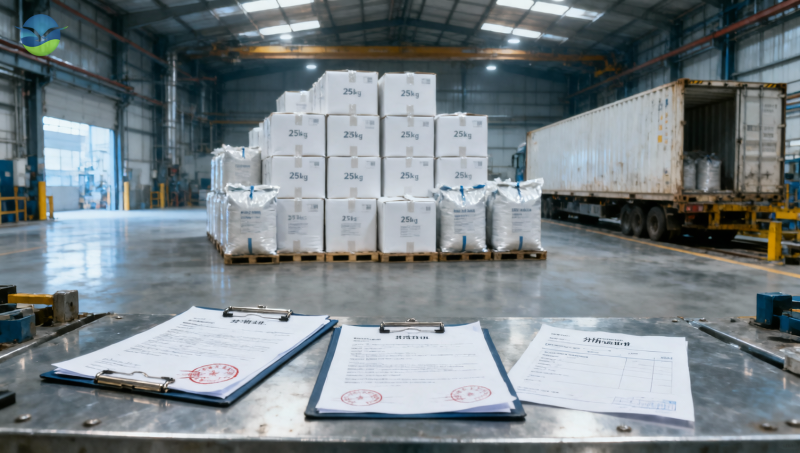
Payment terms can change the economics of an industrial chemical purchase even when the quoted unit price stays the same. A lower-priced shipment that requires full prepayment may consume working capital for weeks before the material reaches the plant. A higher-priced offer with balanced payment milestones may be easier to approve, easier to reconcile, and less disruptive to production planning.
For companies sourcing chemical raw materials internationally, payment is not merely an administrative condition placed at the end of a purchase order. It is part of supplier qualification. The selected structure affects cash conversion, foreign-exchange exposure, inventory pressure, document control, and the ability to respond when a shipment is delayed or a quality issue must be resolved. This is why assessing an industrial chemical raw material supplier requires more than comparing a price per kilogram or per metric ton.
Unit price is only one part of the sourcing cost
Chemical procurement often involves a gap between three dates: when the deposit is paid, when the goods are ready, and when the material can actually be used in production. The longer that gap becomes, the more cash is tied up in inventory or goods in transit. This matters especially for imported additives, intermediates, coatings materials, and specialty ingredients with long shipping routes or documentation requirements.
A quotation should therefore be read as a commercial package. Freight terms, container loading schedule, minimum order quantity, inspection arrangements, bank charges, and payment timing can all alter the effective landed cost. For example, a supplier offering a modest discount for 100% advance payment may appear competitive at first glance. Yet the buyer also needs to consider whether advance payment removes leverage before final inspection documents, packing confirmation, or shipping evidence are available.
The opposite problem also exists. Very extended credit terms can be attractive on paper, but they may be offset by a higher product price, a stricter volume commitment, or limited flexibility when demand changes. The right question is not “Which term is the longest?” It is “Which structure gives the business the most control at an acceptable total cost and risk level?”
How common payment structures change the risk allocation
Different terms distribute risk differently between buyer and seller. There is no universally correct arrangement, because the appropriate structure depends on product value, order history, production lead time, shipment size, and the supplier’s ability to evidence quality and dispatch.
For a first order, a staged structure is often easier to govern than either full prepayment or an informal promise of post-delivery payment. A deposit can help reserve production capacity or secure raw materials, while the balance can be linked to defined evidence before loading. That evidence should not be vague. It should state which documents are required, who approves them, and what happens if the batch does not conform to the agreed specification.
The practical value of a milestone is not its label; it is its verifiability. “Payment before shipment” is weakly controlled if neither shipment readiness nor quality acceptance is defined. “Payment against documents” is more meaningful when the contract specifies documents such as a commercial invoice, packing list, certificate of analysis, material safety data sheet, and transport document where applicable.
Documentation is part of payment security
In chemical sourcing, documents do more than support customs clearance. They connect payment approval to traceability. A COA should be checked against the agreed product specification and relevant batch information. An MSDS should be current and suitable for the product being transported and used. Packaging details, labels, net weight, and the stated chemical identity should be consistent across the quotation, sales contract, invoice, and shipping paperwork.
This control becomes more important when a material is technically sensitive or intended for regulated downstream applications. Take potassium sorbate, commonly used to inhibit mold, yeast, and other microorganisms in applications such as beverages, baked goods, dairy products, meat products, and some cosmetics. A sourcing decision for Potassium Sorbate Food Preservative Raw Material should not be based on an attractive price or lenient payment timing alone. Buyers still need to confirm the applicable grade, CAS No. 24634-61-5, packaging condition, batch documentation, and the requirements of the destination market and intended use.
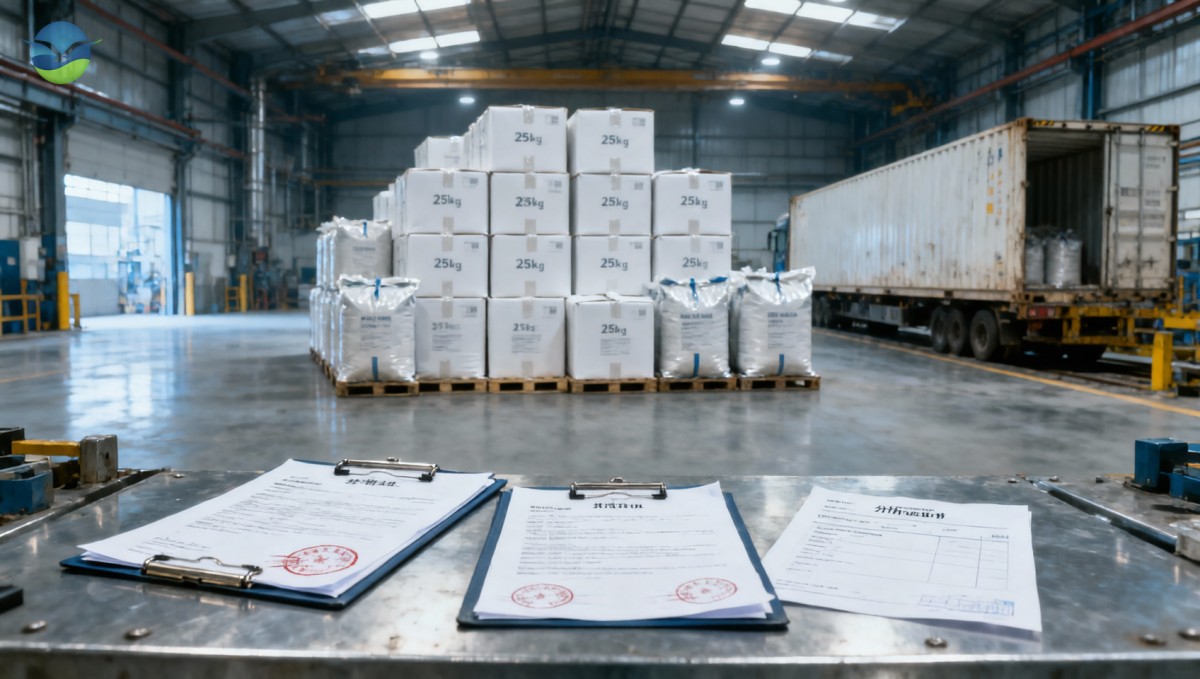
For this material, the stated form may be white, scaly crystals, with packing such as 25 kg double corrugated cartons lined with food-grade PE plastic bags. Those details influence not only product acceptance but also warehouse handling, pallet planning, damage claims, and insurance discussions. If a payment milestone is connected to “final inspection,” the inspection criteria should cover the actual commercial risks: identity, appearance, packaging integrity, net weight, documents, and any agreed analytical parameters.
Payment terms reveal how prepared a supplier is to support scale
A supplier’s willingness to discuss payment structure in detail can reveal useful operational information. It may show whether the company has a formal order process, reliable export documentation, production scheduling discipline, and a clear division between commercial and technical responsibilities. These are not minor administrative matters. They determine whether a purchase can move from a sample order to repeat container business without creating friction in finance, quality assurance, or logistics.
An industrial chemical raw material supplier that manufactures directly may be better positioned to explain why a deposit is needed, whether capacity has been reserved, and which production stage triggers the balance payment. A pure trading intermediary may still be suitable, but the buyer should understand who controls the manufacturing schedule, batch release, and quality records. Lack of clarity can create a familiar problem: payment is made to one entity while the underlying production, inspection, and shipment decisions sit elsewhere.
Qixiang Chemical’s operating arrangement illustrates why commercial access and manufacturing visibility should be evaluated together. Its foreign trade operations center is located in Wuxi, Jiangsu, where dedicated teams handle overseas inquiries, quotations, sample coordination, order follow-up, logistics communication, qualification documents, and after-sales matters. The Wuxi team also supports video factory visits and communication requests around the clock, which can reduce delays when approval questions arise across time zones.
Meanwhile, its source manufacturing base in Shandong operates a 10,000-square-meter standardized facility with modified granulation lines, anti-corrosion coating reaction workshops, raw-material storage, and quality inspection laboratories. Production activities from raw-material blending through final testing are managed within the facility, and shipments are accompanied by documentation including COAs and MSDSs. For a buyer reviewing payment risk, this separation can be useful: negotiations and document coordination are handled by the Wuxi foreign trade team, while the production source and batch controls can be examined at the Shandong base.
Match payment timing to the real supply-chain timeline
The most defensible payment terms are tied to the physical flow of the order. Before approving a structure, map the transaction from purchase order to goods receipt. Include sample validation, raw-material preparation, manufacturing lead time, testing, packing, booking, port delivery, ocean transit, customs clearance, and internal release. A payment schedule that ignores those stages can create either unnecessary financial exposure or unrealistic pressure on the supplier.
For small samples, simpler arrangements may be reasonable because bank instruments and elaborate inspections can cost more than the shipment itself. For regular FOB container exports, stronger process controls are usually justified. The buyer may need confirmation of container loading, document review before final remittance, and alignment between the bill of lading data and the purchase contract. For large or recurring orders, a framework agreement can clarify forecast volumes, price review triggers, credit evaluation, claims handling, and treatment of quality deviations.
Foreign-exchange timing also deserves attention. When the invoice currency differs from the company’s operating currency, a long interval between price confirmation and payment can affect budget certainty. This is not always a reason to reject a supplier’s terms, but it is a reason to coordinate procurement, treasury, and operations before the order is placed. Payment dates should be visible in the cash forecast rather than treated as a surprise when shipping documents arrive.
What to challenge before approving a chemical purchase
A sound review does not need to be burdensome, but it should test the assumptions behind the offer. Ask whether the payment beneficiary is the same legal entity named in the contract. Confirm the Incoterm and named port or place. Establish which documents are supplied before the final payment and which accompany the cargo. If pre-shipment inspection is expected, define who conducts it and what standard is used. For chemical products, also determine how claims are submitted, what evidence is required, and whether the supplier can trace the shipment to a batch record.
The cheapest quote is often not the lowest-risk quote. Likewise, the most buyer-friendly payment condition is not automatically the most reliable basis for a long-term relationship. A supplier facing material costs, production commitments, and export logistics may reasonably require a deposit. The discipline lies in making that deposit proportionate, documented, and connected to a transparent production and delivery process.
Before a final approval, compare offers on a like-for-like basis: product specification, quantity, packaging, Incoterms, lead time, inspection evidence, document set, payment milestones, and claim process. When these elements are considered together, payment terms become what they should be—a practical tool for controlling sourcing cost, preserving liquidity, and protecting continuity of supply.
Please give us a message
Send Us Your Inquiry Today
Scalable production and one-stop R&D, manufacturing, sales & after-sales services.