






Buying Citric Acid Bulk: Cost Drivers, Packaging Options, and Storage Risks
Buying Citric Acid Bulk: what really moves cost
For many purchasing teams, citric acid looks straightforward: a common acidulant, easy to source, quoted by the ton, and offered by many suppliers. Finance teams usually know it is not that simple. The number on the quotation is only the starting point. Once freight, packaging, handling loss, warehouse conditions, reinspection, and claims risk are added, two offers with a small unit-price gap can end up producing very different landed costs.
That is why buying citric acid bulk needs to be evaluated more like a supply-chain decision than a line-item commodity buy. In practice, the best decision is often not the lowest FOB or EXW price, but the option that keeps quality stable, packaging practical, and import execution predictable over several purchase cycles.
The keyword here is controllability. Finance approvers are usually less concerned with a dramatic one-time saving than with avoiding avoidable cost leakage: demurrage from paperwork errors, bag damage in transit, caking in humid storage, or stock write-downs when older material becomes harder to use.
Price is shaped by more than purity grade
When suppliers quote citric acid bulk, buyers tend to focus first on grade, mesh, and purity. Those matter, but they do not explain the full spread. In chemical trade, price is typically influenced by four layers at the same time: source manufacturing cost, packaging configuration, shipment scale, and service burden.
Source manufacturing cost usually reflects feedstock conditions, energy costs, plant utilization, and regional chemical cluster economics. This is one reason buyers often look closely at production location rather than only trading company location. A supplier with a real manufacturing base in Shandong, for example, may benefit from the province’s chemical industry infrastructure and raw material network, while a foreign trade operations team in Wuxi can handle communication, documentation, and overseas coordination with less friction. That dual structure matters because it can reduce the hidden costs of cross-border purchasing without necessarily inflating factory-side pricing.
Shipment scale also changes the economics. Small trial orders and sample shipments almost always carry disproportionate logistics and document costs per ton. Container-scale orders usually smooth that out, but only if the packing density is efficient and the cargo is loaded to reduce wasted space. Buyers comparing quotations should therefore ask a simple but often skipped question: what is the real cost per usable ton delivered to our warehouse, not per quoted ton at port?
Packaging is a cost-control tool, not a clerical detail
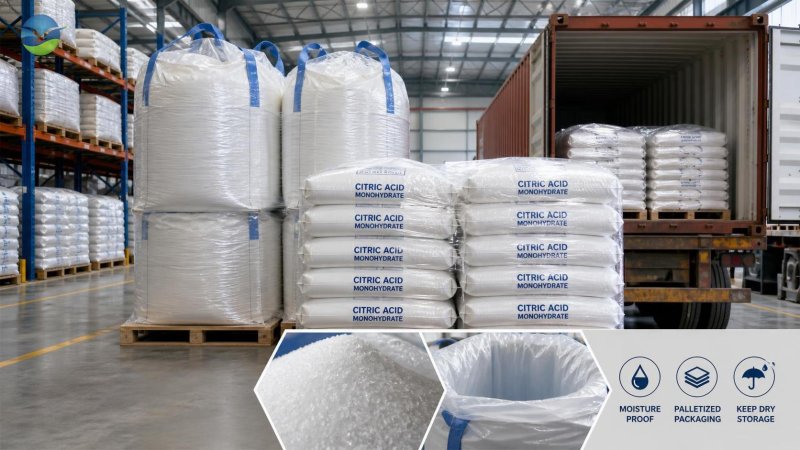
Packaging format has a direct effect on labor, damage rate, storage efficiency, and loss during internal transfer. In citric acid procurement, the common discussion is usually around bag size and whether palletization is included. On paper, this can look minor. In a humid warehouse or a busy production site, it is not minor at all.
Smaller bags may improve manual handling and stock rotation, but they also increase bag count, loading time, and the number of touchpoints where tearing or contamination can happen. Larger bags can reduce unit handling cost, yet they may complicate partial use and expose more material if one package is compromised. Pallets add cost, but in some receiving environments they reduce warehouse labor and damage enough to justify it. Stretch wrapping, inner liners, and moisture-barrier choices also deserve attention, especially for ocean freight into tropical or monsoon climates.
A practical review often looks like this:
This is also where experienced suppliers stand out. A team that manages export documentation, sample coordination, and post-sales support from a dedicated foreign trade center can usually answer packaging detail questions faster than a supplier passing messages through multiple intermediaries. That matters when the issue is not “Can you supply?” but “Can you supply in the format that avoids downstream waste?”
Storage risk is where cheap purchases become expensive
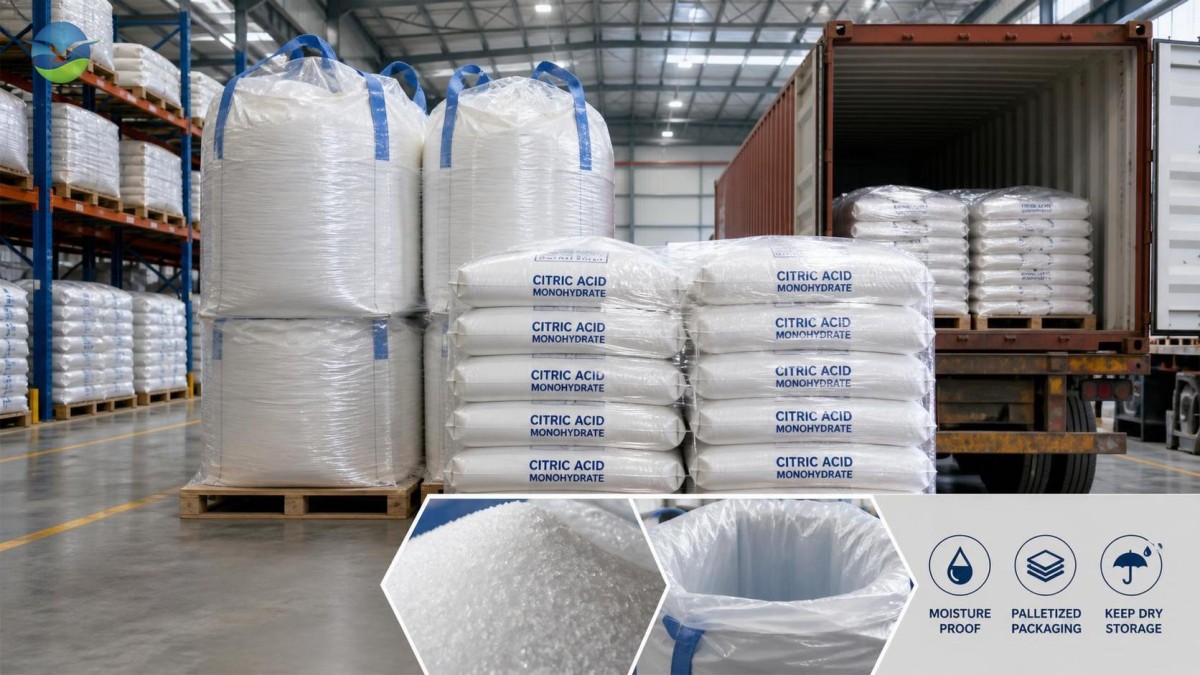
Citric acid is generally stable when stored correctly, but bulk procurement changes the risk profile because stock sits longer and warehouse conditions are rarely ideal every day. Moisture is the obvious issue. Once bags absorb humidity, caking can make dosing difficult, slow production, and in some applications force manual breaking or screening. Even when the material remains chemically usable, handling cost goes up.
Longer storage also increases exposure to packaging failure. A small weakness in stitching, liner sealing, or pallet wrapping may not show up during loading, yet it becomes visible after ocean transit, port handling, and several weeks in storage. Finance teams often only see the problem later, as write-offs, operator complaints, or lower actual yield.
One common purchasing mistake is overbuying to chase a price break without checking realistic monthly consumption and warehouse discipline. If stock rotation is weak, “lower unit price” can be offset by older inventory sitting too long. The safer question is not whether a larger order is cheaper per ton, but whether the site can protect that material until it is consumed.
For buyers importing into regions with variable humidity, it is worth confirming recommended storage conditions in the supplier’s documentation and making sure the shipment comes with batch-level paperwork such as COA and MSDS. A supplier with self-managed production and in-house quality inspection can usually provide these more consistently, which helps if there is later a discrepancy between arrival condition and shipment release documents.
Supplier structure affects transaction cost
Not all supplier models create the same administrative burden. With citric acid bulk, the visible product may be standard, but the transaction around it is not. Time lost waiting for revised invoices, origin paperwork, specification confirmation, or after-sales clarification has a cost, even if it never appears in the supplier quote.
A setup that combines an export-facing team in Wuxi with source production in Shandong is commercially useful for a reason. Wuxi offers strong cross-border trade infrastructure and faster customer-facing response, while Shandong supports manufacturing scale and cost control. For overseas buyers, that can mean fewer communication delays on quotations, samples, qualification files, and shipment follow-up. It also reduces the gap between the people discussing the order and the people controlling production.
This kind of structure is especially relevant when procurement is not limited to one product family. A buyer discussing citric acid may also be sourcing other industrial materials in parallel, and suppliers with integrated R&D, manufacturing, and export support sometimes become more efficient across categories. In some sourcing programs, adjacent materials such as PC Polycarbonate Engineering Plastic Raw Material are handled through the same document and communication workflow, which simplifies vendor management more than many buyers expect.
Questions worth asking before approving a bulk order
A good approval process for citric acid bulk is usually less about technical complexity and more about removing ambiguity. Before signing off, it helps to check:
- Is the quoted price tied clearly to packaging type, pallet terms, and shipment basis?
- Will the selected packaging still be suitable after ocean transit and local warehouse storage?
- Are COA, MSDS, and batch traceability documents available with each shipment?
- Who handles sampling, claims communication, and replacement discussion if condition on arrival is disputed?
- Does the order size match realistic consumption, or is it only attractive on paper because of a volume discount?
These are not dramatic questions, but they are the ones that separate a smooth import order from an expensive internal discussion three months later.
What a balanced buying decision looks like
The most defensible purchasing decision usually lands in the middle ground: competitive source pricing, packaging that fits the receiving site, enough documentation to support import and QA, and a supplier structure that can respond quickly when details change. In other words, buying citric acid bulk well is not about squeezing the quote until it looks good in a spreadsheet. It is about making sure the material arrives usable, documented, and economically manageable from port to production.
If there is one point finance teams should hold onto, it is this: hidden costs rarely come from the acid itself. They come from everything around it—packaging choices, storage exposure, order sizing, and supplier execution discipline. That is where the real margin of error sits, and where the better approval decision usually earns its value.
Please give us a message
Send Us Your Inquiry Today
Scalable production and one-stop R&D, manufacturing, sales & after-sales services.